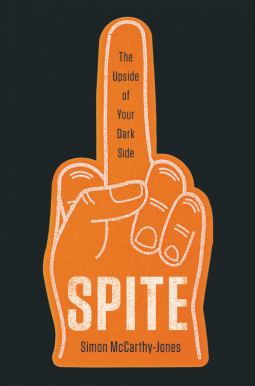
Spite
The Upside of Your Dark Side
This title was previously available on NetGalley and is now archived.
Buy on Amazon
Buy on BN.com
Buy on Bookshop.org
*This page contains affiliate links, so we may earn a small commission when you make a purchase through links on our site at no additional cost to you.
Send NetGalley books directly to your Kindle or Kindle app
1
To read on a Kindle or Kindle app, please add kindle@netgalley.com as an approved email address to receive files in your Amazon account. Click here for step-by-step instructions.
2
Also find your Kindle email address within your Amazon account, and enter it here.
Pub Date Apr 13 2021 | Archive Date May 13 2021
Perseus Books, Basic Books | Basic Books
Description
Spite angers and enrages us, but it also keeps us honest. In this provocative account, a psychologist examines how petty vengeance explains human thriving.
Spite seems utterly useless. You don't gain anything by hurting yourself just so you can hurt someone else. So why hasn't evolution weeded out all the spiteful people?
As psychologist Simon McCarthy-Jones argues, spite seems pointless because we're looking at it wrong. Spite isn't just what we feel when a car cuts us off or when a partner cheats. It's what we feel when we want to punish a bad act simply because it was bad. Spite is our fairness instinct, an innate resistance to exploitation, and it is one of the building blocks of human civilization. As McCarthy-Jones explains, some of history's most important developments—the rise of religions, governments, and even moral codes—were actually redirections of spiteful impulses.
A provocative, engaging read, Spite shows that if you really want to understand what makes us human, you can't just look at noble ideas like altruism and cooperation. You need to understand our darker impulses as well.
Spite seems utterly useless. You don't gain anything by hurting yourself just so you can hurt someone else. So why hasn't evolution weeded out all the spiteful people?
As psychologist Simon McCarthy-Jones argues, spite seems pointless because we're looking at it wrong. Spite isn't just what we feel when a car cuts us off or when a partner cheats. It's what we feel when we want to punish a bad act simply because it was bad. Spite is our fairness instinct, an innate resistance to exploitation, and it is one of the building blocks of human civilization. As McCarthy-Jones explains, some of history's most important developments—the rise of religions, governments, and even moral codes—were actually redirections of spiteful impulses.
A provocative, engaging read, Spite shows that if you really want to understand what makes us human, you can't just look at noble ideas like altruism and cooperation. You need to understand our darker impulses as well.
Available Editions
| EDITION | Other Format |
| ISBN | 9781541646995 |
| PRICE | $28.00 (USD) |
| PAGES | 272 |
Available to Buy
Buy on Amazon Buy on BN.com Buy on Bookshop.org*This page contains affiliate links, so we may earn a small commission when you make a purchase through links on our site at no additional cost to you.
Average rating from 10 members
Readers who liked this book also liked:









The Official Clue Book of Puzzles
Dr. Gareth Moore; Laura Jayne Ayres
Crafts & Hobbies, Entertainment & Pop Culture, Mystery & Thrillers
Dr. Gareth Moore; Laura Jayne Ayres
Crafts & Hobbies, Entertainment & Pop Culture, Mystery & Thrillers