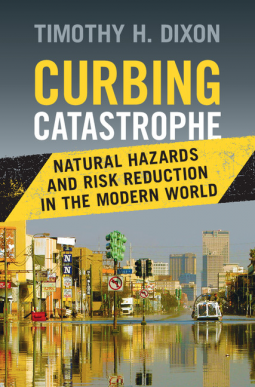
Curbing Catastrophe
Natural Hazards and Risk Reduction in the Modern World
This title was previously available on NetGalley and is now archived.
Buy on Amazon
Buy on BN.com
Buy on Bookshop.org
*This page contains affiliate links, so we may earn a small commission when you make a purchase through links on our site at no additional cost to you.
Send NetGalley books directly to your Kindle or Kindle app
1
To read on a Kindle or Kindle app, please add kindle@netgalley.com as an approved email address to receive files in your Amazon account. Click here for step-by-step instructions.
2
Also find your Kindle email address within your Amazon account, and enter it here.
Pub Date Feb 13 2017 | Archive Date Mar 13 2017
Description
What does Japan's 2011 nuclear accident have in common with the 2005 flooding of New Orleans from Hurricane Katrina? This thought-provoking book presents a compelling account of recent and historical disasters, both natural and human-caused, drawing out common themes and providing a holistic understanding of hazards, disasters and mitigation, for anyone interested in this important and topical subject. Based on his on-the-ground experience with several major recent disasters, Timothy H. Dixon explores the science, politics and economics behind a variety of disasters and environmental issues, arguing that many of the worst effects are avoidable. He describes examples of planning and safety failures, provides forecasts of future disasters and proposes solutions for hazard mitigation. The book shows how billions of dollars and countless lives could be saved by adopting longer-term thinking for infrastructure planning and building, and argues that better communication is vital in reducing global risks and preventing future catastrophes.
Available Editions
| EDITION | Hardcover |
| ISBN | 9781107035188 |
| PRICE | $29.99 (USD) |
Available to Buy
Buy on Amazon Buy on BN.com Buy on Bookshop.org*This page contains affiliate links, so we may earn a small commission when you make a purchase through links on our site at no additional cost to you.