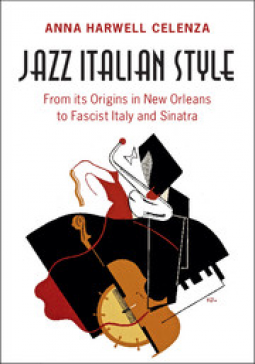
Jazz Italian Style
From its Origins in New Orleans to Fascist Italy and Sinatra
This title was previously available on NetGalley and is now archived.
Buy on Amazon
Buy on BN.com
Buy on Bookshop.org
*This page contains affiliate links, so we may earn a small commission when you make a purchase through links on our site at no additional cost to you.
Send NetGalley books directly to your Kindle or Kindle app
1
To read on a Kindle or Kindle app, please add kindle@netgalley.com as an approved email address to receive files in your Amazon account. Click here for step-by-step instructions.
2
Also find your Kindle email address within your Amazon account, and enter it here.
Pub Date Mar 13 2017 | Archive Date Apr 13 2017
Description
Jazz Italian Style explores a complex era in music history, when politics and popular culture collided with national identity and technology. When jazz arrived in Italy at the conclusion of World War I, it quickly became part of the local music culture. In Italy, thanks to the gramophone and radio, many Italian listeners paid little attention to a performer's national and ethnic identity. Nick LaRocca (Italian-American), Gorni Kramer (Italian), the Trio Lescano (Jewish-Dutch), and Louis Armstrong (African-American), to name a few, all found equal footing in the Italian soundscape. The book reveals how Italians made jazz their own, and how, by the mid-1930s, a genre of jazz distinguishable from American varieties and supported by Mussolini began to flourish in Northern Italy and in its turn influenced Italian-American musicians. Most importantly, the book recovers a lost repertoire and an array of musicians whose stories and performances are compelling and well worth remembering.
Available Editions
| EDITION | Hardcover |
| ISBN | 9781107169777 |
| PRICE | $44.99 (USD) |
Available to Buy
Buy on Amazon Buy on BN.com Buy on Bookshop.org*This page contains affiliate links, so we may earn a small commission when you make a purchase through links on our site at no additional cost to you.