Please wait... This may take a moment.
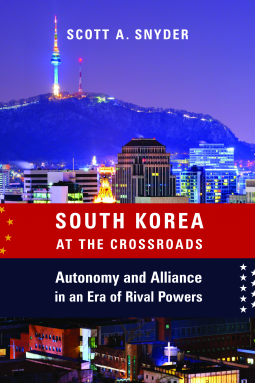
South Korea at the Crossroads
Autonomy and Alliance in an Era of Rival Powers
This title was previously available on NetGalley and is now archived.
Pub Date
Jan 2 2018
| Archive Date
Mar 27 2018
Description
Against the backdrop of China’s mounting influence and North Korea’s growing nuclear capability and expanding missile arsenal, South Korea faces a set of strategic choices that will shape its economic prospects and national security. In South Korea at the Crossroads, Scott A. Snyder examines the trajectory of fifty years of South Korean foreign policy and offers predictions—and a prescription—for the future. Pairing a historical perspective with a shrewd understanding of today’s political landscape, Snyder contends that South Korea’s best strategy remains investing in a robust alliance with the United States.
Snyder begins with South Korea’s effort in the 1960s to offset the risk of abandonment by the United States during the Vietnam War and the subsequent crisis in the alliance during the 1970s. A series of shifts in South Korean foreign relations followed: the “Nordpolitik” engagement with the Soviet Union and China at the end of the Cold War; Kim Dae Jung’s “Sunshine Policy,” designed to bring North Korea into the international community; “trustpolitik,” which sought to foster diplomacy with North Korea and Japan; and changes in South Korea’s relationship with the United States. Despite its rise as a leader in international financial, development, and climate-change forums, South Korea will likely still require the commitment of the United States to guarantee its security. Although China is a tempting option, Snyder argues that only the United States is both credible and capable in this role. South Korea remains vulnerable relative to other regional powers in northeast Asia despite its rising profile as a middle power, and it must balance the contradiction of desirable autonomy and necessary alliance.
Against the backdrop of China’s mounting influence and North Korea’s growing nuclear capability and expanding missile arsenal, South Korea faces a set of strategic choices that will shape its...
Description
Against the backdrop of China’s mounting influence and North Korea’s growing nuclear capability and expanding missile arsenal, South Korea faces a set of strategic choices that will shape its economic prospects and national security. In South Korea at the Crossroads, Scott A. Snyder examines the trajectory of fifty years of South Korean foreign policy and offers predictions—and a prescription—for the future. Pairing a historical perspective with a shrewd understanding of today’s political landscape, Snyder contends that South Korea’s best strategy remains investing in a robust alliance with the United States.
Snyder begins with South Korea’s effort in the 1960s to offset the risk of abandonment by the United States during the Vietnam War and the subsequent crisis in the alliance during the 1970s. A series of shifts in South Korean foreign relations followed: the “Nordpolitik” engagement with the Soviet Union and China at the end of the Cold War; Kim Dae Jung’s “Sunshine Policy,” designed to bring North Korea into the international community; “trustpolitik,” which sought to foster diplomacy with North Korea and Japan; and changes in South Korea’s relationship with the United States. Despite its rise as a leader in international financial, development, and climate-change forums, South Korea will likely still require the commitment of the United States to guarantee its security. Although China is a tempting option, Snyder argues that only the United States is both credible and capable in this role. South Korea remains vulnerable relative to other regional powers in northeast Asia despite its rising profile as a middle power, and it must balance the contradiction of desirable autonomy and necessary alliance.
Advance Praise
"South Korea at the Crossroads provides a lucid and expansive coverage of the major forces that have shaped and influenced South Korean diplomacy since its founding in 1948. Snyder emphasizes the contradictory forces that have shaped Seoul's foreign policy, such as the pluses and minuses of geography, nationalism and internationalism, and autonomy and alliance through each administration. This volume will stand out as the best single-volume study on South Korean foreign policy."
- Chung Min Lee, Yonsei University
"South Korea at the Crossroads provides a lucid and expansive coverage of the major forces that have shaped and influenced South Korean diplomacy since its founding in 1948. Snyder emphasizes the...
Advance Praise
"South Korea at the Crossroads provides a lucid and expansive coverage of the major forces that have shaped and influenced South Korean diplomacy since its founding in 1948. Snyder emphasizes the contradictory forces that have shaped Seoul's foreign policy, such as the pluses and minuses of geography, nationalism and internationalism, and autonomy and alliance through each administration. This volume will stand out as the best single-volume study on South Korean foreign policy."
- Chung Min Lee, Yonsei University
Available Editions
| EDITION |
Other Format |
| ISBN |
9780231185486 |
| PRICE |
$140.00 (USD)
|
| PAGES |
352
|
Additional Information
Available Editions
| EDITION |
Other Format |
| ISBN |
9780231185486 |
| PRICE |
$140.00 (USD)
|
| PAGES |
352
|
Average rating from 3 members