*This page contains affiliate links, so we may earn a small commission when you make a purchase through links on our site at no additional cost to you.
Send NetGalley books directly to your Kindle or Kindle app
To read on a Kindle or Kindle app, please add kindle@netgalley.com as an approved email address to receive files in your Amazon account. Click here for step-by-step instructions.
2
Also find your Kindle email address within your Amazon account, and enter it here.
Talking about this book? Use #BathroomBattlegrounds #NetGalley. More hashtag tips!
Description
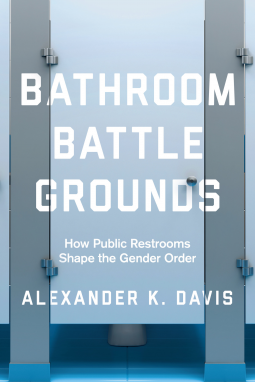
Today’s debates about transgender inclusion and public restrooms may seem unmistakably contemporary, but they have a surprisingly long and storied history in the United States—one that concerns more than mere “potty politics.” Alexander K. Davis takes readers behind the scenes of two hundred years’ worth of conflicts over the existence, separation, and equity of gendered public restrooms, documenting at each step how bathrooms have been entangled with bigger cultural matters: the importance of the public good, the reach of institutional inclusion, the nature of gender difference, and, above all, the myriad privileges of social status. Chronicling the debut of nineteenth-century “comfort stations,” twentieth-century mandates requiring separate-but-equal men’s and women’s rooms, and twenty-first-century uproar over laws like North Carolina’s “bathroom bill,” Davis reveals how public restrooms are far from marginal or unimportant social spaces. Instead, they are—and always have been—consequential sites in which ideology, institutions, and inequality collide.
Today’s debates about transgender inclusion and public restrooms may seem unmistakably contemporary, but they have a surprisingly long and storied history in the United States—one that concerns more...
Today’s debates about transgender inclusion and public restrooms may seem unmistakably contemporary, but they have a surprisingly long and storied history in the United States—one that concerns more than mere “potty politics.” Alexander K. Davis takes readers behind the scenes of two hundred years’ worth of conflicts over the existence, separation, and equity of gendered public restrooms, documenting at each step how bathrooms have been entangled with bigger cultural matters: the importance of the public good, the reach of institutional inclusion, the nature of gender difference, and, above all, the myriad privileges of social status. Chronicling the debut of nineteenth-century “comfort stations,” twentieth-century mandates requiring separate-but-equal men’s and women’s rooms, and twenty-first-century uproar over laws like North Carolina’s “bathroom bill,” Davis reveals how public restrooms are far from marginal or unimportant social spaces. Instead, they are—and always have been—consequential sites in which ideology, institutions, and inequality collide.
Advance Praise
"A valuable contribution that will help nuance our understanding of gender. Davis draws on a wide range of historical materials as well as interviews with key stakeholders to explain how the social organization of bathroom space naturalizes gender and class hierarchies."—Catherine Connell, author of School’s Out: Gay and Lesbian Teachers in the Classroom
"Provides a unique historical overview of bathroom policy and construction standards along with analysis of legal discrimination cases. A much-needed contribution to contemporary debates about public bathrooms."—Miriam Abelson, Portland State University
"A valuable contribution that will help nuance our understanding of gender. Davis draws on a wide range of historical materials as well as interviews with key stakeholders to explain how the social...
"A valuable contribution that will help nuance our understanding of gender. Davis draws on a wide range of historical materials as well as interviews with key stakeholders to explain how the social organization of bathroom space naturalizes gender and class hierarchies."—Catherine Connell, author of School’s Out: Gay and Lesbian Teachers in the Classroom
"Provides a unique historical overview of bathroom policy and construction standards along with analysis of legal discrimination cases. A much-needed contribution to contemporary debates about public bathrooms."—Miriam Abelson, Portland State University
*This page contains affiliate links, so we may earn a small commission when you make a purchase through links on our site at no additional cost to you.
*This page contains affiliate links, so we may earn a small commission when you make a purchase through links on our site at no additional cost to you.
Average rating from 1 member
This site uses cookies. By continuing to use the site, you are agreeing to our cookie policy. You'll also find information about how we protect your personal data in our privacy policy.