*This page contains affiliate links, so we may earn a small commission when you make a purchase through links on our site at no additional cost to you.
Send NetGalley books directly to your Kindle or Kindle app
To read on a Kindle or Kindle app, please add kindle@netgalley.com as an approved email address to receive files in your Amazon account. Click here for step-by-step instructions.
2
Also find your Kindle email address within your Amazon account, and enter it here.
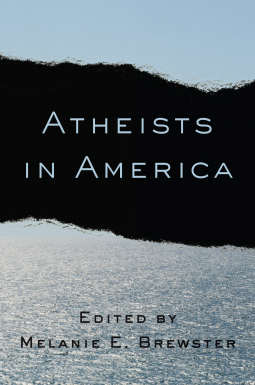
This collection features more than two dozen narratives by atheists hailing from different backgrounds across the United States. Ranging in age, race, sexual orientation, and firmness in their irreligiosity, these individuals address religious deconversion, community building, parenting, and romantic relationships, providing a nuanced look at living without God in a predominantly Christian nation.
These narratives illuminate the complexities and consequences for nonbelievers in the United States. Stepping away from religious belief can have serious social and existential ramifications, forcing atheists to discover new ways to live meaningfully without the guidance of a religious community. Yet shedding the constraints of a formal belief system can also be a freeing experience. Ultimately, this volume shows that claiming an atheist identity is anything but an act isolated from the other dimensions of the self. Upending common social, political, and psychological assumptions about atheists, this collection helps carve out a more accepted space for this minority to live within American society.
This collection features more than two dozen narratives by atheists hailing from different backgrounds across the United States. Ranging in age, race, sexual orientation, and firmness in their...
This collection features more than two dozen narratives by atheists hailing from different backgrounds across the United States. Ranging in age, race, sexual orientation, and firmness in their irreligiosity, these individuals address religious deconversion, community building, parenting, and romantic relationships, providing a nuanced look at living without God in a predominantly Christian nation.
These narratives illuminate the complexities and consequences for nonbelievers in the United States. Stepping away from religious belief can have serious social and existential ramifications, forcing atheists to discover new ways to live meaningfully without the guidance of a religious community. Yet shedding the constraints of a formal belief system can also be a freeing experience. Ultimately, this volume shows that claiming an atheist identity is anything but an act isolated from the other dimensions of the self. Upending common social, political, and psychological assumptions about atheists, this collection helps carve out a more accepted space for this minority to live within American society.
Advance Praise
"A unique contribution to the literature on atheism touching on
topics rarely discussed or researched. I don't know of any other book on the
market that seeks to bring together individual narratives of de-conversion and
the challenges faced afterwards"
—Amarnath Amarasingam, York University
"According to a 2012 Pew Forum survey, the fastest growing
religious cohort in America are the “Nones”—those with no religious affiliation—at
20 percent, or 48 million people. Of these, 14.4 million are atheists. Who are
these people and how did they lose their religion? Atheists in America—a vital
new contribution to the growing literature on nonbelievers—reveals in their own
words how a wide diversity of people learned to live lives of integrity and
meaning without God. The book also grants readers ready to hear it the message
that not only is it okay not to believe, being an atheist can be both
enlightening and liberating."
—Michael Shermer, Editor of Skeptic
"A unique contribution to the literature on atheism touching on topics rarely discussed or researched. I don't know of any other book on the market that seeks to bring together individual narratives...
"A unique contribution to the literature on atheism touching on
topics rarely discussed or researched. I don't know of any other book on the
market that seeks to bring together individual narratives of de-conversion and
the challenges faced afterwards"
—Amarnath Amarasingam, York University
"According to a 2012 Pew Forum survey, the fastest growing
religious cohort in America are the “Nones”—those with no religious affiliation—at
20 percent, or 48 million people. Of these, 14.4 million are atheists. Who are
these people and how did they lose their religion? Atheists in America—a vital
new contribution to the growing literature on nonbelievers—reveals in their own
words how a wide diversity of people learned to live lives of integrity and
meaning without God. The book also grants readers ready to hear it the message
that not only is it okay not to believe, being an atheist can be both
enlightening and liberating."
—Michael Shermer, Editor of Skeptic
Marketing Plan
Melanie E. Brewster is assistant professor of psychology and
education at Columbia University. Her research focuses on marginalized groups
and examines how experiences of discrimination and stigma may shape the mental
health of minority group members, such as LGBTQ individuals, atheists, and
people of color.
Melanie E. Brewster is assistant professor of psychology and education at Columbia University. Her research focuses on marginalized groups and examines how experiences of discrimination and stigma...
Melanie E. Brewster is assistant professor of psychology and
education at Columbia University. Her research focuses on marginalized groups
and examines how experiences of discrimination and stigma may shape the mental
health of minority group members, such as LGBTQ individuals, atheists, and
people of color.
This site uses cookies. By continuing to use the site, you are agreeing to our cookie policy. You'll also find information about how we protect your personal data in our privacy policy.