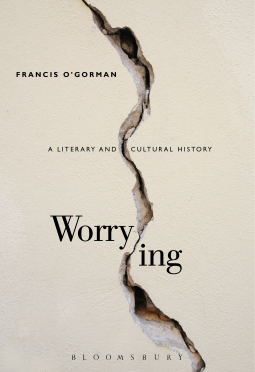
Worrying
A Literary and Cultural History
This title was previously available on NetGalley and is now archived.
Buy on Amazon
Buy on BN.com
Buy on Bookshop.org
*This page contains affiliate links, so we may earn a small commission when you make a purchase through links on our site at no additional cost to you.
Send NetGalley books directly to your Kindle or Kindle app
1
To read on a Kindle or Kindle app, please add kindle@netgalley.com as an approved email address to receive files in your Amazon account. Click here for step-by-step instructions.
2
Also find your Kindle email address within your Amazon account, and enter it here.
Pub Date May 21 2015 | Archive Date Dec 14 2015
Description
Worrying: A Literary and Cultural History suggests a unique approach to the inner life and its ordinary pains. Francis O'Gorman charts the emergence of our contemporary idea of worry in the Victorian era and its establishment, after the First World War, as a feature of modernity. For some writers between the Wars, worry was the “disease of the age.”
Worrying examines the everyday kind of worry-the fearful, non-pathological, and usually hidden questioning about uncertain futures. It shows worry to be a natural companion in a world where we try to live by reason and believe we have the right to choose, finding in the worrier a peculiarly contemporary sufferer whose mental life is not only exceptionally familiar, but also deeply strange.
Offering an intimately personal account of an all-too-common human experience, and of a word that slips in and out of ordinary conversation so often that it has become invisible in its familiarity, Worrying explores how the modern world has shaped our everyday anxieties.
Worrying examines the everyday kind of worry-the fearful, non-pathological, and usually hidden questioning about uncertain futures. It shows worry to be a natural companion in a world where we try to live by reason and believe we have the right to choose, finding in the worrier a peculiarly contemporary sufferer whose mental life is not only exceptionally familiar, but also deeply strange.
Offering an intimately personal account of an all-too-common human experience, and of a word that slips in and out of ordinary conversation so often that it has become invisible in its familiarity, Worrying explores how the modern world has shaped our everyday anxieties.
Advance Praise
“Keeping us up with his sleepless stresses-did I forget to lock the door downstairs?-Francis O'Gorman comes to think that such anxieties, rather than being just a niggling malfunction, might also represent a constructive aspect of the human condition. What's the use of worrying?” – Rachel Bowlby, Professor of Comparative Literature, Princeton University, USA, and author of A Child of One's Own: Parental Stories
Marketing Plan
Table of Contents
List of illustrations
Preface
Chapter 1: What is Worry?
Chapter 2: Worry and Belief
Chapter 3: Worry and Reason
Chapter 4: Reasoning about Worry
Coda
Acknowledgements
Bibliography
Index
List of illustrations
Preface
Chapter 1: What is Worry?
Chapter 2: Worry and Belief
Chapter 3: Worry and Reason
Chapter 4: Reasoning about Worry
Coda
Acknowledgements
Bibliography
Index
Table of Contents
List of illustrations
Preface
Chapter 1: What is Worry?
Chapter 2: Worry and Belief
Chapter 3: Worry and Reason
Chapter 4: Reasoning about Worry
Coda
Acknowledgements
Bibliography
Index
List of illustrations
Preface
Chapter 1: What is Worry?
Chapter 2: Worry and Belief
Chapter 3: Worry and Reason
Chapter 4: Reasoning about Worry
Coda
Acknowledgements
Bibliography
Index
Available Editions
| EDITION | Hardcover |
| ISBN | 9781441151292 |
| PRICE | $20.00 (USD) |
Available to Buy
Buy on Amazon Buy on BN.com Buy on Bookshop.org*This page contains affiliate links, so we may earn a small commission when you make a purchase through links on our site at no additional cost to you.
Average rating from 8 members
Readers who liked this book also liked: