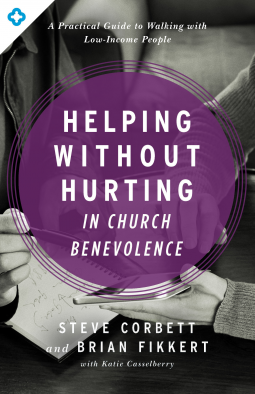
Helping Without Hurting in Church Benevolence
A Practical Guide to Walking with Low-Income People
This title was previously available on NetGalley and is now archived.
Buy on Amazon
Buy on BN.com
Buy on Bookshop.org
*This page contains affiliate links, so we may earn a small commission when you make a purchase through links on our site at no additional cost to you.
Send NetGalley books directly to your Kindle or Kindle app
1
To read on a Kindle or Kindle app, please add kindle@netgalley.com as an approved email address to receive files in your Amazon account. Click here for step-by-step instructions.
2
Also find your Kindle email address within your Amazon account, and enter it here.
Pub Date Oct 6 2015 | Archive Date Oct 6 2015
Description
<div><P><B>When a low-income person asks your church for help, what do you do next?</B></P><P>God is extraordinarily generous, and our churches should be, too. However, because poverty is complex, helping low-income people often requires going beyond meeting their material needs to holistically addressing the roots of their poverty. </p><P>But on a practical level, how do you move forward in walking with someone who approaches your church for financial help?</p><P>From the authors of <I>When Helping Hurts</I> comes <I>Helping Without Hurting in Church Benevolence</I>, a guidebook for church staff, deacons, or volunteers who work with low-income people.</P><P>Short and to the point, this tool provides foundational principles for poverty alleviation and then addresses practical matters, like:</P><UL><LI>How to structure and focus your benevolence work</LI><LI>How to respond to immediate needs while pursuing long-term solutions</LI><LI>How to mobilize your church to walk with low-income people</LI></UL><P>With practical stories, forms, and tools for churches to use, <I>Helping Without Hurting in Church Benevolence </I>is an all-in-one guide for church leaders and laypeople who want to help the poor in ways that lead to lasting change.</p><P> </P></div>
Available Editions
| EDITION | Other Format |
| ISBN | 9780802413390 |
| PRICE | $14.99 (USD) |
Available to Buy
Buy on Amazon Buy on BN.com Buy on Bookshop.org*This page contains affiliate links, so we may earn a small commission when you make a purchase through links on our site at no additional cost to you.
Average rating from 9 members
Readers who liked this book also liked: