Please wait... This may take a moment.
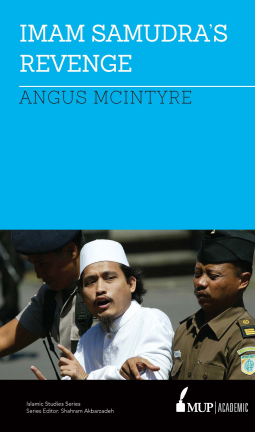
Imam Samudra's Revenge
This title was previously available on NetGalley and is now archived.
Pub Date
Feb 01 2016
| Archive Date
Dec 18 2016
Description
Why did Imam Samudra explode bombs in Balinese nightclubs? It is not possible to answer this question regarding the Bantenese Abdul Aziz alias Imam Samudra, "field commander" of the Bali bombing of 12 October 2002, without paying due attention to the social and political context provided by his experiences as a youthful member of Darul Islam both in Indonesia and Pakistan, where he studied at the Akademi Militer Mujahidin Afghanistan, and by the outbreak of religious violence in Indonesia from 1999. Yet these same factors also influenced his colleagues within Jema'ah Islamiyah (JI), and most of them strongly disapproved of what he did in Bali. The failure of these contextual factors to fully explain his behaviour encouraged this writer to introduce the personality of Imam Samudra as relevant to the question posed above, not in place of the abovementioned factors, but in interaction with them.
---
Angus McIntyre is an Honorary Associate at La Trobe University and a Visiting Fellow in the Department of Political and Social Change at the Australian National University. He is the author of The Indonesian Presidency: The Shift from Personal toward Constitutional Rule (2005) and has edited two other volumes: Aging and Political Leadership (1988) and Indonesian Political Biography: In Search of Cross-Cultural Understanding (1993). In the years 2009-2012, he worked with colleagues on an Australian Research Council Discovery Project concerning the origins and development of Islamic terrorist behaviour in Indonesia. His contribution to this joint endeavour eventually took shape as this work.
Why did Imam Samudra explode bombs in Balinese nightclubs? It is not possible to answer this question regarding the Bantenese Abdul Aziz alias Imam Samudra, "field commander" of the Bali bombing of...
Description
Why did Imam Samudra explode bombs in Balinese nightclubs? It is not possible to answer this question regarding the Bantenese Abdul Aziz alias Imam Samudra, "field commander" of the Bali bombing of 12 October 2002, without paying due attention to the social and political context provided by his experiences as a youthful member of Darul Islam both in Indonesia and Pakistan, where he studied at the Akademi Militer Mujahidin Afghanistan, and by the outbreak of religious violence in Indonesia from 1999. Yet these same factors also influenced his colleagues within Jema'ah Islamiyah (JI), and most of them strongly disapproved of what he did in Bali. The failure of these contextual factors to fully explain his behaviour encouraged this writer to introduce the personality of Imam Samudra as relevant to the question posed above, not in place of the abovementioned factors, but in interaction with them.
---
Angus McIntyre is an Honorary Associate at La Trobe University and a Visiting Fellow in the Department of Political and Social Change at the Australian National University. He is the author of The Indonesian Presidency: The Shift from Personal toward Constitutional Rule (2005) and has edited two other volumes: Aging and Political Leadership (1988) and Indonesian Political Biography: In Search of Cross-Cultural Understanding (1993). In the years 2009-2012, he worked with colleagues on an Australian Research Council Discovery Project concerning the origins and development of Islamic terrorist behaviour in Indonesia. His contribution to this joint endeavour eventually took shape as this work.
Available Editions
| EDITION |
Paperback |
| ISBN |
9780522869453 |
| PRICE |
A$59.99 (AUD)
|
Additional Information
Available Editions
| EDITION |
Paperback |
| ISBN |
9780522869453 |
| PRICE |
A$59.99 (AUD)
|
Average rating from 2 members