*This page contains affiliate links, so we may earn a small commission when you make a purchase through links on our site at no additional cost to you.
Send NetGalley books directly to your Kindle or Kindle app
To read on a Kindle or Kindle app, please add kindle@netgalley.com as an approved email address to receive files in your Amazon account. Click here for step-by-step instructions.
2
Also find your Kindle email address within your Amazon account, and enter it here.
The debate over cyber technology has resulted in new considerations for national security operations. States find themselves in an increasingly interconnected world with a diverse threat spectrum and little understanding of how decisions are made within this amorphous domain.
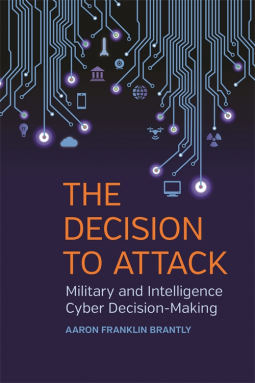
With The Decision to Attack, Aaron Franklin Brantly investigates how states decide to employ cyber in military and intelligence operations against other states and how rational those decisions are. In his examination, Brantly contextualizes broader cyber decision-making processes into a systematic expected utility–rational choice approach to provide a mathematical understanding of the use of cyber weapons at the state level.
Discussed: The Key Concepts of Cyber The Motivation and Utility for Covert Action Digital Power Anonymity and Attribution in Cyberspace Cyber and Conventional Operations: The Dynamics of Conflict Defining the Role of Intelligence in Cyberspace How Actors Decide to Use Cyber—a Rational Choice Approach Cognitive Processes and Decision-Making in Cyberspace Finding Meaning in the Expected Utility of International Cyber Conflict
The debate over cyber technology has resulted in new considerations for national security operations. States find themselves in an increasingly interconnected world with a diverse threat spectrum and...
The debate over cyber technology has resulted in new considerations for national security operations. States find themselves in an increasingly interconnected world with a diverse threat spectrum and little understanding of how decisions are made within this amorphous domain.
With The Decision to Attack, Aaron Franklin Brantly investigates how states decide to employ cyber in military and intelligence operations against other states and how rational those decisions are. In his examination, Brantly contextualizes broader cyber decision-making processes into a systematic expected utility–rational choice approach to provide a mathematical understanding of the use of cyber weapons at the state level.
Discussed: The Key Concepts of Cyber The Motivation and Utility for Covert Action Digital Power Anonymity and Attribution in Cyberspace Cyber and Conventional Operations: The Dynamics of Conflict Defining the Role of Intelligence in Cyberspace How Actors Decide to Use Cyber—a Rational Choice Approach Cognitive Processes and Decision-Making in Cyberspace Finding Meaning in the Expected Utility of International Cyber Conflict
A Note From the Publisher
Aaron Franklin Brantly is assistant professor of international relations and cyber in the Department of Social Sciences at the U.S. Military Academy, cyber policy fellow at the Army Cyber Institute, and cyber fellow at the Combating Terrorism Center.
Aaron Franklin Brantly is assistant professor of international relations and cyber in the Department of Social Sciences at the U.S. Military Academy, cyber policy fellow at the Army Cyber Institute...
Aaron Franklin Brantly is assistant professor of international relations and cyber in the Department of Social Sciences at the U.S. Military Academy, cyber policy fellow at the Army Cyber Institute, and cyber fellow at the Combating Terrorism Center.
*This page contains affiliate links, so we may earn a small commission when you make a purchase through links on our site at no additional cost to you.
*This page contains affiliate links, so we may earn a small commission when you make a purchase through links on our site at no additional cost to you.
Average rating from 2 members
This site uses cookies. By continuing to use the site, you are agreeing to our cookie policy. You'll also find information about how we protect your personal data in our privacy policy.