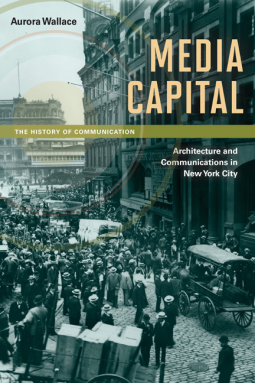
Media Capital
Architecture and Communications in New York City
This title was previously available on NetGalley and is now archived.
Buy on Amazon
Buy on BN.com
Buy on Bookshop.org
*This page contains affiliate links, so we may earn a small commission when you make a purchase through links on our site at no additional cost to you.
Send NetGalley books directly to your Kindle or Kindle app
1
To read on a Kindle or Kindle app, please add kindle@netgalley.com as an approved email address to receive files in your Amazon account. Click here for step-by-step instructions.
2
Also find your Kindle email address within your Amazon account, and enter it here.
Pub Date Nov 18 2012 | Archive Date Sep 1 2012
Description
In a
declaration of the ascendance of the American media industry,
nineteenth-century press barons in New York City helped to invent the
skyscraper, a quintessentially American icon of progress and aspiration.
Early newspaper buildings in the country's media capital were designed
to communicate both commercial and civic ideals, provide public space
and prescribe discourse, and speak to class and mass in equal measure.
This book illustrates how the media have continued to use the city as a
space in which to inscribe and assert their power.
With
a unique focus on corporate headquarters as embodiments of the values
of the press and as signposts for understanding media culture, Media Capital
demonstrates the mutually supporting relationship between the media and
urban space. Aurora Wallace considers how architecture contributed to
the power of the press, the nature of the reading public, the
commercialization of media, and corporate branding in the media
industry. Tracing the rise and concentration of the media industry in
New York City from the mid-nineteenth century to the present, Wallace
analyzes physical and discursive space, as well as labor, technology,
and aesthetics, to understand the entwined development of the mass media
and late capitalism.
Aurora Wallace is a professor in the department of Media, Culture, and Communication at New York University and the author of Newspapers and the Making of Modern America.
Advance Praise
"Aurora Wallace
tells a very compelling story about the 'media architecture' that
materialized in New York around the newspaper industry from the early
nineteenth century to now. Lively and filled with scholarly detail, Media Capital is an essential book for our understanding of modern culture."--Ben Highmore, author of Cityscapes: Cultural Readings in the Material and Symbolic City
Available Editions
| ISBN | 9780252078828 |
| PRICE | |
Links
Available to Buy
Buy on Amazon Buy on BN.com Buy on Bookshop.org*This page contains affiliate links, so we may earn a small commission when you make a purchase through links on our site at no additional cost to you.