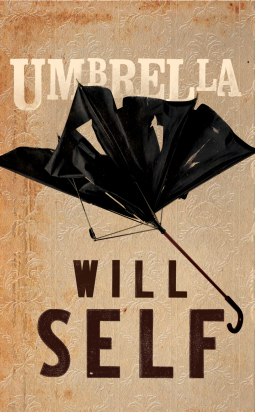
Umbrella
This title was previously available on NetGalley and is now archived.
Buy on Amazon
Buy on BN.com
Buy on Bookshop.org
*This page contains affiliate links, so we may earn a small commission when you make a purchase through links on our site at no additional cost to you.
Send NetGalley books directly to your Kindle or Kindle app
1
To read on a Kindle or Kindle app, please add kindle@netgalley.com as an approved email address to receive files in your Amazon account. Click here for step-by-step instructions.
2
Also find your Kindle email address within your Amazon account, and enter it here.
Pub Date Jan 8 2013 | Archive Date Jan 8 2013
Grove/Atlantic, Inc. | Grove Press
Description
"A brother is as easily forgotten as an umbrella."—James Joyce, Ulysses
Radical and uncompromising, Umbrella is a tour de force from one of England’s most acclaimed contemporary writers, and Self’s most ambitious novel to date. Moving between Edwardian London and a suburban mental hospital in 1971, Umbrella exposes the twentieth century’s technological searchlight as refracted through the dark glass of a long term mental institution. While making his first tours of the hospital at which he has just begun working, maverick psychiatrist Zachary Busner notices that many of the patients exhibit a strange physical tic: rapid, precise movements that they repeat over and over. One of these patients is Audrey Dearth, an elderly woman born in the slums of West London in 1890. Audrey’s memories of a bygone Edwardian London, her lovers, involvement with early feminist and socialist movements, and, in particular, her time working in an umbrella shop, alternate with Busner’s attempts to treat her condition and bring light to her clouded world. Busner’s investigations into Audrey’s illness lead to discoveries about her family that are shocking and tragic.
Radical and uncompromising, Umbrella is a tour de force from one of England’s most acclaimed contemporary writers, and Self’s most ambitious novel to date. Moving between Edwardian London and a suburban mental hospital in 1971, Umbrella exposes the twentieth century’s technological searchlight as refracted through the dark glass of a long term mental institution. While making his first tours of the hospital at which he has just begun working, maverick psychiatrist Zachary Busner notices that many of the patients exhibit a strange physical tic: rapid, precise movements that they repeat over and over. One of these patients is Audrey Dearth, an elderly woman born in the slums of West London in 1890. Audrey’s memories of a bygone Edwardian London, her lovers, involvement with early feminist and socialist movements, and, in particular, her time working in an umbrella shop, alternate with Busner’s attempts to treat her condition and bring light to her clouded world. Busner’s investigations into Audrey’s illness lead to discoveries about her family that are shocking and tragic.
Advance Praise
“Will Self belongs in the company of Nabokov, Pynchon, William Gaddis, and Don DeLillo.” —The New York Times Book Review
“In these culturally straitened times few writers would have the artistic effrontery to offer us a novel as daring, exuberant and richly dense as Umbrella. Will Self has carried the modernist challenge into the twenty-first century, and worked a wonder.” —John Banville
“Umbrella is his best book yet. . . . It makes new for today the lessons taught by the morals of Catch-22, Slaughterhouse-Five, The Tin Drum, also García Márquez’s Chronicle of a Death Foretold.” —Alasdair Gray
“In these culturally straitened times few writers would have the artistic effrontery to offer us a novel as daring, exuberant and richly dense as Umbrella. Will Self has carried the modernist challenge into the twenty-first century, and worked a wonder.” —John Banville
“Umbrella is his best book yet. . . . It makes new for today the lessons taught by the morals of Catch-22, Slaughterhouse-Five, The Tin Drum, also García Márquez’s Chronicle of a Death Foretold.” —Alasdair Gray
Available Editions
| EDITION | Other Format |
| ISBN | 9780802120724 |
| PRICE | $25.00 (USD) |
| PAGES | 448 |
Links
Available to Buy
Buy on Amazon Buy on BN.com Buy on Bookshop.org*This page contains affiliate links, so we may earn a small commission when you make a purchase through links on our site at no additional cost to you.