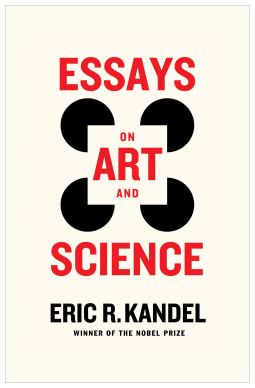
Essays on Art and Science
This title was previously available on NetGalley and is now archived.
Buy on Amazon
Buy on BN.com
Buy on Bookshop.org
*This page contains affiliate links, so we may earn a small commission when you make a purchase through links on our site at no additional cost to you.
Send NetGalley books directly to your Kindle or Kindle app
1
To read on a Kindle or Kindle app, please add kindle@netgalley.com as an approved email address to receive files in your Amazon account. Click here for step-by-step instructions.
2
Also find your Kindle email address within your Amazon account, and enter it here.
Pub Date Mar 26 2024 | Archive Date Jun 26 2024
Talking about this book? Use #EssaysonArtandScience #NetGalley. More hashtag tips!
Description
When we view a work of art, we often experience an emotional response, but the causes of our reactions are complex. Our knowledge of why we respond to art as we do is rooted in science—in psychology and biology. Eric R. Kandel traces the origins of this understanding to early twentieth-century Vienna, which gave rise to the concept of the “beholder’s share,” the realization that art is incomplete without the perceptual and emotional involvement of the viewer—that is, without our responses to it.
But what causes our response? Our brain is a creativity machine that brings to bear on any image—including a painting—certain innate, universal processes related to sensory perception as well as higher-order processes related to our personal experiences, memories, and emotions. Understanding how these unconscious processes in the brain interact to create the beholder’s share is one of the great challenges currently confronting brain science.
The essays on art and science in this book vary widely in subject matter, including the angst-ridden portraits of Soutine, conflicting views of women’s sexuality, Cubism’s challenge to our innate visual processes, and why we react differently to abstract versus figurative art. But each essay focuses on the interaction of art and science. Woven throughout are the many notable scientists, art historians, artists, and others, both Jewish and non-Jewish, who contributed to our understanding of how we experience art.
But what causes our response? Our brain is a creativity machine that brings to bear on any image—including a painting—certain innate, universal processes related to sensory perception as well as higher-order processes related to our personal experiences, memories, and emotions. Understanding how these unconscious processes in the brain interact to create the beholder’s share is one of the great challenges currently confronting brain science.
The essays on art and science in this book vary widely in subject matter, including the angst-ridden portraits of Soutine, conflicting views of women’s sexuality, Cubism’s challenge to our innate visual processes, and why we react differently to abstract versus figurative art. But each essay focuses on the interaction of art and science. Woven throughout are the many notable scientists, art historians, artists, and others, both Jewish and non-Jewish, who contributed to our understanding of how we experience art.
Available Editions
| EDITION | Other Format |
| ISBN | 9780231212564 |
| PRICE | $26.95 (USD) |
| PAGES | 240 |
Available on NetGalley
NetGalley Shelf App
(EPUB)
Download (EPUB)
Available to Buy
Buy on Amazon Buy on BN.com Buy on Bookshop.org*This page contains affiliate links, so we may earn a small commission when you make a purchase through links on our site at no additional cost to you.
Average rating from 8 members
Readers who liked this book also liked:
The Collected Prose, Volume 3: 1935–1950
T. S. Eliot
Essays & Collections, Nonfiction (Adult), Reference
T. S. Eliot
Essays & Collections, Nonfiction (Adult), Reference
The Collected Prose, Volume 4: 1951–1966
T. S. Eliot
Essays & Collections, Nonfiction (Adult), Reference
T. S. Eliot
Essays & Collections, Nonfiction (Adult), Reference
The Collected Prose, Volume 1: 1905–1928
T. S. Eliot
Essays & Collections, Nonfiction (Adult), Reference
T. S. Eliot
Essays & Collections, Nonfiction (Adult), Reference
The Collected Prose, Volume 2: 1929–1934
T. S. Eliot
Essays & Collections, Nonfiction (Adult), Reference
T. S. Eliot
Essays & Collections, Nonfiction (Adult), Reference

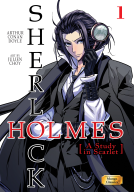
Manga Classics: Sherlock Holmes Vol. 1 A Study in Scarlet (Paperback)
Sir Arthur Conan Doyle
Comics, Graphic Novels, Manga, Mystery & Thrillers, Teens & YA
Sir Arthur Conan Doyle
Comics, Graphic Novels, Manga, Mystery & Thrillers, Teens & YA
What You Learn Learning Music
Mike Shaw; Kevin Bales
Arts & Photography, Business, Leadership, Finance, Self-Help
Mike Shaw; Kevin Bales
Arts & Photography, Business, Leadership, Finance, Self-Help