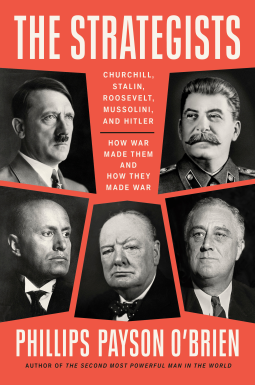
The Strategists
Churchill, Stalin, Roosevelt, Mussolini, and Hitler--How War Made Them and How They Made War
This title was previously available on NetGalley and is now archived.
Send NetGalley books directly to your Kindle or Kindle app
1
To read on a Kindle or Kindle app, please add kindle@netgalley.com as an approved email address to receive files in your Amazon account. Click here for step-by-step instructions.
2
Also find your Kindle email address within your Amazon account, and enter it here.
Pub Date Aug 27 2024 | Archive Date Dec 20 2024
PENGUIN GROUP Dutton | Dutton
Talking about this book? Use #TheStrategists #NetGalley. More hashtag tips!
Description
In The Strategists, Professor Phillips Payson O'Brien shows how the views these five leaders forged in WW1 are crucial to understanding how they fought WW2. For example, Churchill's experiences of facing the German Army in France in 1916 made him unwilling to send masses of British soldiers back there in the 1940s, while Hitler's mistakes on the Eastern Front were influenced by his reluctance to accept that conditions had changed since his own time fighting. The implications of the power of leaders remain with us to this day: to truly understand what is happening in Ukraine, for example, requires us to know what has influenced the leaders involved.
This is a history in which leaders—and their choices—matter. For better or worse.
Available Editions
| EDITION | Other Format |
| ISBN | 9781524746483 |
| PRICE | $35.00 (USD) |
| PAGES | 544 |
Available on NetGalley
Available to Buy
Buy on Amazon Buy on BN.com Buy on Bookshop.orgAverage rating from 3 members
Readers who liked this book also liked: