Please wait... This may take a moment.
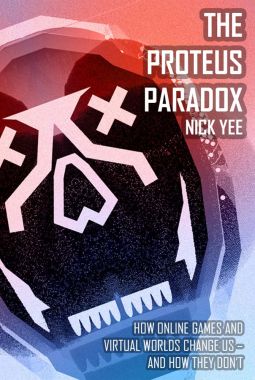
The Proteus Paradox
How Online Games and Virtual Worlds Change Us-And How They Don't
This title was previously available on NetGalley and is now archived.
Pub Date
Jan 07 2014
| Archive Date
Jan 02 2014
Description
A surprising assessment of the ways that virtual worlds are entangled with human psychology
Proteus, the mythical sea god who could alter his appearance at will, embodies one of the promises of online games: the ability to reinvent oneself. Yet inhabitants of virtual worlds rarely achieve this liberty, game researcher Nick Yee contends. Though online games evoke freedom and escapism, Yee shows that virtual spaces perpetuate social norms and stereotypes from the offline world, transform play into labor, and inspire racial scapegoating and superstitious thinking. And the change that does occur is often out of our control and effected by unparalleled—but rarely recognized—tools for controlling what players think and how they behave.
Using player surveys, psychological experiments, and in-game data, Yee breaks down misconceptions about who plays fantasy games and the extent to which the online and offline worlds operate separately. With a wealth of entertaining and provocative examples, he explains what virtual worlds are about and why they matter, not only for entertainment but also for business and education. He uses gaming as a lens through which to examine the pressing question of what it means to be human in a digital world. His thought-provoking book is an invitation to think more deeply about virtual worlds and what they reveal to us about ourselves.
A surprising assessment of the ways that virtual worlds are entangled with human psychology
Proteus, the mythical sea god who could alter his appearance at will, embodies one of the promises of online...
Description
A surprising assessment of the ways that virtual worlds are entangled with human psychology
Proteus, the mythical sea god who could alter his appearance at will, embodies one of the promises of online games: the ability to reinvent oneself. Yet inhabitants of virtual worlds rarely achieve this liberty, game researcher Nick Yee contends. Though online games evoke freedom and escapism, Yee shows that virtual spaces perpetuate social norms and stereotypes from the offline world, transform play into labor, and inspire racial scapegoating and superstitious thinking. And the change that does occur is often out of our control and effected by unparalleled—but rarely recognized—tools for controlling what players think and how they behave.
Using player surveys, psychological experiments, and in-game data, Yee breaks down misconceptions about who plays fantasy games and the extent to which the online and offline worlds operate separately. With a wealth of entertaining and provocative examples, he explains what virtual worlds are about and why they matter, not only for entertainment but also for business and education. He uses gaming as a lens through which to examine the pressing question of what it means to be human in a digital world. His thought-provoking book is an invitation to think more deeply about virtual worlds and what they reveal to us about ourselves.
A Note From the Publisher
Nick Yee has explored online games and virtual worlds with a variety of research methods and tools for over a decade. He is widely known for the Daedalus Project, an extensive survey study of online gamers, and for his original research at Stanford University on the Proteus Effect, which describes how our avatars change the way we behave online and off. Formerly a researcher at the Palo Alto Research Center, he is currently a senior research scientist at Ubisoft, where he studies gamer behavior. He lives in Mountain View, California.
Nick Yee has explored online games and virtual worlds with a variety of research methods and tools for over a decade. He is widely known for the Daedalus Project, an extensive survey study of online...
A Note From the Publisher
Nick Yee has explored online games and virtual worlds with a variety of research methods and tools for over a decade. He is widely known for the Daedalus Project, an extensive survey study of online gamers, and for his original research at Stanford University on the Proteus Effect, which describes how our avatars change the way we behave online and off. Formerly a researcher at the Palo Alto Research Center, he is currently a senior research scientist at Ubisoft, where he studies gamer behavior. He lives in Mountain View, California.
Advance Praise
"Nick Yee is responsible for the most thoughtful work on the psychology of avatars and gaming in the past 15 years. He also has a rare gift for writing compelling prose."—Jeremy Bailenson, author of Infinite Reality: Avatars, Eternal Life, New Worlds, and the Dawn of the Virtual Revolution
"With clarity, insight, and above all hard experimental data, Yee has written what may be the last word on the tantalizing promise of virtual worlds. A must-read for social theorists and game designers alike."—Julian Dibbell, author of Play Money: Or How I Quit My Day Job and Made Millions Trading Virtual Loot
"Nick Yee is responsible for the most thoughtful work on the psychology of avatars and gaming in the past 15 years. He also has a rare gift for writing compelling prose."—Jeremy Bailenson, author of ...
Advance Praise
"Nick Yee is responsible for the most thoughtful work on the psychology of avatars and gaming in the past 15 years. He also has a rare gift for writing compelling prose."—Jeremy Bailenson, author of Infinite Reality: Avatars, Eternal Life, New Worlds, and the Dawn of the Virtual Revolution
"With clarity, insight, and above all hard experimental data, Yee has written what may be the last word on the tantalizing promise of virtual worlds. A must-read for social theorists and game designers alike."—Julian Dibbell, author of Play Money: Or How I Quit My Day Job and Made Millions Trading Virtual Loot
Available Editions
| EDITION |
Hardcover |
| ISBN |
9780300190991 |
| PRICE |
$28.00 (USD)
|
Additional Information
Available Editions
| EDITION |
Hardcover |
| ISBN |
9780300190991 |
| PRICE |
$28.00 (USD)
|
Average rating from 2 members