Please wait... This may take a moment.
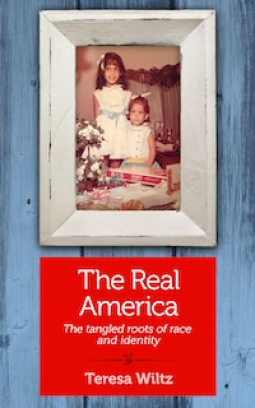
The Real America
The Tangled Roots of Race and Identity
This title was previously available on NetGalley and is now archived.
Pub Date
Mar 17 2014
| Archive Date
May 26 2014
Description
Growing up, Teresa Wiltz always knew that she was black. Her parents, the mixed-race descendants of both the enslaved and the enslavers—and a stray American Indian or two—made it abundantly clear: we’re black. Be proud. And she was proud. Problem was, everyone else was always questioning her about her racial bona fides. She grew up bumping against the either/or boxes, being mistaken for everything from Puerto Rican to Moroccan to Brazilian to Ethiopian to South Asian and getting terribly confused by it all. Looking like a generic ethnic means getting stopped by cops in Havana, Cuba, who see her hanging with other Americans and are convinced she is a jinetera, a local prostitute, up to no good. It means being hassled by the customs official in Islamabad, Pakistan, who assumes she’s Pakistani American, or having a West African cabbie insist, “Your mother is white and your father is black!” (Um, nope.) She used to hate it when people asked her, “What are you?” and “What are you mixed with?” or even, “Do you speak English?”—but now, she’s come to appreciate her family’s convoluted racial heritage. Because her family story, with its generations of mixing and miscegenating, is very much an American story. A story of the Real America.
Growing up, Teresa Wiltz always knew that she was black. Her parents, the mixed-race descendants of both the enslaved and the enslavers—and a stray American Indian or two—made it abundantly clear:...
Description
Growing up, Teresa Wiltz always knew that she was black. Her parents, the mixed-race descendants of both the enslaved and the enslavers—and a stray American Indian or two—made it abundantly clear: we’re black. Be proud. And she was proud. Problem was, everyone else was always questioning her about her racial bona fides. She grew up bumping against the either/or boxes, being mistaken for everything from Puerto Rican to Moroccan to Brazilian to Ethiopian to South Asian and getting terribly confused by it all. Looking like a generic ethnic means getting stopped by cops in Havana, Cuba, who see her hanging with other Americans and are convinced she is a jinetera, a local prostitute, up to no good. It means being hassled by the customs official in Islamabad, Pakistan, who assumes she’s Pakistani American, or having a West African cabbie insist, “Your mother is white and your father is black!” (Um, nope.) She used to hate it when people asked her, “What are you?” and “What are you mixed with?” or even, “Do you speak English?”—but now, she’s come to appreciate her family’s convoluted racial heritage. Because her family story, with its generations of mixing and miscegenating, is very much an American story. A story of the Real America.
Advance Praise
No Advance Praise Available
No Advance Praise Available
Marketing Plan
No Marketing Info Available
No Marketing Info Available
Available Editions
| EDITION |
Ebook |
| ISBN |
9781940838236 |
| PRICE |
$9.99 (USD)
|
Additional Information
Available Editions
| EDITION |
Ebook |
| ISBN |
9781940838236 |
| PRICE |
$9.99 (USD)
|
Average rating from 2 members
Readers who liked this book also liked:
Jigsaw
Jonathan Kellerman
General Fiction (Adult), Mystery & Thrillers