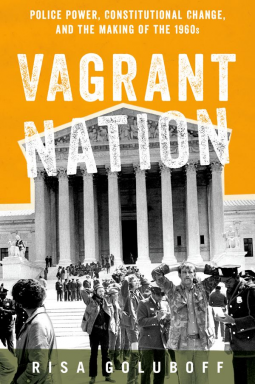
Vagrant Nation
Police Power, Constitutional Change, and the Making of the 1960s
This title was previously available on NetGalley and is now archived.
Buy on Amazon
Buy on BN.com
Buy on Bookshop.org
*This page contains affiliate links, so we may earn a small commission when you make a purchase through links on our site at no additional cost to you.
Send NetGalley books directly to your Kindle or Kindle app
1
To read on a Kindle or Kindle app, please add kindle@netgalley.com as an approved email address to receive files in your Amazon account. Click here for step-by-step instructions.
2
Also find your Kindle email address within your Amazon account, and enter it here.
Pub Date Feb 1 2016 | Archive Date Feb 8 2016
Description
In 1950s America, it was remarkably easy for police to arrest almost anyone for almost any reason. The criminal justice system-and especially the age-old law of vagrancy-played a key role not only in maintaining safety and order but also in enforcing conventional standards of morality and propriety. A person could be arrested for sporting a beard, making a speech, or working too little. Yet by the end of the 1960s, vagrancy laws were discredited and American society was fundamentally transformed. What happened?
In Vagrant Nation, Risa Goluboff provides a truly groundbreaking account of this transformation. By reading the history of the 1960s through the lens of vagrancy laws, Goluboff shows how constitutional challenges to long-standing police practices were at the center of the multiple movements that made "the 1960s." Vagrancy laws were not just about poor people. They were so broad and flexible-criminalizing everything from immorality to wandering about-that they made it possible for the police to arrest anyone out of place in any way: Beats and hippies; Communists and Vietnam War protestors; racial minorities, civil rights activists, and interracial couples; prostitutes, single women, and gay men, lesbians, and other sexual minorities. As hundreds of these "vagrants" and their lawyers claimed that vagrancy laws were unconstitutional, the laws became a flashpoint for debates about radically different visions of order and freedom.
In Goluboff's compelling portrayal, the legal campaign against vagrancy laws becomes a sweeping legal and social history of the 1960s. It touches on movements advocating everything from civil rights to peace to gay rights to welfare rights to cultural revolution. As Goluboff links the human stories of those arrested to the great controversies of the time, she makes coherent an era that often seems chaotic. She also powerfully demonstrates how ordinary people, with the help of lawyers and judges, can change the meaning of the Constitution.
By 1972, the Supreme Court announced that vagrancy laws that had been a law enforcement staple for four hundred years were no longer constitutional. That decision, as well as the social movements and legal arguments that prompted it, has had major consequences for current debates about police power and constitutional rights. Clashes over everything from stop and frisk to homelessness to public protests echo the same tension between order and freedom that vagrancy cases tried to resolve. Since the early 1970s, courts, policymakers, activists, and ordinary citizens have had to contend with the massive legal vacuum left by vagrancy law's downfall. Battles over what, if anything, should replace vagrancy laws, like battles over the legacy of the sixties transformations themselves, are far from over.
In Vagrant Nation, Risa Goluboff provides a truly groundbreaking account of this transformation. By reading the history of the 1960s through the lens of vagrancy laws, Goluboff shows how constitutional challenges to long-standing police practices were at the center of the multiple movements that made "the 1960s." Vagrancy laws were not just about poor people. They were so broad and flexible-criminalizing everything from immorality to wandering about-that they made it possible for the police to arrest anyone out of place in any way: Beats and hippies; Communists and Vietnam War protestors; racial minorities, civil rights activists, and interracial couples; prostitutes, single women, and gay men, lesbians, and other sexual minorities. As hundreds of these "vagrants" and their lawyers claimed that vagrancy laws were unconstitutional, the laws became a flashpoint for debates about radically different visions of order and freedom.
In Goluboff's compelling portrayal, the legal campaign against vagrancy laws becomes a sweeping legal and social history of the 1960s. It touches on movements advocating everything from civil rights to peace to gay rights to welfare rights to cultural revolution. As Goluboff links the human stories of those arrested to the great controversies of the time, she makes coherent an era that often seems chaotic. She also powerfully demonstrates how ordinary people, with the help of lawyers and judges, can change the meaning of the Constitution.
By 1972, the Supreme Court announced that vagrancy laws that had been a law enforcement staple for four hundred years were no longer constitutional. That decision, as well as the social movements and legal arguments that prompted it, has had major consequences for current debates about police power and constitutional rights. Clashes over everything from stop and frisk to homelessness to public protests echo the same tension between order and freedom that vagrancy cases tried to resolve. Since the early 1970s, courts, policymakers, activists, and ordinary citizens have had to contend with the massive legal vacuum left by vagrancy law's downfall. Battles over what, if anything, should replace vagrancy laws, like battles over the legacy of the sixties transformations themselves, are far from over.
Available Editions
| EDITION | Hardcover |
| ISBN | 9780199768448 |
| PRICE | $29.95 (USD) |
Available to Buy
Buy on Amazon Buy on BN.com Buy on Bookshop.org*This page contains affiliate links, so we may earn a small commission when you make a purchase through links on our site at no additional cost to you.