Please wait... This may take a moment.
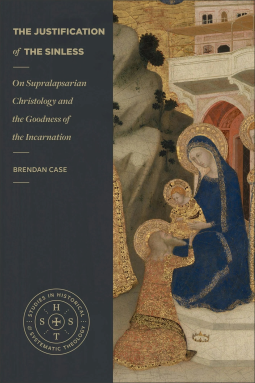
The Justification of the Sinless
On Supralapsarian Christology and the Goodness of the Incarnation
This title was previously available on NetGalley and is now archived.
Buy on BN.com
Buy on Bookshop.org
*This page contains affiliate links, so we may earn a small commission when you make a purchase through links on our site at no additional cost to you.
Pub Date
Sep 22 2026
| Archive Date
Sep 30 2026
Description
Did God decide to save before he decided to create? Though this question is often considered abstract, its answer informs both the purpose and the nature of the incarnation.
In The Justification of the Sinless, Brendan Case argues that God the Son would have become incarnate even if humanity had never sinned. The incarnation benefits creation in many ways besides redemption. Indeed, it is the ultimate reason for the creation of the cosmos itself.
Case develops his argument primarily by drawing on the work of Robert Grosseteste (ca. 1168-1253). Though neglected today, this brilliant medieval theologian drove the thirteenth-century debates over the incarnation. Building on Grosseteste, Case provides a compelling set of exegetical and theological arguments for the supralapsarian thesis. If the incarnation is logically prior to the fall, then God always planned to endow creation with a glory beyond estimation.
Did God decide to save before he decided to create? Though this question is often considered abstract, its answer informs both the purpose and the nature of the incarnation.
In The Justification of...
Description
Did God decide to save before he decided to create? Though this question is often considered abstract, its answer informs both the purpose and the nature of the incarnation.
In The Justification of the Sinless, Brendan Case argues that God the Son would have become incarnate even if humanity had never sinned. The incarnation benefits creation in many ways besides redemption. Indeed, it is the ultimate reason for the creation of the cosmos itself.
Case develops his argument primarily by drawing on the work of Robert Grosseteste (ca. 1168-1253). Though neglected today, this brilliant medieval theologian drove the thirteenth-century debates over the incarnation. Building on Grosseteste, Case provides a compelling set of exegetical and theological arguments for the supralapsarian thesis. If the incarnation is logically prior to the fall, then God always planned to endow creation with a glory beyond estimation.
Available Editions
| EDITION |
Other Format |
| ISBN |
9781540971319 |
| PRICE |
$29.99 (USD)
|
| PAGES |
192
|
Available on NetGalley
NetGalley Reader
(EPUB)
NetGalley Shelf App
(EPUB)
Send to Kindle (EPUB)
Send to Kobo (EPUB)
Download (EPUB)
Available to Buy
Buy on BN.com
Buy on Bookshop.org
*This page contains affiliate links, so we may earn a small commission when you make a purchase through links on our site at no additional cost to you.
Additional Information
Available Editions
| EDITION |
Other Format |
| ISBN |
9781540971319 |
| PRICE |
$29.99 (USD)
|
| PAGES |
192
|
Available on NetGalley
NetGalley Reader
(EPUB)
NetGalley Shelf App
(EPUB)
Send to Kindle (EPUB)
Send to Kobo (EPUB)
Download (EPUB)
Available to Buy
Buy on BN.com
Buy on Bookshop.org
*This page contains affiliate links, so we may earn a small commission when you make a purchase through links on our site at no additional cost to you.
Average rating from 1 member
Featured Reviews
 Roger L, Reviewer
4 stars
4 stars
4 stars
4 stars
4 stars
This book is a look into the Supralapsarianism belief system of Robert Grosseteste.
Case uses Grosseteste to present his argument for the Supralapsarianism. His view has more to do with Christ's incarnation than predestination. He sees the plan of the incarnation to be in God's will even before man's fall.
The main argument is, "Would Christ have come in the flesh if there was no fall?"
He believes the fact that man is a physical being and because of that man needs God to take on flesh as a way of communicating with man as both flesh and spirit.
I don't totally agree with his conclusions but thought the book was very interesting. It asked questions that I had never considered.
I would recommend it to those who like to go deeper into theological history of the subject
4 stars
4 stars
4 stars
4 stars
4 stars
Featured Reviews
Roger L, Reviewer
4 stars
4 stars
4 stars
4 stars
4 stars
This book is a look into the Supralapsarianism belief system of Robert Grosseteste.
Case uses Grosseteste to present his argument for the Supralapsarianism. His view has more to do with Christ's incarnation than predestination. He sees the plan of the incarnation to be in God's will even before man's fall.
The main argument is, "Would Christ have come in the flesh if there was no fall?"
He believes the fact that man is a physical being and because of that man needs God to take on flesh as a way of communicating with man as both flesh and spirit.
I don't totally agree with his conclusions but thought the book was very interesting. It asked questions that I had never considered.
I would recommend it to those who like to go deeper into theological history of the subject
4 stars
4 stars
4 stars
4 stars
4 stars