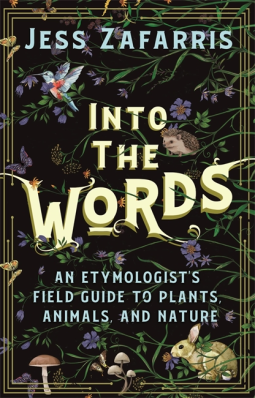
Into the Words
An Etymologist's Field Guide to Plants, Animals, and Nature
Sign In or Register Now to see if this title is available for request.
Buy on BN.com Buy on Bookshop.orgSend NetGalley books directly to your Kindle or Kindle app
1
To read on a Kindle or Kindle app, please add kindle@netgalley.com as an approved email address to receive files in your Amazon account. Click here for step-by-step instructions.
2
Also find your Kindle email address within your Amazon account, and enter it here.
Pub Date Nov 5 2026 | Archive Date Nov 11 2026
John Murray Specialist Non-Fiction | Chambers
Talking about this book? Use #IntotheWords #NetGalley. More hashtag tips!
Description
Find out how and why raccoons are named after their hands, squirrels after their tails and olives after their oil. Discover why "dog" is an etymological mystery and "bear" contains a hair-raising horror story.
Which animal holds the record for having the most common names?
When and why did we stop calling giraffes "camel-leopards"?
Do mushrooms have anything to do with mush or rooms?
Why are dandelions named after lions' teeth?
How should you really pluralize "octopus"?
Follow trails word history in the etymological excursion that is Into the Words. This book puts the fun in fungi, leaves language lovers contemplating forest for its trees, and reveals the wonderful stories hiding in our words for birds, beasts, insects, flowers, soil and everything in between.
Featuring both the origins of the names of different organisms, this book will captivate anyone who revels in both the glorious chaos and logic of the English language and the beauty and majesty of everything that lives on the planet Earth.
***
'Into the Words is as rich in delights as the natural world that its expert author guides the reader through. Jess Zafarris has assembled an anthology of etymological information that combines impressive breadth with stimulating depth; as a writer, she regularly marshals brief 'fun facts' to make profound points about our relationship with and understanding of nature, while never failing to keep the reader entertained and intrigued. Word-nerds new and old should set off on their next hike with Into the Words stowed in their backpack!'
Danny Bate, linguist and author of Why Q Needs U
Available Editions
| EDITION | Other Format |
| ISBN | 9781399821223 |
| PRICE | £16.99 (GBP) |
| PAGES | 288 |
Available on NetGalley
Available to Buy
Buy on BN.com Buy on Bookshop.orgAverage rating from 48 members
Featured Reviews
 Bonnie P B, Reviewer
Into the Wild is a joy to read for any word nerd who are green thumbers, animal lovers, and nature seekers. But the history nerd in me also enjoyed the origins of the hows and whys of naming plants and animals back in the day. The book is fascinating, interesting, and informative, but because it has an encyclopedia-esque style layout, I’d recommend leisurely reading it rather than in one or two sittings.
 Lilah M, Reviewer
Thank you very much to the author, publisher, and to NetGalley for providing this ARC in exchange for an honest review.
Into the Words is an etymological exploration of nature. It encompasses climates, flora, fauna, and everything in between, detailing the origins of the words we use to describe them.
This book is highly informative. In addition to providing etymologies for all manner of species and natural phenomena, it also contextualises them. Author Jess Zafarris doesn’t shy away from pointing out, quite directly, the colonialist and Eurocentrist influence exerted on natural science. Zafarris honours the knowledge of those whose names weren’t preserved in European studies.
Zafarris also writes with impressive wit, pre-empting the reader’s likely points of contention and humour alike. Even mythical creatures like the phoenix and dragon are given a presence on the page, and rumours/circulated myths are either confirmed or debunked quite clearly.
The illustrations in the book, masterfully drawn by Melissa Faris, are stunning to look at. They complement the pages beautifully. My personal favourite was the depiction of the tundra, which (to my delight) encompassed a full page.
The book also features the contributions of other writers, including Gabrielle Cerberville, Matt Howard, Charlotte Moore-Lambert, Lexi Natoli, Zachary Petit, and Dexter Sorenson. Each of their sections contributes meaningful, valuable additions to the existing information, enriching the book with even more fun facts and wonderful information.
Zafarris’s epilogue fully encompasses the goal we should all share: preservation. Many of these species are known to us, but many are also at risk of extinction. In learning about all the fun, odd, and even roundabout ways we’ve named these species, we can also come to know them and—hopefully—treat them as valuable friends with whom we share our precious planet.
 Sarah L, Reviewer
I really enjoyed this and actually learned so many interesting things! This is perfect for any nature lover with an appreciation for animals and our planet. Thank you Netgalley for the ARC!
 Kendal L, Reviewer
Thank you to NetGalley for an early ARC in exchange for a review!
This was engaging and informative and exactly what I was craving when I read the pitch. I learned a lot and have a lot of new fun facts to break out in the future 😆
 Reviewer 1302927
Thank you to NetGalley for an ARC of this book! I do enjoy nature and linguistics, so I thought this book would be for me. In a way, it is. The book reads easily, so could even be enjoyed by kids. The facts are fun, and the illustrations as well. Where I had a hard time for this book as an ARC was that it is a book I'd pick up and browse from time to time. Reading it all in one go lessened how much I enjoyed it, because it was just definition after definition.
Still, you can get all kinds of information to impress your friends. The birch tree and the relation to its color, the word 'Hawk' and its relation to a war cry, or how the orangutan is a 'person of the forest.'
All in all, a 3.5 star read rounded up for my assumption that it's just not a book to read all in one go, It would be a great book to have on your shelves at home or in your classroom.
 Melissa B, Reviewer
Into the Words is truly an inspirational book for readers everywhere worrying about how to use the right words, in which contexts to use those words, and how to understand where so many words originated from. While novice readers might initially worry or feel pressure from confronting so many words and encyclopedia-worthy background information, patience and intuition will promptly point out that this book is a marvel and a reason to face the art of modern communication with optimism and enthusiasm! One can only wonder how much research has went into preparing this book, however a slow and methodical perusal through its contents can lead to hours of mirth and enjoyment!
 liz b, Reviewer
A very detailed and educational background into the origin of the name of many many different species
 Kirsty-Elise N, Reviewer
I ended up giving this 4 stars, but it could've been a 5 star read as I did find it fascinating!
I’ve always loved words and where they come from, so a whole book dedicated to the origins of the names we give plants, animals, and the natural world was right up my street. There were so many moments where I’d read something and immediately want to tell someone else because it was just such a fun fact to know - and actually, I did manage to bring so many tidbits up in conversation!
It's so clear just how much research has clearly gone into this, you can tell it’s a real passion project from the author. It doesn’t just explain where words come from, but also explores how language has changed alongside our understanding of nature, history, and science. I also really appreciated the epilogue, which reflected on how our knowledge of the natural world is constantly evolving, while also serving as a reminder of how many species we’ve already lost.
I think the way the book was structured was really good - rather than being one long alphabetical list, it’s broken down into different environments before exploring the plants, animals, and other natural features found within them, which made it feel much more cohesive.
The only reason this wasn’t a full 5 stars for me is that it’s quite a dense read. It’s very information-heavy and isn’t written in a particularly narrative or story-driven way. Instead, it’s essentially one fact after another, so I think it works much better reading a chapter or two at a time rather than trying to read it all in one go. There were also a couple of words that came up more than once, although it usually made sense because the same roots apply to different words.
Overall though, I absolutely loved learning from this book. If you’re someone who loves etymology or nature, I’d definitely recommend picking this up. Just maybe treat it as a book to dip into and savour instead!
Educator 2031567
"Into the Words" is one of those books that I can genuinely admire, even though it wasn't quite the perfect fit for my personal reading taste.
Jess Zafarris' enthusiasm for nature, animals, and language is unmistakable. Her passion radiates from every page, and she invites readers on an engaging journey through the origins of the words we use to describe the natural world. The book is filled with fascinating stories that reveal just how much history is hidden within everyday language. What I appreciated most was that this isn't simply a collection of etymological facts. Zafarris often reflects on the relationship between language, society, and the natural world, encouraging readers to think about how words shape the way we understand our environment. There is a thoughtful, sometimes philosophical layer beneath the fun facts, and I found those moments particularly engaging.
That said, I also realized that this type of nonfiction isn't entirely my preferred reading experience. While I found many of the linguistic discoveries genuinely interesting, I sometimes felt myself wanting more narrative and less encyclopedic exploration. This is very much a book to dip into over time rather than one I personally wanted to read straight through. I can absolutely see myself returning to individual chapters whenever I'm curious about a particular word or species, but reading it cover to cover wasn't quite as captivating for me.
Even so, I have a great deal of appreciation for what this book accomplishes. It's meticulously researched, written with warmth and humor, and perfectly captures the author's infectious curiosity about words and the natural world. Readers who love etymology, linguistics, or simply enjoy learning the hidden stories behind the language we use every day will likely find this an absolute delight.
I received a complimentary copy of this book. Opinions expressed in this review are completely my own.
Educator 1511420
For those word lovers out there, who also have a special interest in nature, this is a perfect fit! If you’ve ever wondered about how things in the natural world are named, this book is for you!
A H, Reviewer
A very entertaining read! I really enjoy linguistic history, and this is a great collection to dip into and out of for some nature-themed etymology! It does at times repeat itself, so it's probably best not read cover to cover, and at times the humour is a little cheesy, but for interesting linguistic tidbits, I would recommend it!
 Stephen G, Reviewer
I enjoyed this book. I love biology and language, so this book was made for me. It was well-written, in a conversational tone and with a good sense of humour and many pop-culture references. The puns and clever wording were appreciated. The illustrations were great and I liked the trail marker sections. Jess Zafarris introduced many fascinating elements of biology that had me running to my computer to look for additional information. Overall this was a great read. Thank you to NetGalley and Chambers for the advance reader copy.
Reviewer 1916486
Dives right into the words of flora and fauna. This was very informative and interesting, a little dry at times, but overall it kept my interest to keep reading! You can tell lots of research was put into this!
 Mikayla W, Librarian
This book didn't quite hook me as much as Useless Etymology, but it was still an interesting read! I learned a lot and now get to brag to my friends about all the word origins I know.
Thank you Jess Zafarris, John Murray Press, and NetGalley for the ARC!
 Melanie G, Reviewer
Into the Words is a fascinating look at the stories hidden inside the English language. Jess Zafarris explores the origins of familiar words and phrases, showing how history, culture, and human behavior have shaped the way we communicate today. I was surprised by how often a single word led to an unexpected story, making it easy to keep reading "just one more" section.
As someone who has spent my career writing, I found this book especially enjoyable. Language is constantly evolving, and I loved seeing how meanings shift over time while traces of the past remain. This is the kind of book that rewards curiosity and leaves you looking at everyday words a little differently. My sincere thanks to the publisher and NetGalley for providing me with a free advance review copy.
 N L, Reviewer
This is an interesting one. Generally, the reader should have an interest in the etymology of words, but this book is also specifically focused on flora and fauna and nature in general. Divided by biomes, it is an interesting encyclopedia/dictionary of sorts. The book is not so dry as to be completely unreadable, but instead tries to be more accessible to non-linguists, but I also see it not aging that well because of it. That said, every word that is listed here, has an interesting history, and it was a delight to read about and be able to share this knowledge with others. As a linguist, I find the contents all fascinating, so I hope others do too.
 Terri P, Reviewer
This was a super cool read, I'm really happy I found it. It combined two of my biggest passions, words and nature, and I even though this is a subject I've read a lot about I still learned a ton! I like how the author organized things by biome, so there was a section on dessert mammals, rainforests, birds of the forest, marshland, etc. It was easier to follow along that way. Bonus points for the section on whether or not vegetables exist, something I debate with people surprisingly often, haha.
Charlie F, Bookseller
I really really enjoyed this. As a historical linguistics student I tend to spend most of my studies looking at literature and history, and often we run straight past nature. This was fun, informative, and set up in a way that made it easy to follow along and enjoy, whilst still learning.
Reviewer 2099983
Thank you to Netgalley for providing me the ARC of this book.
The writing is charming, I can see myself giving this to my little nephew to read. Definitely satisfied my linguistic fixation with this. My only complain would be the layout/formatting with little break between paragraph that makes it hard to read. At least for me, haha.
That being said, I would like to order the physical book if it available in Indonesia.
 Titti C, Reviewer
4.5 stars
A must read if you are curious about etymology of words! This is not my first Jess Zafarris book. Last year I was captivated by Useless Etymology and I liked that this book focused instead only on plants, animals, nature.
This book was neat and organized well. It was divided into biomes, thus in every chapter you'd find plants or animals from that natural environment. I liked the illustrations and also the addition of some paragraphs that expanded on some of the entries. There was also a quick biology background of some concepts, which helped people who may not be familiar with the topic.
One reason I didn't give it 5 full stars is that in some parts, it just gives facts as if it was writing a grocery list, and I didn't like that. I wished it created a different narrative, like it did in the first pages. Don't get me wrong, there was a common thread but I feel like it was a bit lost along the way.
Nonetheless, if you are in the field of linguistics like me or simply like to know more about words for your own entertainment, I'm sure you'll find this enjoyable.
Reviewer 1876796
This book is exactly what it says it is....it is all about the origins of words for plants, animals and nature.
I don't think this book was meant for me, but I enjoyed learning interesting facts and history behind the words.
Thank you to NetGalley, Jess Zafarris, and John Murray Specialist Non-Fiction | Chambers. All opinions expressed are fully and uniquely my own.
Educator 388984
Really excellent, if you love etymology and nature! Jess Zafarris gives the history of so many words, neatly organised in chapters by habitat (the ocean, the jungle, English countryside, rivers...), with sub chapters about different kingdoms and different species. I liked how she explains how naming species (plants or animals) reflects power and colonialism, and how more recently there has been an effort to use local (Indigenous) words when giving a species a Latin name. It was also interesting to read about why some species with controversial names (like the spider named after that German war criminal and dictator...) can't easily be renamed, and I loved learning about the many paths words took, with words changing meaning over time (bunny meant squirrel until the 16th century!) or their assumed obvious origin not being obvious at all (witch Hazel- nothing to do with witches, sadly).
Really entertaining and informative.
Jules I, Bookseller
This book is exactly the right choice for you if you´re curious about the origins of everyday words we all take for granted.
Account D, Reviewer
I really enjoyed this as a concept, it was a unique concept for this type of book. I enjoyed the nature element and how much the humor adds to this book. I was invested in what was going on in this and how the information was told during this. Jess Zafarris was able to weave a strong storyline and was glad I got to read this.
 Diana M, Reviewer
Thank you very much to the author, publisher, and to NetGalley for providing this ARC in exchange for an honest review.
#IntotheWords #NetGalley
4.5⭐
Non-fiction isn't usually my genre, but give me a book about fauna, flora, and words, and I'm hooked! And Into The Words ended up being near perfect for me.
This was such a lovely introduction to etymology and taxonomy. It was easy to understand, fun and playful and casual, but still clearly written by someone who knows their stuff! I got genuinely excited learning about words and how they apply to the plant and animal kingdoms.
The illustrations that separate the different biomes and chapters are gorgeous too (the axolotl one is my favorite). And I loved that the wit is mixed in with the factual knowledge, it makes it so much easier to read, less of a chore, less like you're studying and more like you're having a conversation with the author who is clearly passionate about this subject. The book is also well organized and cohesive, and when it goes into the etymology of each biome, every paragraph focuses on one flaura or fauna type, with the animal or plant highlighted in bold right there on the text. It's such a small thing, but makes it so much easier on the eye, and easier to flip back through if you want to find a fact quickly! I also love that it doesn't stop at etymology, it goes into historical facts, legends, and uses for plants too, for example, as well as many more.
I really don't want to spoil any of the actual facts, because half the fun is discovering them yourself, but I'll tease you a little bit: there's a whole section on the many, many names for mountain lion, and tracing where each one comes from was a joy to read. The word "iguana" carries a piece of indigenous history inside it that I never expected. The story behind why "flower" and "flour" used to be the same word genuinely amazed me! And if you ever wondered why people used to be terrified of tomatoes... this book has you covered!
Honestly, my family got annoyed with me popping into the living room every single page with a new fact and proceeding to giggle joyfully on my way out. That's how good this book is!
If you love words, plants, animals, or just bite-sized fascinating facts you'll want to share with everyone around you, pick this one up!
 Michelle H, Reviewer
Such a fun and informative read! If you have ever wondered what genus your favorite flora or fauna is, what it is related to, or what the name originally meant, then this etymology guide is for you! This book includes such a wide variety of biomes and species. I definitely plan on reading more of this author’s works!
 Richard N, Media/Journalist
Into the Words by Jess Zafarris is a thoroughly detailed and educational look at where the names of so many different species come from. I really enjoyed it.
It's a book to dip in and out of, though, rather than one to sit down and read in a single go. The sheer density of definitions means that reading it cover to cover in one sitting could start to feel a bit tiring. Picked up and put down over time, it's a delight.
All in all, a genuinely enjoyable read, and my thanks to the author for all her hard work that clearly went into it.
Bryanna K, Reviewer
This was such an enjoyable book. It was refreshing to read a book about how plants, animals, and fungi got their names. Many of my coursework in college primarily just focused on the scientific names of specific but not their origins. This was written in such a way that even someone not in any field of science could read and enjoy. Will definitely be a book that I pick up when I want something educational but fun to read!
Chelsea B, Bookseller
This is the first Jess Zaffaris book I’ve read, but it certainly won’t be the last. I requested an ARC on NetGalley as it combines two of my interests - etymology and nature. Through the book, we are guided on journey to discover the history of given names, with some more puzzling than others.
A very clear explanation of how binomial nomenclature works and why Latin was the main choice. It also shows that those tasked with naming a species can also have some fun!
It was interesting to find out the root word and original meaning then consider how it has changed over time due to various factors. To read about how certain words are connected and the changes that certain ones have experienced from Old English and Middle English to modern day usage was exactly the subject I enjoy learning more about.
One that sticks in my mind is raccoon, which in many languages ‘translates to wash-bear because they often dunk their food in water before eating it’.
A must-read for anyone with a curiosity connected to etymology and the natural world; the academic level is strong enough that it will appeal to those with specific interests but also broad enough for a layman to indulge in too.
 Lauren B, Reviewer
A good leisurely read - perfect for coffee shops or coffee tables and display where you browse as you are interested. I learned a lot and those history/plant lvoers in your life will enjoy this a lot!
 Shelby S, Reviewer
Thank you to NetGalley for this e-ARC.
To absolutely no one's surprise, I adored this book.
Etymology is a study that I am obsessed with. The more I learn about how words can craft meaning and express perspective, the more I fall in love with reading and writing.
I truly appreciate the natural world. Ever since I was a little girl, I grew alongside the seasons and its creatures. Although I was raised in a suburb, my mother's sprawling garden and the amazing parks of my hometown forged a passion for anything wild.
By combining these two, the author has certainly introduced me (and hopefully many other readers) to a fascinating subject.
 Esi M, Reviewer
Both the synopsis and the cover were screaming to me so of course I had to give this book a try.
I love nature and languages, which means this was right up my alley. And I did enjoy it in the broadest way. It was really educational and accessible. That said, it was a lot of information back to back to back; which made it quite hard to read continuously. The illustrations were really nice and helped with the pacing of the text - I just wish there were a bit more of them.
I believe this would make a great bedside read or a coffee book: something you can just pick up on random and learn something new.
Willow M, Reviewer
A witty and engaging book about the etymology of the natural world, covering everything from the deepest oceans to the highest peaks and from the smallest insects to the largest animals. Discover the history and meanings behind a wide range of words. This book is perfect for those who love language, the history of the English language, and the wonders of the natural world.
First off, I love Zaffaris' books. Her writing feels more like fiction than the non-fiction it is. I've read her earlier works, "Useless Etymology" and "Words from Hell," and I adored both of them. However, I felt that this latest book fell a bit short compared to her earlier ones. Don't get me wrong; it’s still an amazing book, just not up to her usual standard. I still cannot wait to see what she writes next! All her books are fascinating, wordy, and witty, and I recommend you read them all, this book included.
 Emili B, Reviewer
Into the Words by Jess Zafarris is a fascinating and accessible exploration of language, etymology, and the stories hidden within the words we use every day. Blending history, linguistics, and cultural insight, Zafarris takes readers on an engaging journey through the evolution of language, revealing how words can illuminate the past while shaping the way we think and communicate.
One of the book's greatest strengths is its ability to make complex linguistic concepts approachable and entertaining. Jess Zafarris has a talent for presenting detailed information in a conversational style that keeps the material engaging, even for readers with little prior knowledge of etymology or language history. The anecdotes and historical connections throughout the book add depth while maintaining a sense of curiosity and discovery.
I especially enjoyed the way the book highlights the interconnectedness of language and culture. Every chapter offers intriguing insights into how words develop, change, and carry traces of the societies that created and adapted them. It's the kind of book that encourages readers to look at everyday language in an entirely new way.
The reason this earns four stars rather than five is that some sections can feel a bit dense with information, and at times I found myself wishing for even more examples or deeper exploration of certain topics. However, these are minor concerns in an otherwise highly engaging and informative work.
Readers who liked this book also liked:


Michael Seth Starr
Biographies & Memoirs, Entertainment & Pop Culture, Nonfiction (Adult)
Andrew Leigh
Business, Leadership, Finance, Nonfiction (Adult), Professional & Technical

Yuzuru Kuki
Biographies & Memoirs, Children's Nonfiction, Comics, Graphic Novels, Manga