Illusions (Faber Editions)
with Rob Madole (Translator)
This title was previously available on NetGalley and is now archived.
Send NetGalley books directly to your Kindle or Kindle app
1
To read on a Kindle or Kindle app, please add kindle@netgalley.com as an approved email address to receive files in your Amazon account. Click here for step-by-step instructions.
2
Also find your Kindle email address within your Amazon account, and enter it here.
Pub Date Nov 3 2026 | Archive Date Sep 9 2026
Faber and Faber Ltd | Faber & Faber
Talking about this book? Use #IllusionsFaberEditions #NetGalley. More hashtag tips!
Description
Four office workers, one unforgettable weekend - this shimmering lost German classic unveils the hidden lives inside every employee.
Welcome to the Wellis Corporation. Twenty-three storeys of shimmering glass cubicles, rattling typewriters, spiraling corridors: a corporate kingdom with its own neon light.
Across the glittering panes, the acrobatic window cleaner swoops and dives, or pauses, still as a gargoyle, seeing things that nobody else sees.
Over one weekend, we follow four employees into their private worlds. An ageing secretary; a translator in a mid-life-crisis; a once-glamorous typist; and a lovelorn trainee.
Together, they reveal the illusions we live by - in the workplace, in the home and in our own mind's eye.
Lost for decades since it was first published in Germany in 1959, introduced by Megan Nolan and in a hypnotic new translation by Rob Madole, this crystalline debut novel by a pioneering female writer rewrites German literary history.
Available Editions
| EDITION | Other Format |
| ISBN | 9780571396580 |
| PRICE | $14.95 (USD) |
| PAGES | 304 |
Available on NetGalley
Available to Buy
Buy on BN.com Buy on Bookshop.orgAverage rating from 18 members
Featured Reviews
 Reviewer 2092404
Germany 1959, or Britain 2026? Does it matter? This is a timeless tale of four colleagues locked in a misery of their own, equally troubled, equally alone.
The writing is beautiful and meandering, leading us through dreams and memories, mixing up the past and the future through different devices for each character. It's an effective tool: we understand how the present came to be and the cyclical nature of life, hope and loss. Not a light read, but definitely worth reading.
 Kat M, Bookseller
Illusions by Ruth Rehmann follows the individual lives of four co-workers during a weekend: Paul, a man who feels trapped by his family and finds himself yearning for a friendship from his past; Carmen, a woman slowly leaving the prime of her life, continually changing her appearance, and constantly unsatisfied with her lot in life; Therese, a flighty, young typist whose life has already been turned upside down by heartache; and Frau Schramm, an older secretary who has pledged her life's meaning to the company that employs her.
Each of the characters leaves the office on Saturday teetering on the brink of disastrous inner turmoil, each one suffering from loneliness, misery, and despair.
What struck me while reading this book was how well it had aged. Published in 1959, the writing, as well as the translation, reads like it could have been written in the last few years. The themes were timeless, and the rerelease of this novel was certainly a timely one.
Written in the early postwar period, the novel is full of allusions to fascism, each rooted in a character's desperate and exhausted need for someone else to take control of their existence.
Illusions was not an easy read, and it's written in a way that requires close attention. Rehmann doesn't skimp on details but doesn't over-explain or get bogged down either. The story is quietly devastating, offering the reader little in the way of reprieve.
I was surprised to learn that this novel was mostly overlooked upon its initial publication and then mostly forgotten. Hopefully, this rerelease will change that. Illusions deserves to find a readership.
Recommended.
With thanks to Faber and Faber for the ARC.
 Nemra N, Reviewer
Illusions follows four employees of the Wellis Corporation over the course of a single weekend, moving between their professional lives and private worlds to reveal the desires, disappointments, and assumptions that shape them. Set in postwar West Germany, the novel uses the workplace to examine the ways people construct identities both at work and at home.
Rehmann shifts between the perspectives of her characters, gradually uncovering the emotional and social pressures that define each of them. Her precise, evocative prose captures both everyday situations and inner experience, while the novel also reflects on the values and contradictions of corporate life. At times, the boundary between reality and imagination becomes deliberately uncertain, reinforcing its psychological focus.
Illusions is a character-driven novel about identity, work, and self-deception, offering a subtle portrait of modern life whose themes remain strikingly relevant.
 Shari B, Reviewer
In this quietly devastating book, first published in German in 1959, we follow four employees at a German corporation. They're all at different stages of life and have different backgrounds. They're not particularly friendly with one another, don't really know one another, often misunderstand each other, and are, in some cases, envious of the others. They all work in one small area, which can sometimes create tension. The window cleaner observes them from outside and takes an interest in a couple of them. Frau Schramm has devoted her life to the corporation and it's pretty much what she lives for, but she's aging and although she pushes the reality from her awareness, her working life won't continue on forever. What then? Fraulein Viol is also no longer young, but trying desperately to hide every sign of aging. She's still looking for love, which has been elusive. Therese, the young trainee, makes Fraulein Viol uncomfortable because she's young, attractive, and seemingly with her whole life ahead of her. But Therese is searching too--for what, she has no idea. She is reckless and looking for both excitement and a place/group to belong. Paul, the lone male of the group, is a failed academic who has been hired to translate documents into French. He's not very good at this in a business context and he resents having to do this work, being more comfortable in what he sees as the higher realm of literature. His job performance makes his position precarious. One Saturday at midday, their weekends begin and they leave the building to spend a day and a half without the demands of work. This time they have to fill, with no work distractions, quickly becomes difficult for all of them, each in their own way. The book takes place over this day and a half as we alternate between their stories and their lives change.
This is an excellent book. It is set at a particular time and place, but in some ways, it is timeless. The quiet desperation with which these people face the weekend is so beautifully communicated--I could feel it with each of these characters. The inability to relax and enjoy the time they have, the overthinking, the attempts to manipulate, all illustrate the pain and lack of self awareness these characters are living with. The window cleaner, observing from the other side of the glass, is often not even noticed by these people, but he seems to understand more about them than they do themselves. There would be some sort of dissonance in that time and place, I suppose, so soon after Germany's defeat in the war and the attempts to either bury or come to grips with what the country was in the not-so-distant past. It's not stated what specific year the book is set in, and the war is mentioned in passing a few times, but since it was published in 1959, it would have had an impact on the author and, by extension, the characters. However, I've known people with the same sorts of issues and I wasn't even born when the book was written, so I would say the book goes beyond a particular time and place and describes very human struggles. I had never read anything by this author before, but after having read this, I'd love to read more. Her writing is gorgeous. This is a book I highly recommend. It was a 5-star read for me.
Thanks to NetGalley and the publisher for a digital review copy.
 Rhian P, Reviewer
Illusions (Faber Editions) by Ruth Rehmann; Megan Nolan with Rob Madole (Translator)
This book was not an easy read. It is set in post war Germany and follows the lives of four employees. We, as the reader, learn more about them over the course of a day or so and we see how they live their lives and how the events of their pasts have shaped them. As another reviewer has mentioned it is a fundamentally human story. Despite being written decades ago and largely forgotten until fairly recently it still feels very relevant and Rehmann is a very evocative writer. The translation feels very faithful and the book demands your attention. Not my usual read but enjoyed it nevertheless. Thank you to the author, the publisher, and to Netgalley for this ARC.
Reviewer 2045501
ILLUSIONS is a fascinating novel which invites its reader to spend a weekend with four members of the same office at the Wellis Corporation’s headquarters. The text starts by carving out the positions of each of its characters within the office building, and then quickly expands into a character study so impressively precise and yet also terrifically cinematic that I was frequently struck by my favourite feeling when reading a novel: the sense that I’m reading an author describe a feeling, sensation, or experience so universal that I hadn’t realised it needed words to be described, and yet Ruth Rehmann (and importantly translator Rob Madole) manage to find the perfect words to do so in a totally novel and unique way. The inner lives of each of the characters in ILLUSIONS are painted in meticulous detail, addictive style, in a voice that I found simultaneously exact but also drifting and dreamlike. The translator, Rob Madole, has produced a wonderful translation that has the specific dexterity of making its identity clear — this is a translation, and you can tell from the delightful quirks and details that render the context clear — whilst also being smooth enough that my experience of the novel felt natural and seamless. This was a delight to read, and I take some ironic pleasure in knowing that the reason it took me such a long time to finish it is because I started a new job this month!
If I could try to encourage any readers to pick this book up with one sentence, it would be that Ruth Rehmann reveals precisely how much can be hidden in, lurking behind, weighing down, the answer your colleague gives when you ask them on Monday morning, ‘how was your weekend?’
Huge thank you to @faberbooks and @netgalley for giving me access to this proof to read!
Leah G, Reviewer
Saturday morning, and four colleagues are watching the clock tick towards the beginning of the weekend. They are in a tall, glass building in Berlin, in the late 1950s, employed by a company so large it is soulless – tiny cogs working towards an end so distant it seems almost irrelevant. They are very different people with no interests in common, and are not friends, but they have that kind of intimacy that comes from occupying the same small space five and a half days a week. Over the course of their short weekend, we will learn about their hopes and dreams, their failures and disappointments, and will come to see that the office offers each an illusion of security, of human contact, of purpose, of their own worth. Or perhaps we will see those illusions destroyed…
First published in 1959 to critical but not popular acclaim, the book has been largely forgotten for decades. Now it has been republished in a new translation by Rob Madole, and is being described as a ‘lost classic’, which, I must admit, feels like quite an oxymoron to me.
The story swings from character to character and back again, and drifts through their memories while they go about their weekend, so that it can often be difficult to distinguish past from present. That vagueness is amplified by the fact that it is not always clear if what we are reading are real memories or fantasies of what the characters wish had happened to them. Combine that with the stream-of-consciousness style of never-ending sentences and paragraphs that run on for pages, and I found it so hard to get into and, quite frankly, so depressing that I came within an inch of abandoning it around a third of the way through.
However, when I dashed off my dismissive abandonment ‘review’, I found I was adding in lots of ‘admittedlys’ – admittedly, the picture she draws of the soulless office environment is wonderfully accurate and insightful; admittedly, the writing, though difficult, is great, and enhanced by an excellent translation; admittedly, the four characters are beautifully drawn and their stories intrigued me. So I told myself to get a grip, embrace the style rather than carp about it, and struggle on. And I’m very glad I did.
"And suddenly the Wellis headquarters emerged from a gap between two buildings, glowing glassily, filling the sky with a bluish light – neon daylight in a human night. He approached it, ran a finger over its stone base. “You’re not sleeping,” he said. “You’ve got them all on a wire, hanging by your invisible strings. Funny little kites that you let flutter off on Saturdays to have their fun, but the string’s running with them the whole time, and in the middle of the fun you yank it tight, you say, “Come back!” and you reel in your dancing little kites…"
Frau Schramm is the senior member of the small team. Widowed during WWI just two years into her marriage, she lives a solitary life and has dedicated herself to the Wellis Corporation and the bosses she reveres. She has just been told by her current revered boss that the company intends to ‘let her go’. Her weekend begins with her in a state of disbelief, and we see the impact on her as realisation of all this will mean begins to sink in. The shattering truth is that all along she has been a small cog, easily replaceable, and now the company wants someone younger with more up-to-date skills. She wanders back through her memories, letting us glimpse regrets she had buried so deeply she had ceased to be aware of them. It is a heartbreaking portrayal, made more so by the fact that it’s so entirely believable.
She is to be replaced by the younger Fräulein Carmen Viol, though Carmen doesn’t yet know this. Fortyish and good-looking, she values herself in terms of her ability to attract men, but as she ages, that doesn’t happen as much as it used to. Anxious, one might almost say desperate, she feels she has to keep up a facade to her colleagues of an exciting romantic life outside work – dates that give her the opportunity to wear one of her four most precious frocks, each of which has its own set of memories attached. This weekend, as she waits for a date who doesn’t show up, she drifts back through some of those memories, and a picture develops of a woman who has always wanted love but has only attracted lust. Tragic and again believable, but there is also some mild humour in her story, and she is not beyond all hope yet.
"And now this dress is used up, it no longer gives out any light or warmth. A shivering shoulder shimmy makes it fall to her ankles. Impersonally, she takes a step out of the snake skin of the abandoned role and into the abyss of the grand interval between acts."
Paul Westermann is the only man in the team. In his late twenties or thereabouts, he is well-educated, and has been hired on probation as a translator. But he finds that modern business language is a very different thing to the language of the beloved classic literature he learned in university, so he’s struggling. He has a wife and a baby, and his wife asks him every day if his job has been made permanent yet. He feels trapped, stifled, so that when a friend from his youth reappears with an aura of exciting adventures around him, Paul feels a longing to escape from his life.
Lastly, there is the youngster of the team – Therese Pfeiffer. Despite her youth, she has already been married and is now separated because she had an affair. She longs to be part of the bohemian crowd she fringes, but doesn’t quite fit in. She longs for a family, but her own family turfed her out when they learned of her affair, siding with her husband. She longs for someone to take care of her – she is very young – but the one man who wants to also restricts her, trying hard to turn her into something she’s not. She has a self-destructive streak, but one feels she has a whole life yet in which she may work out who she is and what she wants.
The introduction suggests the book shows how fascism can arise, but I must say I didn’t see that at all. For me, it is simply four excellent character portraits set in an entirely realistic setting of a city still recovering from war and a corporation that becomes part prison, part haven for its employees even though they are merely replaceable parts in its giant machine. And frankly, that’s quite profound enough without having to stretch for more. One that reminded me that sometimes pushing on is worthwhile.
NB This book was provided for review by Faber and Faber via NetGalley.
Trevelyan W, Reviewer
Written in 1959, this take-down of the hollowness at the heart of the German post-war economic miracle takes no prisoners. Over one weekend, starting on Saturday morning - the full weekend was not yet universal - Ruth Rehmann puts four employees of the Wellis corporation under the microscope. Paul is a translator, his dreams of academia already dust as he works on sales brochures and business letters, tied down with a wife and young child. Therese, the youngest, is already drifting through life sustained by an ever-changing cast of friends and lovers. Carmen Viola, a thirty something, is caught between committing fully to corporate life and escape. And Frau Schumann, perhaps Rehmann’s most fully realised character, is a sixty something secretary who has given her entire life to the corporation, embodied in her fretting over the health and calendar of The Boss.
Over the course of this weekend we observe their thoughts and routines in prose veering on the stream of consciousness at times. Carmen is haunted by a Mediterranean holiday affair, Paul has an absurd ambition to join the French foreign legion. We follow Therese through a series of bars and Frau Schumann through a weekend entirely absent of joy or diversion, marking the time until the real world begins again on Monday morning.
Detail and observation pile up, at times making this a dense read, as Rehmann strips all the characters one by one of their illusions. Her themes - how the submissive corporate culture that enabled the Nazis has survived intact, and how a collective amnesia settled on society that put all that unpleasantness behind itself for the forward march of economic progress - are brilliantly brought out through the actions of the four characters. In the novel’s central confrontation one of the characters is gaslit over the thought of not working. Don’t you have a ‘private reservoir’ of travel plans, hobbies and interests she is asked? No comes the answer. The company has asked for everything and life outside it is unthinkable.
Dmitry P, Reviewer
The story is set in a large German city in the 1950s, where four office workers begin their weekend, each trying to escape their day-to-day lives and building illusions to sustain their fantasies, only to return to the office on Monday morning. Each protagonist is unhappy with their place in life in a different way, and struggles, ultimately futilely, to free themselves from the constraints around them.
Paul is a man in his thirties doing a job he feels no passion for and where he is scarcely appreciated. He feels constrained by family life and dreams of the life he might have lived, only to realise that his choices are limited and there is very little he can actually do.
Frau Schramm is approaching retirement, having dedicated most of her life to the company, only to realise that she has almost nothing outside it. When circumstances finally force her to confront this, she suffers a profound crisis of meaning.
Therese is a young typist trying to understand who she is, but struggling with romantic entanglements and living in a fantasy world far removed from her everyday existence.
Finally, Carmen Viola is an attractive but no longer young woman, torn between various romantic relationships and trying unsuccessfully to build a life for herself outside work.
The book has a distinctly nihilistic quality, showing how modern life can become a trap, with work and the workplace functioning almost as a prison cell that makes the very idea of true freedom difficult to contemplate. In this respect, the novel excels. It conveys the futility of hope with remarkable economy and emotional force.
I cannot say I particularly liked the writing, however. Some parts felt tedious, and the style (with the narrative shifting between the perspectives of the four protagonists) is probably simply not to my taste.
Either way, I recommend the book wholeheartedly. Nearly seventy years after publication, it has lost remarkably little of its relevance.
My thanks to NetGalley and the publisher for providing me with an early copy of this book in return for an honest review.
Readers who liked this book also liked:





Zhang Guixing. Translated by Christopher Rea and Julie M. Wang
General Fiction (Adult), Historical Fiction, Literary Fiction



Ben Devlin
Literary Fiction, Mystery & Thrillers, True Crime


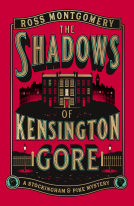
Ross Montgomery
General Fiction (Adult), Historical Fiction, Mystery & Thrillers