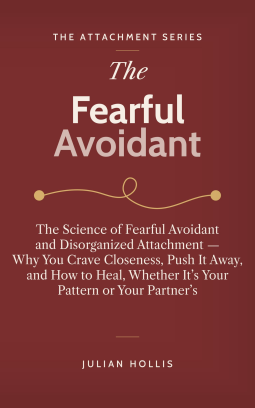
The Fearful Avoidant
The Science of Fearful Avoidant and Disorganized Attachment — Why You Crave Closeness, Push It Away, and How to Heal, Whether It’s Your Pattern or Your Partner’s
This title was previously available on NetGalley and is now archived.
Send NetGalley books directly to your Kindle or Kindle app
1
To read on a Kindle or Kindle app, please add kindle@netgalley.com as an approved email address to receive files in your Amazon account. Click here for step-by-step instructions.
2
Also find your Kindle email address within your Amazon account, and enter it here.
Pub Date Aug 7 2026 | Archive Date Sep 10 2026
ARC provided by Victory Editing NetGalley Co-op | Julian Hollis
Talking about this book? Use #TheFearfulAvoidant #NetGalley. More hashtag tips!
Description
Why can you want closeness so much - and then need space the moment it finally arrives?
Why can a really good weekend leave you feeling more uncertain on Monday? Why can reassurance feel wonderful one moment and overwhelming the next? Why can you miss someone when they are distant, then struggle to stay open when they move closer again?
And the question underneath so many of the others:
Can a fearful avoidant attachment pattern really change?
The Fearful Avoidant is a practical guide to fearful avoidant and disorganized attachment for both people inside the pattern: the person living it and the partner trying to understand it.
It helps make sense of something that can feel deeply confusing from either side - wanting connection while another part of you is asking for space, reassurance or time to feel settled again.
Instead of reducing fearful avoidant attachment to a label, the book shows you the relationship pattern underneath it: what can activate it, how the same moment can feel completely different to two people, why familiar cycles repeat, and what can help create a different experience next time.
Inside, you'll find answers to more than 120 real questions people ask about fearful avoidant and disorganized attachment, including:
- Why do fearful avoidants sometimes pull away after closeness?
- What helps a fearful avoidant feel more secure in a relationship?
- Why can affection, sex and emotional intimacy feel different?
- How do you communicate when one person needs closeness and the other needs space?
- What can a partner do that genuinely helps?
- Can a fearful avoidant become securely attached?
- What does real progress towards a calmer, healthier relationship actually look like?
More than a fearful avoidant workbook, this is a full-length guide with practical tools built into the journey.
Twenty visual maps help make invisible patterns easier to see. A Decoder at the end of every chapter translates the same relationship moment from both sides. A six-domain Profile, guided reflection, practical frameworks and three Letters That Were Never Sent help turn understanding into something you can recognise and use in everyday relationships. The goal is not simply to know your attachment style.
It is to understand yourself more clearly, understand the person beside you more accurately, communicate with greater confidence, recognise the pattern earlier - and have more choice about what happens next.
Patterns can change.
Change can mean learning to stay connected without losing yourself. Feeling close without becoming overwhelmed. Asking for space without disappearing. Expressing what you need more clearly. Repairing moments that once became distance. And gradually building more trust in yourself, your partner and the relationship between you.
The research behind the book is documented chapter by chapter, with established findings separated clearly from interpretation and original frameworks.
See the pattern. Understand both sides. Build something calmer, steadier and more secure.
A Note From the Publisher
The book combines research-led explanations with practical frameworks, assessments, reflection exercises and suggested scripts to help readers understand and respond to relationship patterns.
Further information about the author and the book is available at julianhollis.com.
Marketing Plan
The book will be promoted through the Julian Hollis author website https://julianhollis.com, Goodreads, Amazon author pages, targeted Amazon advertising, social-media content, direct outreach to suitable reviewers, and NetGalley ARC activity.
Marketing will focus on readers interested in relationships, attachment, dating and modern relationship dynamics. Promotional activity will include educational posts, extracts, book-related articles, reviewer outreach, launch announcements and ongoing advertising following publication.
The author will also seek opportunities for relevant podcast, blog and media coverage
Available Editions
| EDITION | Ebook |
| ISBN | 9540225986414 |
| PRICE | $8.99 (USD) |
| PAGES | 449 |