*This page contains affiliate links, so we may earn a small commission when you make a purchase through links on our site at no additional cost to you.
Send NetGalley books directly to your Kindle or Kindle app
To read on a Kindle or Kindle app, please add kindle@netgalley.com as an approved email address to receive files in your Amazon account. Click here for step-by-step instructions.
2
Also find your Kindle email address within your Amazon account, and enter it here.
Talking about this book? Use #LongTermOutcomesOfMilitaryService #NetGalley. More hashtag tips!
Description
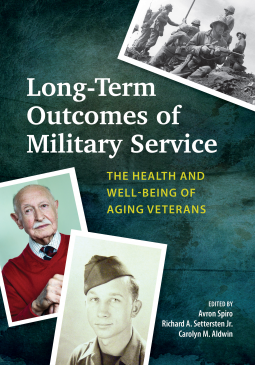
Using data compiled from longitudinal studies of World War II, Korean War, and Vietnam War veterans, contributors to this groundbreaking book examine the effects of military service across the lifespan. The US spends over 100 billion dollars annually on healthcare for more than 30 million active military and veterans.
The prevalence of negative trauma and post-traumatic stress disorder (PTSD) among military veterans is well-known. But other more subtle effects of military service—particularly on health and well-being in later life—are less well-understood, among researchers as well as medical and mental health professionals who care for veterans.
Chapters in this book give us crucial insights into the impact of military service, including the surprising finding that service can serve as a protective factor in some contexts, throughout the aging process. Topic areas include the effects of combat and stress on longevity and brain functioning; the use of memory, cognition, and ego development at various points in life; the relationship between experiences of discrimination and the later development of PTSD; marriage longevity; employment; and the way notions of patriotism and nationalism among service personnel and their families may change over time.
Using data compiled from longitudinal studies of World War II, Korean War, and Vietnam War veterans, contributors to this groundbreaking book examine the effects of military service across the...
Using data compiled from longitudinal studies of World War II, Korean War, and Vietnam War veterans, contributors to this groundbreaking book examine the effects of military service across the lifespan. The US spends over 100 billion dollars annually on healthcare for more than 30 million active military and veterans.
The prevalence of negative trauma and post-traumatic stress disorder (PTSD) among military veterans is well-known. But other more subtle effects of military service—particularly on health and well-being in later life—are less well-understood, among researchers as well as medical and mental health professionals who care for veterans.
Chapters in this book give us crucial insights into the impact of military service, including the surprising finding that service can serve as a protective factor in some contexts, throughout the aging process. Topic areas include the effects of combat and stress on longevity and brain functioning; the use of memory, cognition, and ego development at various points in life; the relationship between experiences of discrimination and the later development of PTSD; marriage longevity; employment; and the way notions of patriotism and nationalism among service personnel and their families may change over time.
Advance Praise
"This volume summarizes
decades of study on the topic of veterans’ health, mental health, and
well-being. With contributions by some of the premier people in the field of
veterans’ health, the volume is sure to influence our understanding of the
needs of male and female veterans and thereby lead to significant advances in
public policy. For scholars interested in longitudinal studies, this book will
affect models and methods for the conduct of studies of long-term effects of
military experiences and exposure to traumatic life events. The book is
exemplary in all ways and belongs on the shelves of students of the military
and veterans."
—Terence M. Keane, PhD, Associate Chief of Staff—Research &
Development, VA Boston Healthcare System; Director, Behavioral Science Division,
National Center for Posttraumatic Stress Disorder; Professor of Psychiatry and
Psychology and Assistant Dean for Research, Boston University School of
Medicine, Boston, MA
"This volume summarizes decades of study on the topic of veterans’ health, mental health, and well-being. With contributions by some of the premier people in the field of veterans’ health, the...
"This volume summarizes
decades of study on the topic of veterans’ health, mental health, and
well-being. With contributions by some of the premier people in the field of
veterans’ health, the volume is sure to influence our understanding of the
needs of male and female veterans and thereby lead to significant advances in
public policy. For scholars interested in longitudinal studies, this book will
affect models and methods for the conduct of studies of long-term effects of
military experiences and exposure to traumatic life events. The book is
exemplary in all ways and belongs on the shelves of students of the military
and veterans."
—Terence M. Keane, PhD, Associate Chief of Staff—Research &
Development, VA Boston Healthcare System; Director, Behavioral Science Division,
National Center for Posttraumatic Stress Disorder; Professor of Psychiatry and
Psychology and Assistant Dean for Research, Boston University School of
Medicine, Boston, MA
*This page contains affiliate links, so we may earn a small commission when you make a purchase through links on our site at no additional cost to you.
*This page contains affiliate links, so we may earn a small commission when you make a purchase through links on our site at no additional cost to you.
Average rating from 1 member
This site uses cookies. By continuing to use the site, you are agreeing to our cookie policy. You'll also find information about how we protect your personal data in our privacy policy.