Please wait... This may take a moment.
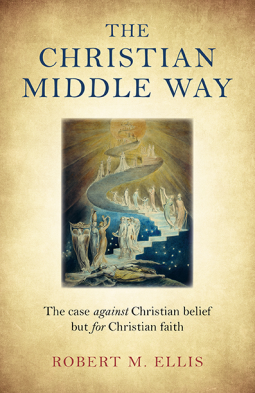
The Christian Middle Way
The Case Against Christian Belief But For Christian Faith
This title was previously available on NetGalley and is now archived.
Pub Date
Jul 27 2018
| Archive Date
Jun 29 2018
Description
The Middle Way is the practical principle of avoiding both positive and negative absolutes, so as to develop provisional beliefs accessible to experience. Although inspired initially by the Buddha’s Middle Way, in Middle Way Philosophy Robert M. Ellis has developed it as a critical universalism: a way of separating the helpful from the unhelpful elements of any tradition. In this book, the Middle Way is applied to the Christian tradition in order to argue for a meaningful and positive interpretation of it, without the absolute beliefs that many assume to be essential to Christianity. Faith as an embodied, provisional confidence is distinguished from dogmatic belief. Recent developments in embodied meaning, brain lateralization from neuroscience, Jungian archetypes and the Jungian model of psychological integration are drawn on to support an account of how Christian faith is not only possible without ‘belief’ in God or Christ, but indeed puts us in a better position to access inspiration, moral purpose, responsibility and the basis of peace.
The Middle Way is the practical principle of avoiding both positive and negative absolutes, so as to develop provisional beliefs accessible to experience. Although inspired initially by the Buddha’s...
Description
The Middle Way is the practical principle of avoiding both positive and negative absolutes, so as to develop provisional beliefs accessible to experience. Although inspired initially by the Buddha’s Middle Way, in Middle Way Philosophy Robert M. Ellis has developed it as a critical universalism: a way of separating the helpful from the unhelpful elements of any tradition. In this book, the Middle Way is applied to the Christian tradition in order to argue for a meaningful and positive interpretation of it, without the absolute beliefs that many assume to be essential to Christianity. Faith as an embodied, provisional confidence is distinguished from dogmatic belief. Recent developments in embodied meaning, brain lateralization from neuroscience, Jungian archetypes and the Jungian model of psychological integration are drawn on to support an account of how Christian faith is not only possible without ‘belief’ in God or Christ, but indeed puts us in a better position to access inspiration, moral purpose, responsibility and the basis of peace.
Advance Praise
...a
densely argued book, needing, and deserving, time to digest; and to work out,
with the author’s help, the implications of approaching religion in general and
Christianity in particular, in terms of the Middle Way.
Edward Walker, author of Treasure Beneath the Hearth
...a densely argued book, needing, and deserving, time to digest; and to work out, with the author’s help, the implications of approaching religion in general and...
Advance Praise
...a
densely argued book, needing, and deserving, time to digest; and to work out,
with the author’s help, the implications of approaching religion in general and
Christianity in particular, in terms of the Middle Way.
Edward Walker, author of Treasure Beneath the Hearth
Marketing Plan
It
makes use of the Middle Way: a concept that is not applied in any current
treatments of Christianity.
It
makes use of the Middle Way: a concept that is not applied in any current
treatments of Christianity.
Available Editions
| EDITION |
Other Format |
| ISBN |
9781785357565 |
| PRICE |
$29.95 (USD)
|
Additional Information
Available Editions
| EDITION |
Other Format |
| ISBN |
9781785357565 |
| PRICE |
$29.95 (USD)
|
Average rating from 4 members
Readers who liked this book also liked: