Please wait... This may take a moment.
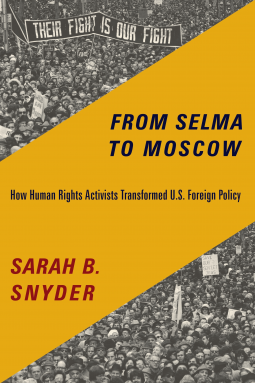
From Selma to Moscow
How Human Rights Activists Transformed U.S. Foreign Policy
This title was previously available on NetGalley and is now archived.
Pub Date
Apr 24 2018
| Archive Date
Apr 27 2022
Description
The 1960s marked a transformation of human rights activism in the United States. At a time of increased concern for the rights of their fellow citizens—civil and political rights, as well as the social and economic rights that Great Society programs sought to secure—many Americans saw inconsistencies between domestic and foreign policy and advocated for a new approach. The activism that arose from the upheavals of the 1960s fundamentally altered U.S. foreign policy—yet previous accounts have often overlooked its crucial role.
In From Selma to Moscow, Sarah B. Snyder traces the influence of human rights activists and advances a new interpretation of U.S. foreign policy in the “long 1960s.” She shows how transnational connections and social movements spurred American activism that achieved legislation that curbed military and economic assistance to repressive governments, created institutions to monitor human rights around the world, and enshrined human rights in U.S. foreign policy making for years to come. Snyder analyzes how Americans responded to repression in the Soviet Union, racial discrimination in Southern Rhodesia, authoritarianism in South Korea, and coups in Greece and Chile. By highlighting the importance of nonstate and lower-level actors, Snyder shows how this activism established the networks and tactics critical to the institutionalization of human rights. A major work of international and transnational history, From Selma to Moscow reshapes our understanding of the role of human rights activism in transforming U.S. foreign policy in the 1960s and 1970s and highlights timely lessons for those seeking to promote a policy agenda resisted by the White House.
The 1960s marked a transformation of human rights activism in the United States. At a time of increased concern for the rights of their fellow citizens—civil and political rights, as well as the...
Description
The 1960s marked a transformation of human rights activism in the United States. At a time of increased concern for the rights of their fellow citizens—civil and political rights, as well as the social and economic rights that Great Society programs sought to secure—many Americans saw inconsistencies between domestic and foreign policy and advocated for a new approach. The activism that arose from the upheavals of the 1960s fundamentally altered U.S. foreign policy—yet previous accounts have often overlooked its crucial role.
In From Selma to Moscow, Sarah B. Snyder traces the influence of human rights activists and advances a new interpretation of U.S. foreign policy in the “long 1960s.” She shows how transnational connections and social movements spurred American activism that achieved legislation that curbed military and economic assistance to repressive governments, created institutions to monitor human rights around the world, and enshrined human rights in U.S. foreign policy making for years to come. Snyder analyzes how Americans responded to repression in the Soviet Union, racial discrimination in Southern Rhodesia, authoritarianism in South Korea, and coups in Greece and Chile. By highlighting the importance of nonstate and lower-level actors, Snyder shows how this activism established the networks and tactics critical to the institutionalization of human rights. A major work of international and transnational history, From Selma to Moscow reshapes our understanding of the role of human rights activism in transforming U.S. foreign policy in the 1960s and 1970s and highlights timely lessons for those seeking to promote a policy agenda resisted by the White House.
Available Editions
| EDITION |
Other Format |
| ISBN |
9780231169479 |
| PRICE |
$32.00 (USD)
|
| PAGES |
320
|
Additional Information
Available Editions
| EDITION |
Other Format |
| ISBN |
9780231169479 |
| PRICE |
$32.00 (USD)
|
| PAGES |
320
|
Average rating from 2 members
Featured Reviews
 Librarian 299542
4 stars
4 stars
4 stars
4 stars
4 stars
This was a fascinating book, but it is definitely not for everyone. It offers academic insight into the discrepancies between national and foreign policy in the United States during the turbulent decade of racial upheaval that was the 1960s. While this is not a book I got lost in and read in one sitting, it was a fascinating one and I am glad I took the time to savor it.
4 stars
4 stars
4 stars
4 stars
4 stars
Featured Reviews
Librarian 299542
4 stars
4 stars
4 stars
4 stars
4 stars
This was a fascinating book, but it is definitely not for everyone. It offers academic insight into the discrepancies between national and foreign policy in the United States during the turbulent decade of racial upheaval that was the 1960s. While this is not a book I got lost in and read in one sitting, it was a fascinating one and I am glad I took the time to savor it.
4 stars
4 stars
4 stars
4 stars
4 stars