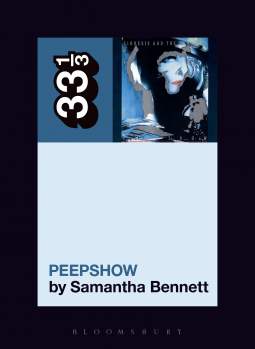
Siouxsie and the Banshees' Peepshow
This title was previously available on NetGalley and is now archived.
Send NetGalley books directly to your Kindle or Kindle app
1
To read on a Kindle or Kindle app, please add kindle@netgalley.com as an approved email address to receive files in your Amazon account. Click here for step-by-step instructions.
2
Also find your Kindle email address within your Amazon account, and enter it here.
Pub Date Oct 18 2018 | Archive Date Oct 18 2018
Talking about this book? Use #SiouxsieAndTheBanshees'Peepshow #NetGalley. More hashtag tips!
Description
In 1978, Siouxsie and the Banshees declared 'We don't see ourselves in the same context as other rock'n'roll bands.' A decade later, and in the stark aftermath of a devastating storm, the band retreated to a 17th-century mansion house in the deracinated Sussex countryside to write their ninth studio album, Peepshow. Here, the band absorbed the bygone, rural atmosphere and its inspirational mise en scène, thus framing the record cinematically, as Siouxsie Sioux recalled, 'It was as if we were doing the whole thing on the set of The Wicker Man'.
Samantha Bennett looks at how Siouxsie and the Banshees' Peepshow is better understood in the context of film and film music (as opposed to popular music studies or, indeed, the works of other rock'n'roll bands). Drawing upon more than one hundred films and film scores, this book focuses on Peepshow's deeply embedded historical and aesthetic (para)cinematic influences: How is each track a reflection of genre film? Who are the various featured protagonists? And how does Peepshow's diverse orchestration, complex musical forms, atypical narratives and evocative soundscapes reveal an inherently cinematic record? Ultimately, Peepshow can be read as a soundtrack to all the films Siouxsie and the Banshees ever saw. Or perhaps it was the soundtrack to the greatest film they never made.
Available Editions
| EDITION | Paperback |
| ISBN | 9781501321863 |
| PRICE | $14.95 (USD) |
Links
Available to Buy
Buy on Amazon Buy on BN.com Buy on Bookshop.orgAverage rating from 11 members
Readers who liked this book also liked:

Kerri Rawson
Biographies & Memoirs, Parenting, Families, Relationships, True Crime