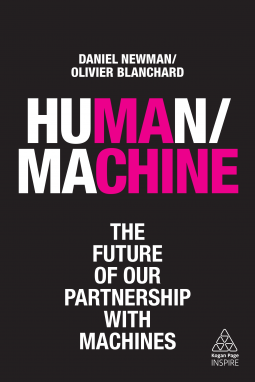
Human/Machine
The Future of our Partnership with Machines
This title was previously available on NetGalley and is now archived.
Send NetGalley books directly to your Kindle or Kindle app
1
To read on a Kindle or Kindle app, please add kindle@netgalley.com as an approved email address to receive files in your Amazon account. Click here for step-by-step instructions.
2
Also find your Kindle email address within your Amazon account, and enter it here.
Pub Date Jul 3 2019 | Archive Date Aug 3 2019
Kogan Page Ltd | Kogan Page
Talking about this book? Use #HumanMachine #NetGalley. More hashtag tips!
Description
Available Editions
| EDITION | Other Format |
| ISBN | 9780749484248 |
| PRICE | £24.99 (GBP) |
| PAGES | 248 |
Available to Buy
Buy on Amazon Buy on BN.com Buy on Bookshop.orgAverage rating from 4 members
Featured Reviews
 Dee A, Reviewer
After reading this book, I felt somewhat redeemed. Over the last several years, I have discussed/argued/insisted that robots will NOT replace humans and take away all our jobs. I would point out that mankind has gone through transformations in the past, and each time more jobs were created and life actually got better. Years of reading sci-fi had presented many sides of this question, and helped to dispel any worrisome thoughts.
Receiving solid backup from authors Daniel Newman and Olivier Blanchard was encouraging. They even added the caveat that it would be in everyone’s best interest to begin preparing for this new world now, something I had also preached. My nuts and bolts knowledge didn’t extend much beyond these talking points. Fortunately, the authors have put plenty of thought and time into this subject, and presented a book full of facts.
Human/Machine goes into depth on the possibilities that await us while preferring not to get too far ahead of current reality. Although periodically the book would peer 30 years into the future, most of the book focuses on the present and moving through the next decade (leaving the prognosticating to those brave enough to take their crystal balls out of the closet. The authors recognized that there are too many variables preventing a reliable vision into what the future may look like in 2050).
I thought it was helpful to dive into specific areas, addressing which jobs might be more at risk. This took us into white- and blue-collar jobs, and eventually into job categories and titles. The authors offered suggestions, sharing preparatory steps for any of us to take to be ready for the job shifts (and in reality, doesn’t retaining any job have a lot to do with being valuable to the company you work for?). Other chapters dealt with the ethics and morality of what tech companies create (think Big Brother, then consider the exact opposite) and embracing a future where humans work in more of a symbiotic relationship with AI rather than one that is adversarial.
Newman/Blanchard do inject repetition of their common themes throughout the book (prepare for the upcoming changes, work with rather than against robots, etc.), a bit bothersome when I felt I had “got it” the first time around. Even though on several occasions they insisted the book was for the normal person out in the job market, there were many terms and acronyms used without layman explanations. In retrospect, maybe this was their way of reminding me how I already interact with machines and programming, because at those moments, Google was my friend.
I recommend this book, especially those between the ages of 15-55 (and anyone 55+ who wishes to remain longer in the job market). Although there is repetition of themes/thoughts in the book, the message is clear: Anyone can be a thriving part of the future economy, but the time to prepare for it is now. Three stars.
My thanks to NetGalley and Kogan Page Ltd for a complimentary ebook of this title.