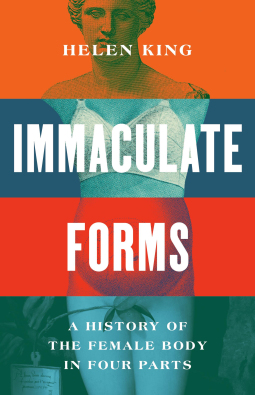
Immaculate Forms
A History of the Female Body in Four Parts
This title was previously available on NetGalley and is now archived.
Send NetGalley books directly to your Kindle or Kindle app
1
To read on a Kindle or Kindle app, please add kindle@netgalley.com as an approved email address to receive files in your Amazon account. Click here for step-by-step instructions.
2
Also find your Kindle email address within your Amazon account, and enter it here.
Pub Date Jan 28 2025 | Archive Date Jan 28 2025
Talking about this book? Use #ImmaculateForms #NetGalley. More hashtag tips!
Description
A New Yorker Best Book of the Year
Breasts, clitoris, hymen, and womb. Across history, these body parts have told women who they are and what they should do. Although knowledge of each part has changed through time, none of them tells a simple story. The way they work and in some cases even their existence have been debated. They can be seen as powerful or as disgusting, as relevant only to reproduction or as sources of sexual pleasure.
In Immaculate Forms, classicist and historian Helen King explores the symbiotic relationship between religion and medicine and their twinned history of gatekeeping over these key organs that have been used to define “woman,” illustrating how conceptions of women’s bodies have owed more to imagination and myth than to observation and science. Throughout history, the way we understand the body has always been debated, and it is still shaped by human intervention and read according to cultural interpretations.
Astute and engaging, Immaculate Forms is for everyone who has wondered what history has to say about today’s raging debates over the human body and who is “really” female.
Available Editions
| EDITION | Other Format |
| ISBN | 9781541606531 |
| PRICE | $35.00 (USD) |
| PAGES | 480 |
Available on NetGalley
Available to Buy
Buy on Amazon Buy on BN.com Buy on Bookshop.orgAverage rating from 5 members
Readers who liked this book also liked:
Kotteri
Comics, Graphic Novels, Manga, General Fiction (Adult), Teens & YA



Sir Arthur Conan Doyle
Comics, Graphic Novels, Manga, Mystery & Thrillers, Teens & YA

Kerri Rawson
Biographies & Memoirs, Parenting, Families, Relationships, True Crime