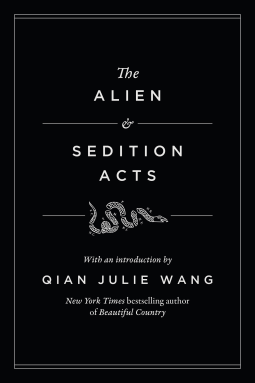
The Alien and Sedition Acts
This title was previously available on NetGalley and is now archived.
Send NetGalley books directly to your Kindle or Kindle app
1
To read on a Kindle or Kindle app, please add kindle@netgalley.com as an approved email address to receive files in your Amazon account. Click here for step-by-step instructions.
2
Also find your Kindle email address within your Amazon account, and enter it here.
Pub Date Oct 28 2025 | Archive Date Dec 28 2025
Random House | Modern Library
Talking about this book? Use #TheAlienandSeditionActs #NetGalley. More hashtag tips!
Description
In the summer of 1798, backed by President John Adams, the United States Congress passed a series of laws that would come to be known as the Alien and Sedition Acts, testing the limits of a Constitution barely a decade old. Passed in anticipation of an impending war with France, the three alien laws—the Naturalization Act, the Alien Friends Act, and the Alien Enemies Act—extended the waiting period for naturalization from five years to fourteen and authorized the detention and expulsion of noncitizens, while the Sedition Act placed a federal ban on the publication of any antigovernment writings.
Objections were passionate and swift. The Kentucky Resolutions of 1798, penned by Vice President Thomas Jefferson, warned that the “friendless alien has been selected as the safest subject of a first experiment; but the citizen will soon follow.” Yet while three out of the four laws were soon repealed or allowed to expire, the Alien Enemies Act is still in effect today. Though it has been invoked sparingly, it was the basis for Japanese American internment during World War II—and for President Donald Trump’s deportation of Venezuelan immigrants to a maximum-security prison in El Salvador during the first one hundred days of his second term.
The questions raised by the Alien and Sedition Acts at the end of the eighteenth century—about immigration, the rights of the people in a time of war, the power of the government to define matters of national security, freedom of speech, freedom of the press—are still very much matters for concern and debate today. In her introduction to these founding documents, New York Times bestselling author and civil rights litigator Qian Julie Wang offers a vital perspective on the origins and long legal history of these ideas in the United States.
Available Editions
| EDITION | Other Format |
| ISBN | 9798217155224 |
| PRICE | $20.00 (USD) |
| PAGES | 176 |
Available on NetGalley
Available to Buy
Buy on Amazon Buy on BN.com Buy on Bookshop.orgAverage rating from 5 members
Readers who liked this book also liked:





Julia Ebner
Health, Mind & Body, Nonfiction (Adult), Politics & Current Affairs


Alexis Wolfe Mbassa; Gregory E. Jacobs
Arts & Photography, Biographies & Memoirs, Entertainment & Pop Culture

Ravi Coltrane; Contributions by Kareem Abdul-Jabbar, Wayne Coyne, Dev Hynes, Phil Lesh, Julie Mehretu, Carlos Santana, Patti Smith and Ravi Coltrane
Arts & Photography, Biographies & Memoirs, Entertainment & Pop Culture





Hannah Rose May
Comics, Graphic Novels, Manga, General Fiction (Adult), Mystery & Thrillers