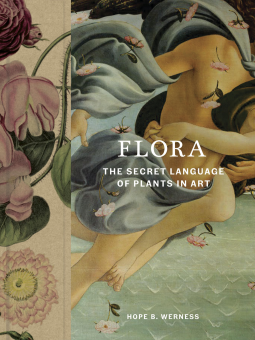
Flora
The Secret Language of Plants in Art
This title was previously available on NetGalley and is now archived.
Send NetGalley books directly to your Kindle or Kindle app
1
To read on a Kindle or Kindle app, please add kindle@netgalley.com as an approved email address to receive files in your Amazon account. Click here for step-by-step instructions.
2
Also find your Kindle email address within your Amazon account, and enter it here.
Pub Date Oct 28 2025 | Archive Date Oct 28 2025
Talking about this book? Use #Flora #NetGalley. More hashtag tips!
Description
“A visually rich exploration of how humankind perceives and represents the botanical world.”―Library Journal
Piet Mondrian’s chrysanthemums, Faith Ringgold's sunflowers, Georgia O'Keefe's black iris, Salvador Dalí's narcissus, Yayoi Kusama's pumpkin—these are just a few of the many exemplary pairings featured in Flora that offer a unique, artistic interpretation of a plant’s essence. This visually captivating survey from Hope Werness is arranged thematically by the trees, flowers, fruit, vegetables, spices, grasses, grains, and vines that have served as a root for artistic inquiry across time. Flora deepens our understanding of plants through the lens of artistic expression, bringing a new context to an ever-enduring love of nature.
Available Editions
| EDITION | Other Format |
| ISBN | 9781643265506 |
| PRICE | $35.00 (USD) |
| PAGES | 240 |
Available on NetGalley
Available to Buy
Buy on Amazon Buy on BN.com Buy on Bookshop.orgAverage rating from 20 members
Featured Reviews
 Melisa A, Reviewer
A very pretty book to look at with good information in it.
I loved every page of this book. For each plant, the author gives a short entry about their history, sometimes one page, sometimes multiple depending on the plant. Then gives examples from art, majority of the time starting on the same page. The selections were pretty good ranging from ancient to contemporary. I like that author highlighted sometimes even the use of shapes in paintings mattered by looking at the plants.
Its a bit random but I also really liked the plant index page where you could see the plants and their names. It made me become more familiar with them.
I didn't find anything that I did not enjoy. Sometimes the font was a bit hard to follow especially when s and t were next to each other but its totally fine and seemed pretty artistic.
I would recommend this book to people who are into plants but also those who are into history regardless their interest in flowers. Its not an overwhelming book. Very pretty, simple, yet informative.
Huge thanks to Netgalley, Timber Press and Hope Werness for this advanced reader copy.
 Cozy Puppy R, Reviewer
"Flora: The Secret Language of Plants in Art" by Hope B. Werness is a truly beautiful and inspiring book that masterfully connects the worlds of botany, symbolism, and art history. The clear, visually appealing illustrations are a standout feature of this book, making it a perfect gift idea, or a valuable study reference for any artist or illustrator with a passion for nature.
Beyond its stunning visuals, the book offers informative and concise plant profiles, weaving in fascinating connections to folklore, mythology, and famous works of art. This unique approach provides both a deeper appreciation for the subject matter and a wellspring of creative ideas. It's a book that can be enjoyed simply for its aesthetic beauty or used as an insightful guide to the symbolism and history of plants in art. It's an excellent addition to any art lover or nature enthusiast's collection.
Thank you to the publisher, Timber Press, and NetGalley for an advanced reader copy.
#Flora #HopeWerness #TimberPress #NetGalley
 Autumn K, Reviewer
Lovely book. I would love to buy a physical copy as a coffee table book. That isn't to say it's just for the art; I enjoyed learning about the way symbolism, religion, art, literature, and history are all touched by flora. But it also works well as a reference and is something I'd like to pick up again.
 Evan L, Reviewer
Flora is a stunning book. The quality of the artwork is superb and the selection of artwork is broad, insightful, and wonderfully illuminates the variety of plants Hope Werness has selected for the book. I am sure my electronic copy failed to do the book justice and this should be owned in physical form to cherish and revisit. My only issue is with the font for the text, which I found distracted me from the clear and informative writing. I am sure it was a very conscious graphical choice but it was a bit too ornate for me. Still, highly recommended.
 Emma B, Reviewer
If you are looking for a gift for the garden and art lover in your life- this book is it! The art is beautiful, obviously, but the information is so interesting! The best of both worlds that ties together history, folklore, symbolism, and holistic medicine. This book is a must for my library! I plan to pull it out frequently to enhance my art and plant knowledge!
 Rebecca S, Reviewer
Thanks so much to NetGalley for the free Kindle book. My review is voluntarily given, and my opinions are my own.
When I requested this book, I was fully expecting maybe one picture for each flower and a sentence or two about them. I was stunned by the gorgeous illustrations, inclusion of classic artwork, and all of the information. I was expecting just geneneric things like 'this flower means blah blah blah'. Instead, there is information on mythological plants. Information about the meaning of flowers in artwork.
I already know several people that I will be recommending this book to. If my grandma was still alive, I would definitely but this for her. Even though I can't do that, it was nice to read a book that made me think of her.
Not only would I recommend this as a book just for anyone to read, but this is a great gift for any art or flower lover in your life. Bonus points for someone who loves both!
 Ronan K, Reviewer
I love herbalism and plants in general, I love plant language, and I love art history. So I was absolutely giddy when I saw I got approved for this wishlist book!!!
Thank you so so much.
It’s so incredibly detailed and informative. I’ll absolutely be snagging a physical copy to have in the future, to compare alongside all the art I find for my home as well!
 Bookseller 1799309
Flora is such an interesting and informative read. Werness shows how plants have inspired art through the ages, and the illustrations make it even more fun to explore. Perfect if you love nature, history, or just want to see the world of art in a new way.
 Barbara B, Book Trade Professional
Hope Werness's Flora offers an encyclopedic reference to understand the meaning of the natural world in art. The book contains high-quality, full-color illustrations and reproductions of exemplary paintings and sculptures. Werness explores the significance of plant imagery in art, in the environment, and life and invites the reader to reconsider ideas about our relationship with plants. She looks at ancient, classic, and contemporary art mostly referencing Western, Judeo-Christian imagery with some mention of Asian and Middle Eastern art. The book divides plants into trees; flowers; fruits, vegetables, and seasonings; and grains, grasses, and vines and explains the meaning they represent within the art.
I enjoyed this book and while I reviewed a digital copy, I can imagine the print version would have even greater impact. Those who appreciate art, cultural history, and gardening will find something interesting and entertaining in this thorough study of the representation of plants.
Thank you to Timber Press for providing this book for review via NetGalley. All opinions are my own.
#netgalley #timberpress
 Emilie B, Reviewer
Publishing date: 28.10.2025 (DD/MM/YYYY)
Thank you to NetGalley and Timber Press for the ARC. My opinions are my own.
TLDR //
A beautifully illustrated book about plants in art and their history therein. 4 stars, did the job
Quickfire likes and gripes //
Absolutely gorgeous artworks
Informative and pretty
My inner plant nerd is pleased and fed
Boppin index
Font is somewhat hard to read sometimes (depends on the letters next to each other)
What you get //
In Flora you get to look, oogle, and learn all in one book. I was IN for the visual feast and left with more knowledge of popular plants in artworks from now and years before my ancestors were conceived. This book will give you plant history, how they are used, placed, and utilized for meaning and emotions in works. Each plant has a page or two (or three) with history and examples of use.
Learned something new? //
I learned a lot about composition, shape language, colors, and the meaning of specific plants. Now I have more tools to use in my own work. Maybe there is hope for me to become a master painter just like the renaissance painters I look up to.
How it was to read //
This is a book I had to take my time with a little. The text is small in the digital copy I received and it wasn’t written in a way that lets me breeze through the text. So I took my time, oogled all the artworks, studied the different illustrations for inspiration, and even attempted to “copy” some of the works in my own sketchbook.
Audience //
This book is made for art nerds, artists, history geeks, and maybe even plant admirers. The more theoretical people, less so the practical ones. But the artists may get some inspo from this book (like me)
Final Verdict //
This is a very beautiful book and one which I got useable information from. However, I feel like the information escaped my mind not too long after. At no fault of the book’s, this is entirely autumn blues from my part. For now I am giving this 4 stars, and will revisit after I have purchased a “coffee table copy” for myself.
Reviewer 1892439
With thanks to Netgalley and the publisher for the ARC.
This is a gorgeous coffee table book that'll keep you company during the dark winter months when you're aching for plants and flowers to come alive again. The book gives you an overview of flowers, vegetables, and other plants in alphabetical order, together with folk remedies the plant is used in, botanical facts, and of course, how the plant has been used symbolically in art. The art reproductions are high quality and the selection is at times surprising; I did not expect to see medieval art featuring aubergines, for example. I did think it was funny that nearly every tree is apparently a candidate for the tree of life, and every fruit symbolises fecundity.
Sadly, the book uses a lot of ligatures, which makes the lettering look very refined at first glance, but which did hinder my reading flow. Read the back cover first to see if this also bothers you. But even then, there's many pretty pictures to enjoy without reading as well.
 The Sassy B, Reviewer
Book Review: Flora: The Secret Language of Plants in Art by Hope Werness
Rating: 4 Stars
I picked up Flora: The Secret Language of Plants in Art by Hope Werness mostly on a whim, and I’m so glad I did. This felt less like a dry reference and more like a conversation with a friend who happens to know everything about plants and how artists have loved them through the ages. Werness pairs botanical know-how with art history in a way that’s unexpectedly warm and vivid.
At its heart the book is organized by plant families — trees, flowers, fruits, vegetables, spices, grasses, grains, and vines — and each entry is a neat little doorway into how a particular plant has been seen, used, and imagined. You’ll hop from Piet Mondrian’s chrysanthemums to Faith Ringgold’s sunflowers, Georgia O’Keeffe’s black iris, Salvador Dalí’s narcissus, and even Yayoi Kusama’s pumpkins. These pairings don’t just show pretty pictures; they offer fresh, artistic readings of what each plant can mean in different hands and moments.
Each plant entry blends short botanical facts, folklore and folk remedies, mythological associations, and key art examples. It’s concise but layered: you get enough background to understand a flower’s symbolic weight, learn how a vegetable or spice featured in folk practice, and then see how artists across centuries have distilled those meanings into visual form. If you want to look up a single plant, there’s a helpful plant index; if you want to linger, you can read it straight through and luxuriate over the images and tidbits. The result is a lovely bridge between the scientific and the poetic.
On a personal note: I adored the cover and the book’s overall design — it feels like a proper coffee-table book, which is exactly how I want to use it. I came to this expecting light, surface-level stuff, but was pleasantly surprised by the depth: there are mythic plants, symbolic analyses, and well-chosen reproductions of classic and contemporary artworks. The images are high quality, and the plant index page (where you can see the plants and their names at a glance) is a small feature that I found genuinely useful. It’s the kind of book I’d reach for during long winter nights when I’m craving green things and want a dose of floral inspiration. Bottom line: this is a beautiful, informative book I’d happily own as a permanent fixture on my coffee table.
⚠️This review was written based on personal opinions and experiences with the book. Individual preferences may vary⚠️
 Annie K, Librarian
This book is a stunning, richly detailed celebration of how artists have been inspired by the natural world. I loved how the book connects plants to religion & mythology, especially the Greek stories that give deeper meaning to familiar flowers and trees. The design is beautiful, the illustrations rich, and each page invites slow, thoughtful reading.
While not an academic resource, it is wonderfully informative and full of insight for anyone interested in the intersection of art and nature. I truly enjoyed this beautiful book!
 Claire P, Reviewer
Wow, this is a truly gorgeous book! I did not expect it to have this many drawings/ illustrations/ photos, etc. It's a wonderful book to have at home and look through now and then.
I have always been interested in the language of flowers in fiction, and it's great to read about the plants, what they represent and how they appear in art.
Truly enjoyed this book..
 Janelle W, Reviewer
A beautifully illustrated and informative book. Divided into three sections, trees, flowers, fruits and vegetables. It describes the symbolism in mythology or religion, other cultural references as well as in art with lots of examples. A great book for dipping in and out of.
 Ioana M, Reviewer
This is a short book that focuses on the cultural symbolism of plants and how they have been seen and used through history and in visual arts.
It's an interesting book to have and to keep close and is a perfect kind of book to be gifted to anyone passionate about this subject.
I am grateful to have received this in order to share my view on it, while I didn't find it as rich in details as I would have liked, it's a great start to research and to create, it's a wonderful tool for inspiration. And it's so full of illustrations, browsing through it often it's an experience on its own.
 Novie N, Bookseller
A beautiful book with a lot of grounded, researched content. This book is ideal for readers interested in: art history, plants, folklore, and magic / healing topics. This book is richer in content and research than most plant symbology books - it is not a boring coffee table with a dictionary guide explaining "daisies represent this; roses represent that." The author curates a beautiful selection of art pieces through history and across cultures - so even plant experts will find new associations to research further. This book feels like it has the rigorous research of an academic, but the voice of someone who really wants to talk about art history with anyone interested. It is not repetitive, it does not read like AI, it includes artworks I've never seen. Excellent! I'll be buying a personal copy and displaying it in the store!
John L, Reviewer
A book that pretty much does what you'd expect – discuss the symbolism of a lot of the trees and flowers that you could name. It's trees first, after the snappy introduction and a fully pictorial index section, and beyond the Tree of Life and the World Tree (and forests) we get to individual examples. Throughout we get the Latin names needed, a thoroughly decent Victorian botanist's depiction of the plant, and a page or two to discuss the flora and what they represent.
The issue with the trees might be that that ends up being slightly repetitive. A lot of them indicate immortality, or virginal behaviours, or steadfastness. It's only when we get to the flowers I think I found the variation I'd have wanted (which admittedly isn't the author's fault of course). Here the colours indicate things, the Language of Flowers (brought to Europe by a Swedish King after exile in Turkey) gives a "there's rosemary, that's for remembrance" kind of shtick, and it almost feels like anyone can decide anything about anything – the most phallic of arums can still represent the Virgin Mary, sunflowers can be devotion or the scariest Audrey/triffid in a hotel corridor, while carnations can be indicative of marriage yet also hark back to a kid having his eyes torn out.
We close with a further large chapter on fruits – what was the aubergine before that emoji? – and then a shorter one on grasses, grains and the humble vine. And I thought this was a success, all told – I won't be the only one asking it "which Pliny?!" but this serves for academic collections and plant-lovers' shelves. The breadth of the art is pretty strong – even if this is very much western thinking and western art, we certainly leave the major canon of classics behind. Serving its purpose well and giving us fine representations of the relevant paintings and sculpture, this is a strong four stars.
Questionable choice of font, mind.
Readers who liked this book also liked:
Publishers Lunch
General Fiction (Adult), Nonfiction (Adult), Teens & YA

Silvia Moreno-Garcia
Historical Fiction, Literary Fiction, Sci Fi & Fantasy

Rachel Joyce
Historical Fiction, Literary Fiction, Women's Fiction


Ravi Coltrane; Contributions by Kareem Abdul-Jabbar, Wayne Coyne, Dev Hynes, Phil Lesh, Julie Mehretu, Carlos Santana, Patti Smith and Ravi Coltrane
Arts & Photography, Biographies & Memoirs, Entertainment & Pop Culture