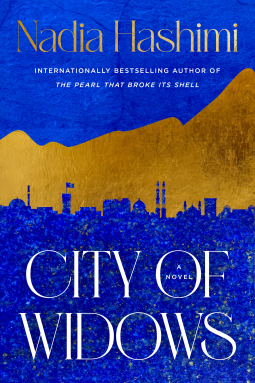
City of Widows
A Novel
This title was previously available on NetGalley and is now archived.
Send NetGalley books directly to your Kindle or Kindle app
1
To read on a Kindle or Kindle app, please add kindle@netgalley.com as an approved email address to receive files in your Amazon account. Click here for step-by-step instructions.
2
Also find your Kindle email address within your Amazon account, and enter it here.
Pub Date Jul 28 2026 | Archive Date Sep 22 2026
Talking about this book? Use #CityofWidows #NetGalley. More hashtag tips!
Description
From bestselling novelist Nadia Hashimi—a gripping, occasionally terrifying, yet ultimately hopeful novel focusing on the women of Afghanistan in the years since the Taliban regained power.
In February 2020 the US began to withdraw troops from Afghanistan after nearly twenty years of occupation. A whole generation of Afghan women had been born during that time—women who had grown up in relative peace, gone to school, entered the professions, even served in the army and Parliament. The women of Afghanistan watched as the Taliban filled the streets again. They knew everything was about to change.
In the bustling, cosmopolitan city of Kabul, women are TV newscasters, shop owners, doctors, teachers, lawyers, even soldiers. They include Marjan, who fought with the Afghan army, and will risk everything to keep her daughter Hawa safe. In her earlier days Marjan was called Rahima and had lived the life of a bacha posh—a girl raised as a boy until she came of age. Forced into an early marriage, Rahima took the name Marjan when she fled her warlord husband. She’s created a whole new life for herself, one she will not give up easily.
So has Soraya, who defiantly wore red lipstick as she led the army’s all-female combat force over the objections of her upper-class family. Soraya’s now a wanted woman whose brother may choose not to shelter her from the Taliban. What will become of her? Or Mina, a journalist and broadcaster whose beautiful face is known to everyone in Kabul—including the new regime?
Fight or flight? Or find a third way? One thing is for certain: none of these women will meekly accept her fate.
An epic saga of fear, resistance, change, and reinvention, City of Widows gives voices to the unforgettable Afghan women at a crossroads of history.
“An essential read…heartbreaking, powerful, and indelible.” — Booklist (starred review)
Available Editions
| EDITION | Other Format |
| ISBN | 9780063423541 |
| PRICE | $32.00 (USD) |
| PAGES | 432 |
Available on NetGalley
Available to Buy
Buy on BN.com Buy on Bookshop.orgAverage rating from 100 members
Featured Reviews
 Mallory N, Reviewer
City of Widows by Nadia Hashimi is a powerful, immersive novel that completely drew me into Marjan’s courageous journey to escape the Taliban and secure a safer future for her daughter. I felt deeply invested in her resilience and the impossible choices she was forced to make. The story also offered eye-opening insight into the Afghan army and the complex realities of life in Afghanistan during this time. An emotional, unforgettable read that fully deserved five stars.
 Tahni F, Reviewer
The harrowing story of Marjan, a soldier in the Afghan military, and her teenage daughter Hawa, as they attempt to flee Kabul during the Taliban takeover after American troops left in 2021.
I'm so thankful for stories that show what Afghan women have to go through under Taliban rule. It's unimaginable as a Westerner to be oppressed like that. This is my fourth of Nadia Hashimi's novels and I've adored them all despite the heartbreak and injustice shown. They expose the realities of life for Afghan women, and the strength and resilience of the protagonists is inspiring.
I'll continue to read more of Hashimi's stories, and will revisit this one at some point too. Highly recommend.
 Alli C, Reviewer
Wow - I’m so glad I got to read this. Nadia’s writing is both captivating and immersive. Each time I put the book down, I simply could not stop wondering about Marjan and Hawa.
City of Widows is a dual-timeline story set in Afghanistan following a young woman named Marjan and her pre-teen daughter Hawa. In 2021 the American troops are withdrawing from the country and the Taliban is rising to power again, bringing severe regression of any progress that was made in the 20 years since they were in power before. Even in those 20 years, Marjan’s story is just one example of how much repression and abuse women have had to fight against.
Reading this novel shines SO MUCH light on harsh realities women are facing in Afghanistan. This story is incredibly important. I hope it finds all the readers who are meant to know it, and that it opens more hearts and minds to the truths that others are experiencing in our world. Thank you NetGalley and Harper Collins/Williams Morrow for sharing this story with me.
 Reviewer 1902553
Thank you to NetGalley for the eARC in exchange for an honest review.
Reading The City of Widows hit me in a way that felt personal. I come from a culture where widows and divorced women are still pushed to the margins, where their grief is treated like a stain instead of a wound, and their existence is treated as something society must manage rather than support. Because of that, this story felt painfully familiar. Nadia Hashimi captures the quiet humiliations, the rules that tighten around women the moment they no longer have a man beside them, and the way entire communities convince themselves that this treatment is normal or justified.
What stood out most to me is how deeply human the women in this book are. They are not reduced to victims, nor are they romanticized as symbols of strength. They are fully realized people navigating an impossible reality, forced to reshape their lives while carrying layers of grief, fear, shame and resilience. Hashimi shows the way grief becomes a kind of exile, not only in the emotional sense but socially as well. I recognized so much in the whispered judgments, the suspicion, and the way a woman can lose status and safety overnight simply because of something she didn’t choose.
The writing is vivid and heavy in the ways it needs to be. At times it was difficult to read because it reflects a truth many of us know too well, but it never feels exploitative. The emotional weight is earned and the storytelling is compassionate. It also shines a light on the importance of community, especially among women who have been cast out or overlooked. There are moments of quiet defiance and connection that feel like small acts of survival, and they matter.
If anything, I wish the world we lived in made this book feel more like fiction. Instead it reads like a mirror many cultures would prefer not to look into. For readers who have lived through similar expectations and judgments, this book will feel both validating and heavy. For those who haven’t, it offers an important and eye-opening window into what widowhood and womanhood can look like under systems that punish instead of protect.
It is a poignant, painful and beautifully told story, and one that will sit with me for a long time.
Librarian 1775997
City of Widows is an epic, deeply affecting novel that feels like the culmination of everything Nadia Hashimi does best: giving Afghan women full, complicated lives on the page and setting their stories against the sweep of history without ever losing sight of the intimate, human cost. Set in Kabul in the years surrounding the 2020 U.S. withdrawal and the Taliban’s return, the book follows a remarkable chorus of women—a former bacha posh and army veteran now living as Marjan, her daughter Hawa, fearless commander Soraya, high-profile journalist Mina, and others—who have come of age in a brief window of relative freedom and suddenly find their futures collapsing overnight. Hashimi renders the city in all its contradictions—cosmopolitan and pious, hopeful and terrified—and the novel’s power lies in the different ways these women respond when the streets fill with armed men again: some choose flight, some fight in whatever ways are still possible, and some try to carve out a third path in the shadows of a regime that wants them erased. The writing is clear and propulsive yet shot through with tenderness, threading together military barracks, TV studios, safe houses, and prisons into one immersive tapestry that’s occasionally terrifying but ultimately profoundly hopeful; rather than turning its characters into symbols, City of Widows lets them be mothers, daughters, lovers, soldiers, and dreamers all at once, and by the end you feel you’ve lived alongside them through fear, resistance, loss, and reinvention.
 Melissa C, Reviewer
This was a poignant and timely novel about Afghan women, highlighting both their persistence and resilience. While I found the story a bit long, with timelines that occasionally felt jumpy, it still offers an important perspective. The author sheds light on a subject that deserves far more attention and exploration.
Thank you NetGalley and William Morrow for this ARC.
 Brielle W, Reviewer
“Women in Afghanistan were trained not to be too attached to their names. When they married, some would be given a new name by their husband’s family. Women existed in relationship to the men around them. They begin their lives as “daughter of” and then were expected to become “bride of” and “mother of.” Rarely did a woman exist for and of herself.”
City of Widows is about the resilience of Afghan woman after the Taliban return to power. It focuses on the lives of several women, many of whom grew up, went to school, and were able to have jobs during the 20 years of US occupation. This was a beautiful story of resistance and it was so interesting to see each woman find their own way. Some in subtle ways, and some in bigger ways. I particularly loved the story between Marjan and Hawa, and the quotes from Khalil Gibran and Rumi woven throughout.
✨4.5 stars rounded up.
Thank you NetGalley and William Morrow for this ARC. City of Widows comes out July 28, 2026.
Erin B, Reviewer
This is one of the best novels I have read this year. I read the description and knew it was something I was going to be interested in. I did find the beginning to be a little slow and had a little trouble following all of the names at first. But then it just clicked and I was hooked. It was so beautifully written and really tore at my heart strings.
Reviewer 1440467
City of Widows is a novel that depicts the cruelty, poverty, and difficult lives of the women of Afghanistan. Young girls are married off to much older and oftentimes cruel men who beat, rape, and enslave them. They are subjected to a life of servitude under these men, yet, Afghan society believes women are nothing without a man.
Marjan, aka Rehima, takes on the life of a soldier all while hiding out from the warlord she was married to, and eventually escaped from. Along with her daughter who later learns about her mother's former life, they make several attempts to leave Afghanistan on one of the planes leaving the country during the withdrawal of the United States military.
This is a story of courage, bravery, and persistence of a woman who endures much so that she can make a better life for her and her daughter.
Reviewer 1100824
The story of Afghan women under the Taliban is a story that must be told – and particularly when it involves a woman who worked with the United States military. When she was only 13 years old, the heroine of this novel, Marjan, was given as a wife to a brutal Afghan warlord. She escaped from his brutality only to live in a series of women’s shelters, where she delivered the warlord’s daughter (Hawa). Since she remains technically married and her brutal husband has full rights to her and Hawa, she must tell everyone from her daughter to the women in the shelters that she is a widow. As a result, she lives in constant fear of detection. Marjan tries to support herself by working in a restaurant, but she is severely injured and must send Hawa to live in an orphanage, where Hawa learns to love music. Marjan then finds shelter as a live-in servant (while Hawa remains in the orphanage); however, she is forced to leave that position because of the betrayal of a man. Feeling that life is out of alternatives, she joins a women’s Afghan army platoon that fights the Taliban alongside US troops. When the Taliban enter Kabul, Marjan is forced to seek safety in a conclave inhabited by other widows. The US troops promised her transport out of Afghanistan to the US, so each day for a week she and Hawa make their way to the airport, where she attempts to attract the attention of the US forces guarding the perimeter of the airport – and is repeatedly thwarted in her attempts. Hawa’s music ultimately works as their salvation.
So that is the plot - an Afghan woman who must live in fear and poverty as a result of Afghan tradition (being given in marriage at 13), the deception of men, and the fear of the Taliban arising from her membership in an Afghan army platoon. But there is so very much more. The reader comes to deeply understand both the restrictions and the freedoms of women in Afghanistan before the Taliban. Education was fully available as we professional careers (one of the characters is a female newscaster). Our hearts are broken as all these freedoms slip away when the Taliban approach and take over.
The women’s military unit was very interesting as well, as were the promises of the US forces that the women in the unit would be given safe passage out of the country. I believe we all know that didn’t happen as planned, but reading about those events through the character of Marjan was very powerful and disturbing.
I repeat – the plight of Afghan women under the Taliban must not be forgotten.
Neda B, Reviewer
City of Widows is another powerful novel by Nadia Hashimi about the lives of Afghan women in Afghanistan. Hashimi consistently does an incredible job depicting what life is like for women in Afghanistan, and this book is no different.
Set during the U.S. withdrawal from Afghanistan in 2021 and the resurgence of the Taliban, this story is heartbreaking and harrowing. It shows how all the progress and advances women had made were suddenly stripped away again. The book also highlights how quickly a country can shift in ideology, and how dramatically lives can be changed almost overnight. Most importantly, Hashimi's books put a face to suffering and hope. These women are not just numbers but actual human beings with aspirations and it is easy to feel a connection with them and their struggles.
Reviewer 1905268
City of Widows completely pulled me in from the very first pages. I found myself utterly enthralled by the lives of the women in Kabul and the impossible choices they faced as the Taliban returned to power. The author’s writing style is vivid and immersive, making the city feel alive while also capturing the fear and uncertainty hanging over it. Each character felt layered and real, and I was deeply invested in what would happen to them as the world around them shifted so dramatically.
What stayed with me most was how powerfully the novel highlights the plight of Afghan women while still celebrating their resilience and courage. I was captivated by the author’s ability to balance heartbreaking realities with moments of strength and determination. This was an unforgettable read that kept me turning the pages, and it left me thinking long after I finished the final chapter.
Readers who liked this book also liked:

Thea Guanzon
General Fiction (Adult), Romance, Sci Fi & Fantasy