This title was previously available on NetGalley and is now archived.
Description
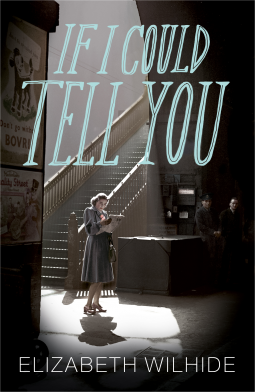
Suffolk, 1939: Julia Compton has a beautifully well-ordered life. Once a promising musician, she now has a handsome husband who pays the bills, a young son she adores and a housekeeper who takes care of her comfortable home. Then on the eve of war something unexpected happens. She falls in love. The consequences are devastating. Cut off from family and friends, Julia loses everything. Penniless, denied access to her son, completely unequipped to fend for herself, she is cast adrift in wartime London with her bohemian filmmaker lover Dougie. As invasion looms and the bombs rain down her struggle is only beginning. While Dougie seeks truth wherever he can find it, Julia finds herself lost. Before long, ruined and broken, she faces a choice - succumb to her fate, or fight to forge a new identity in the heat of war.
Suffolk, 1939: Julia Compton has a beautifully well-ordered life. Once a promising musician, she now has a handsome husband who pays the bills, a young son she adores and a housekeeper who takes care...
Description
Suffolk, 1939: Julia Compton has a beautifully well-ordered life. Once a promising musician, she now has a handsome husband who pays the bills, a young son she adores and a housekeeper who takes care of her comfortable home. Then on the eve of war something unexpected happens. She falls in love. The consequences are devastating. Cut off from family and friends, Julia loses everything. Penniless, denied access to her son, completely unequipped to fend for herself, she is cast adrift in wartime London with her bohemian filmmaker lover Dougie. As invasion looms and the bombs rain down her struggle is only beginning. While Dougie seeks truth wherever he can find it, Julia finds herself lost. Before long, ruined and broken, she faces a choice - succumb to her fate, or fight to forge a new identity in the heat of war.
Available Editions
| EDITION | Hardcover |
| ISBN | 9780241209592 |
| PRICE | CA$27.99 (CAD) |
Available on NetGalley
| Send To Kindle (PDF) |
| Download (PDF) |
Featured Reviews
|
My Recommendation
|
|
What an amazing journey into the past. I opened this book and found myself in a time where morality was paramount and a sense of duty and honour to serve King and Country, in every possible way, was your duty. Elizabeth Wilhide has captured the era perfectly. The vivid descriptions of a pre-war 1939 Britain followed by the blitz were so authentic and the contrast between rural Britain and London very dramatic. As the countryside and small coastal towns filled with children from the cities, the cities filled with rubble from the endless bombings. It was also a time when marriage was meant to be for life and divorce was frowned upon, especially if a third party was involved. Julia Crompton, at 32, had always been a faithful wife and devoted mother to her son, until she saw Dougie. He was irresistible but it lead to devastating consequences for her. Julia was destined to lose more than her reputation. This is a brilliant story that kept me awake until I finished the whole book. This story is shocking, sad and heartbreaking at times. I would recommend this book for anyone that likes a truly realistic feel for the past. It certainly ticked all the boxes for me. I wish to thank Netgalley and Penguin Books for allowing me to read and review this book. |
My Recommendation
|
|
My Recommendation
|
|
Another 1940s read - but one that is very different in tone. Julia Compton is the terribly proper wife and mother, her husband highly-respectable and her home well-ordered. Her only child, a son, is clean and healthy, with appropriate school-boy concerns. Essentially, she's Celia Johnson. But then one day in 1939, a film crew comes to shoot a documentary about the local fishing industry and Julia meets Dougie Birdsall, the crew's director. And it all goes a bit topsy-turvy. This is Brief Encounter without the stiff upper lip or the cups of tea. From the very beginning, a prologue set in 1944 warns us that this is all going to end in tears. I was impressed by this though, If I Could Tell You may be chick-lit, but if so it is of the highest quality. I have mentioned on more than one occasion how I feel about adultery narratives - not a fan. Still, somehow I did find myself drawn into Julia's situation and although I winced at her actions, particularly since her husband was clearly a decent man, I never really felt moved to judge her. It's kind of like a Diary of a Provincial Lady gone a bit wrong. Julia has all of the accouterments of middle-class life but finds herself still dissatisfied. From the beginning, her encounters with Dougie crackle with sexual tension, with Dougie's film crew eyeing them blearily from the side-lines, knowing where all of this will end up. Even during their separations, Dougie bombards Julia with letters full of desire. I felt that Wilhilde captured the period perfectly - having read a good deal around this era, the atmosphere of Blitz-torn London was incredibly evocative. I was reminded of The Love Charm of Bombs, the account of various writers' experience of living through the conflict in the capital. The Blitz really does seem to have loosened many people's inhibitions, for after all, what is the point of sticking to the rules if at any point one may find oneself on the wrong side of an air raid? Thrown out by her husband, Julia finds herself in the midst of a group of Bohemian artists, writers and film producers - a long way from where she began. It was interesting too to see the archaic 1940s divorce laws play out - when I was studying 1940s fiction, I remember reading an explanation of the legislation using Brief Encounter as a case study. Julia is cast out from polite society, unable to see her child, only allowed to write to him via her husband and battling to even be allowed visitation given her status as adulteress. It is the details such as the 'collusion' - that if a cuckolded husband slept with his wife having found out about her adultery, he would be 'colluding with her' and less likely to be granted a divorce. Whenever people argue that we don't need feminism, we need to remember how far we have come. This is not a novel about a woman being shamed or villified for her 'offence', but Julia's new life does quickly become very difficult. She has no idea of how to cook, having always had a cook to instruct instead. She cannot clean, wash clothes - she has no skills other than piano-playing and a pleasant speaking voice. Dougie has not the same means as her husband Richard and it is easy to sigh and consider that Julia has made her bed and now must lie in it - Dougie bursts out laughing the first time that Julia asks which day his cleaning woman visits. I was reminded of Emma Carter, the loose woman of The Archers who left her husband with a well-paid job for his unemployed brother who had no qualifications and then proceeded to belly-ache for years about being 'punished' by poverty for leaving her husband. It is not a punishment for a choice, but it is a consequence and complaining invites very little sympathy. But that is perhaps my Grandma speaking. I felt that If I Could Tell You was a book for the true 1940s enthusiast - Dougie is involved in the making of a film 'They Also Serve', a clear nod to In Which We Serve, which really did star Celia Johnson. Netta, the housewife who provides shelter to Dougie and Julia from the Blitz, is feted in a local magazine for her recipe which involves 'an inventive use of carrots'. Even her name evokes associations with the well-known wartime diarist Nella Last and Netta does keep diaries for her children. This is no Anna Karenina, although a reference is made to that during the course of the novel. The passion between Dougie and Julia is not enough to survive the privations of wartime - there is a horrible claustrophobia to Julia's dependency on this unreliable man, but unlike the Victorian era, there is more scope for her to seek independence and also - thankfully - some responsibility. Julia may lament her victimhood and all that she has lost, but another steely-eyed character tells her quietly that she will find this all a great deal easier to survive if she acknowledges her own part in it. On some level she had not been enjoying her marriage. There are many grim moments to If I Could Tell You, but perhaps the most surprising thing about this novel about a woman choosing heart over head is that the defining relationship is in fact the one she has with herself, and of course her child. Young Peter is apparently stuck in boarding-school 'for the duration' of the war but this is not enough to protect him from the repercussions of his parents' divorce. It is his reaction which most attracted my sympathy and indeed my interest - there were interesting echoes to in the way that it was his maternal grandfather's stern British values which helped Peter to recover. There was much to enjoy here - despite scaling the highs and lows of passionate romance, it feels like a far more considered look at familial breakdown in the 1940s. Elizabeth Wilhilde tells Julia's story without judgment and gives us a compelling glimpse into a world which mixed people who would never have met before and who were drawn into situations which they would never have expected. Julia is captured on camera for wartime propaganda but her true self is far more complex than simply the girl keeping the home fire burning - If I Could Tell You gives the lie to wartime propaganda and illustrates what was for many a confusing and difficult time, where death could strike without warning. We first meet Julia as a woman on the brink, in a dangerous place and in a worrying state of mind. There were many women in the 1940s who would have recognised her situation, unsettled by the conflict and finding themselves adrift in society. Julia often feels like a woman who is not being heard - discontented (and no less so having left her husband), she is a heroine who despite her faults, I found myself supporting. Highly readable and very thought-provoking, I found this a hard book to put down - a very humane look at a traumatic time in our history. |
My Recommendation
|
Tina F, Reviewer
|
My Recommendation
|
|
This book is probably categorised as historical romance which strictly speaking it is as it opens in Suffolk in 1939 and is most definitely about love. But don’t be fooled this book is about so much more: a mother’s love, a woman’s place, and the awfulness of war on the home front. Julia Compton has a good life, her husband provides, her son is at a good boarding school and as her middle class existence decrees she arranges her household with the help of her housekeeper while she plays the piano. Not able to pursue a career as a concert pianist she is satisfied with her comfortable small town way of living although the prospect of war is a potential aggravation. And then one day while watching a film crew on the cliff near her home she falls in love. She may just as well have fallen over the cliff for the huge impact this has on her life. So well written, this story plunges us into the upheaval that takes place when Julia loses her home, her husband and her beloved son. The social mores of married life prior to WW2 demand that she gives it all up if she wishes to be with her film director lover, Dougie. Nothing has prepared her for the turmoil of being Dougie’s new partner and the readers is swept along with her helpless passion. Taking us with her to London and the depravations of the wartime city, we cower under the stairs to avoid the Blitz and follow her through bomb damaged streets and heroic acts of bravery undertaken by its ordinary citizens. This is probably the most I have ever identified with the suffering of those under constant bombardment during the war, due to Wilhide’s superb writing. Dougie and Julia are in love and live together when he is not away filming. But they are not a proper couple; they are mesmerised by each other but haunted by ambition on his part and jealousy and confusion on her’s. They are so different: he is not used to being faithful. She is used to having the status of a wife and with Dougie she feels subjugated, until she finds a use for her musical talents. I shall say no more of the narrative but can recommend this book as a good story as well as giving so much insight into relationships in a suffocating time for women and an exciting time for men. The book and characters have stayed with me and I feel more understanding of a time of vast turmoil in all aspects of life during World War Two. |
My Recommendation
|
Additional Information
Available Editions
| EDITION | Hardcover |
| ISBN | 9780241209592 |
| PRICE | CA$27.99 (CAD) |
Available on NetGalley
| Send To Kindle (PDF) |
| Download (PDF) |
Featured Reviews
|
My Recommendation
|
|
What an amazing journey into the past. I opened this book and found myself in a time where morality was paramount and a sense of duty and honour to serve King and Country, in every possible way, was your duty. Elizabeth Wilhide has captured the era perfectly. The vivid descriptions of a pre-war 1939 Britain followed by the blitz were so authentic and the contrast between rural Britain and London very dramatic. As the countryside and small coastal towns filled with children from the cities, the cities filled with rubble from the endless bombings. It was also a time when marriage was meant to be for life and divorce was frowned upon, especially if a third party was involved. Julia Crompton, at 32, had always been a faithful wife and devoted mother to her son, until she saw Dougie. He was irresistible but it lead to devastating consequences for her. Julia was destined to lose more than her reputation. This is a brilliant story that kept me awake until I finished the whole book. This story is shocking, sad and heartbreaking at times. I would recommend this book for anyone that likes a truly realistic feel for the past. It certainly ticked all the boxes for me. I wish to thank Netgalley and Penguin Books for allowing me to read and review this book. |
My Recommendation
|
|
My Recommendation
|
|
Another 1940s read - but one that is very different in tone. Julia Compton is the terribly proper wife and mother, her husband highly-respectable and her home well-ordered. Her only child, a son, is clean and healthy, with appropriate school-boy concerns. Essentially, she's Celia Johnson. But then one day in 1939, a film crew comes to shoot a documentary about the local fishing industry and Julia meets Dougie Birdsall, the crew's director. And it all goes a bit topsy-turvy. This is Brief Encounter without the stiff upper lip or the cups of tea. From the very beginning, a prologue set in 1944 warns us that this is all going to end in tears. I was impressed by this though, If I Could Tell You may be chick-lit, but if so it is of the highest quality. I have mentioned on more than one occasion how I feel about adultery narratives - not a fan. Still, somehow I did find myself drawn into Julia's situation and although I winced at her actions, particularly since her husband was clearly a decent man, I never really felt moved to judge her. It's kind of like a Diary of a Provincial Lady gone a bit wrong. Julia has all of the accouterments of middle-class life but finds herself still dissatisfied. From the beginning, her encounters with Dougie crackle with sexual tension, with Dougie's film crew eyeing them blearily from the side-lines, knowing where all of this will end up. Even during their separations, Dougie bombards Julia with letters full of desire. I felt that Wilhilde captured the period perfectly - having read a good deal around this era, the atmosphere of Blitz-torn London was incredibly evocative. I was reminded of The Love Charm of Bombs, the account of various writers' experience of living through the conflict in the capital. The Blitz really does seem to have loosened many people's inhibitions, for after all, what is the point of sticking to the rules if at any point one may find oneself on the wrong side of an air raid? Thrown out by her husband, Julia finds herself in the midst of a group of Bohemian artists, writers and film producers - a long way from where she began. It was interesting too to see the archaic 1940s divorce laws play out - when I was studying 1940s fiction, I remember reading an explanation of the legislation using Brief Encounter as a case study. Julia is cast out from polite society, unable to see her child, only allowed to write to him via her husband and battling to even be allowed visitation given her status as adulteress. It is the details such as the 'collusion' - that if a cuckolded husband slept with his wife having found out about her adultery, he would be 'colluding with her' and less likely to be granted a divorce. Whenever people argue that we don't need feminism, we need to remember how far we have come. This is not a novel about a woman being shamed or villified for her 'offence', but Julia's new life does quickly become very difficult. She has no idea of how to cook, having always had a cook to instruct instead. She cannot clean, wash clothes - she has no skills other than piano-playing and a pleasant speaking voice. Dougie has not the same means as her husband Richard and it is easy to sigh and consider that Julia has made her bed and now must lie in it - Dougie bursts out laughing the first time that Julia asks which day his cleaning woman visits. I was reminded of Emma Carter, the loose woman of The Archers who left her husband with a well-paid job for his unemployed brother who had no qualifications and then proceeded to belly-ache for years about being 'punished' by poverty for leaving her husband. It is not a punishment for a choice, but it is a consequence and complaining invites very little sympathy. But that is perhaps my Grandma speaking. I felt that If I Could Tell You was a book for the true 1940s enthusiast - Dougie is involved in the making of a film 'They Also Serve', a clear nod to In Which We Serve, which really did star Celia Johnson. Netta, the housewife who provides shelter to Dougie and Julia from the Blitz, is feted in a local magazine for her recipe which involves 'an inventive use of carrots'. Even her name evokes associations with the well-known wartime diarist Nella Last and Netta does keep diaries for her children. This is no Anna Karenina, although a reference is made to that during the course of the novel. The passion between Dougie and Julia is not enough to survive the privations of wartime - there is a horrible claustrophobia to Julia's dependency on this unreliable man, but unlike the Victorian era, there is more scope for her to seek independence and also - thankfully - some responsibility. Julia may lament her victimhood and all that she has lost, but another steely-eyed character tells her quietly that she will find this all a great deal easier to survive if she acknowledges her own part in it. On some level she had not been enjoying her marriage. There are many grim moments to If I Could Tell You, but perhaps the most surprising thing about this novel about a woman choosing heart over head is that the defining relationship is in fact the one she has with herself, and of course her child. Young Peter is apparently stuck in boarding-school 'for the duration' of the war but this is not enough to protect him from the repercussions of his parents' divorce. It is his reaction which most attracted my sympathy and indeed my interest - there were interesting echoes to in the way that it was his maternal grandfather's stern British values which helped Peter to recover. There was much to enjoy here - despite scaling the highs and lows of passionate romance, it feels like a far more considered look at familial breakdown in the 1940s. Elizabeth Wilhilde tells Julia's story without judgment and gives us a compelling glimpse into a world which mixed people who would never have met before and who were drawn into situations which they would never have expected. Julia is captured on camera for wartime propaganda but her true self is far more complex than simply the girl keeping the home fire burning - If I Could Tell You gives the lie to wartime propaganda and illustrates what was for many a confusing and difficult time, where death could strike without warning. We first meet Julia as a woman on the brink, in a dangerous place and in a worrying state of mind. There were many women in the 1940s who would have recognised her situation, unsettled by the conflict and finding themselves adrift in society. Julia often feels like a woman who is not being heard - discontented (and no less so having left her husband), she is a heroine who despite her faults, I found myself supporting. Highly readable and very thought-provoking, I found this a hard book to put down - a very humane look at a traumatic time in our history. |
My Recommendation
|
Tina F, Reviewer
|
My Recommendation
|
|
This book is probably categorised as historical romance which strictly speaking it is as it opens in Suffolk in 1939 and is most definitely about love. But don’t be fooled this book is about so much more: a mother’s love, a woman’s place, and the awfulness of war on the home front. Julia Compton has a good life, her husband provides, her son is at a good boarding school and as her middle class existence decrees she arranges her household with the help of her housekeeper while she plays the piano. Not able to pursue a career as a concert pianist she is satisfied with her comfortable small town way of living although the prospect of war is a potential aggravation. And then one day while watching a film crew on the cliff near her home she falls in love. She may just as well have fallen over the cliff for the huge impact this has on her life. So well written, this story plunges us into the upheaval that takes place when Julia loses her home, her husband and her beloved son. The social mores of married life prior to WW2 demand that she gives it all up if she wishes to be with her film director lover, Dougie. Nothing has prepared her for the turmoil of being Dougie’s new partner and the readers is swept along with her helpless passion. Taking us with her to London and the depravations of the wartime city, we cower under the stairs to avoid the Blitz and follow her through bomb damaged streets and heroic acts of bravery undertaken by its ordinary citizens. This is probably the most I have ever identified with the suffering of those under constant bombardment during the war, due to Wilhide’s superb writing. Dougie and Julia are in love and live together when he is not away filming. But they are not a proper couple; they are mesmerised by each other but haunted by ambition on his part and jealousy and confusion on her’s. They are so different: he is not used to being faithful. She is used to having the status of a wife and with Dougie she feels subjugated, until she finds a use for her musical talents. I shall say no more of the narrative but can recommend this book as a good story as well as giving so much insight into relationships in a suffocating time for women and an exciting time for men. The book and characters have stayed with me and I feel more understanding of a time of vast turmoil in all aspects of life during World War Two. |
My Recommendation
|