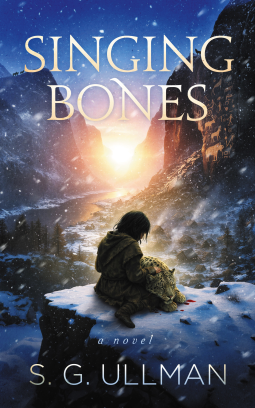
Singing Bones
This title was previously available on NetGalley and is now archived.
Send NetGalley books directly to your Kindle or Kindle app
1
To read on a Kindle or Kindle app, please add kindle@netgalley.com as an approved email address to receive files in your Amazon account. Click here for step-by-step instructions.
2
Also find your Kindle email address within your Amazon account, and enter it here.
Pub Date Mar 25 2026 | Archive Date Mar 25 2026
Talking about this book? Use #SingingBones #NetGalley. More hashtag tips!
Description
Nearly 8,300 years ago, a sudden climate collapse reshaped the earth. Winters grew longer and colder, harvests failed, coastlines flooded, and the ground itself became unstable. For the Téuta, a settled Neolithic village that had endured for generations, survival became uncertain.
Eini is born with troubling visions of disaster—warnings her people dismiss as superstition. As the climate worsens and violence spreads among desperate neighbors, Eini spends her lifetime trying to protect her family and preserve the fragile traditions that hold her community together. When catastrophe finally strikes, the Téuta must face the unthinkable: abandoning their ancestral home and redefining who they are in a transformed world.
Told across generations, Singing Bones follows the lives of women whose strength, memory, and resilience shape the fate of their people—from prophecy, to survival, to leadership forged in loss. Song, story, and shared history become tools of endurance in a world where nothing can be taken for granted.
Available Editions
| EDITION | Ebook |
| ISBN | 9798986761046 |
| PRICE | $7.99 (USD) |
| PAGES | 306 |
Available on NetGalley
Available to Buy
Buy on Amazon Buy on BN.com Buy on Bookshop.org Buy on KoboAverage rating from 27 members
Featured Reviews
 Jann H, Educator
This historical fiction book takes place maybe 8000 years ago. It opens with Eini who intuitively knows something dangerous is in the future. She can't seem to nail down what it is so her tribe ignores her. But each winter is longer and colder than the ones before. The crops don't grow as before. There are changes, but the tribe adapts and again, no thought is given to the perilous future -
Until the future comes to the tribe and then it's too late for the bulk of the tribe. They eventually have to move from the place of their ancestors and they follow Prsedi because Eini is dead.
Ullman does a good job of indicating the differences in the tribes - in the way they dress, their cultures and their social mores.
I did not read the previous book so this certainly works as a stand alone.
 Sophie S, Reviewer
3.5 🌟 (rounded up to 4)
A historical fiction based in tribal times around 8000 years ago.
-3rd person, following multiple characters
-An unknown danger
-Mild magic (more like senses)
I thoroughly enjoyed this book. There were points I got a little muddled, but otherwise, it was an enjoyable read.
Favourite characters
-Eini
-Prsedi
-Senek
 Lisa G, Reviewer
Singing Bones is a prequel to the already published book, The Teuta's Child, which I haven't read. Some of my confusion about the Teuta culture and geographical location is probably made clear in that first book. That said, this story is a fascinating look at the global consequences of a real geological event that occurred about 8,000 years ago when an ice sheet collapsed. The Teuta was a large, settled, permanent village whose people had farmed and raised sheep and goats for many generations. Now, for reasons they don't understand, the summer rains are fewer, the winters colder, and there are roving bands of violent raiders. This story is told through a multitude of voices as they struggle with what they cannot control. This may be a story of a prehistoric people, but the similarities with today's climate change are unmistakable. The hesitancy to leave a home, even when it's no longer viable, and the social issues that arise with displaced communities are in today's headlines. It was easy to understand the reluctance to leave behind not just their dwellings and familiar landscape, but the very bones of their Tueta ancestors. Singing Bones tugged at my heartstrings while giving me plenty to think about.
Rose T, Reviewer
Singing Bones is a collection of short, reimagined fairy tales that feels both ancient and unsettlingly modern. S.G. Ullman takes familiar folklore elements and pares them down to their sharpest emotional core. These stories are brief, sometimes only a few pages long, but they carry weight. There is very little excess. Every image, every line of dialogue feels intentional.
What stood out most to me was the restraint. Instead of long descriptions or elaborate world building, Ullman relies on implication. The tone is quiet but haunting. Many of the stories explore power, transformation, betrayal, and survival, especially from a female perspective. There is an undercurrent of grief and longing running through the collection, which gives it cohesion even as each tale stands on its own.
Some pieces hit harder than others. A few felt so brief that I wanted just one more layer of development, especially when the emotional stakes were high. But there is also something powerful about that sparseness. The reader is asked to sit with discomfort and fill in the shadows. It reads like a collection meant to be savored slowly rather than consumed in one sitting.
Overall, Singing Bones succeeds as a dark, literary take on fairy tale traditions. It is not whimsical or comforting. It is sharp, often unsettling, and deeply thoughtful. Readers who enjoy folklore retellings with a somber tone and strong thematic focus on agency and consequence will likely appreciate this collection.
 Jenny R, Reviewer
I really enjoyed Singing Bones by S.G. Ullman. This is a prequel to Téuta’s Child, which I have not read (but I will) and I didn’t feel like I was missing anything as Singing Bones worked well as a standalone.
Set about 8,000 years ago in the Neolithic age, it’s a historical fiction based around a real climate event that in this story threatens the survival of the Téuta people. Eini, a young girl in the village, starts having strange dreams and visions and feels deep down that something terrible is coming. Eini can’t pinpoint what it is, but she knows it is going to put her village in danger, and most don’t believe her. She meets a shaman named Seneks, who understands that she is telling the truth and is willing to support her.
I really loved the writing as it was so beautiful and filled with vivid descriptions that made it easy to picture the land and fully sink into the world of the Téuta.
The pacing is on the slower side, but I think that really works for this story. It fits the atmosphere and the time period. Even though it unfolds gradually, I was never bored and stayed interested in the story.
What really stood out to me was the strong sense of love and respect for the earth, along with the resilience and endurance of the people. While there were several memorable characters, Eini was my favorite. The story follows her throughout her life, and her determination to protect and help her people never wavers, even when others doubt her or think she’s strange. She has so much heart, and that’s what stayed with me most. She trusted herself, didn’t care what others thought about her and continued to care and want to protect her people.
Overall, it’s a beautifully written story full of hope, love, and meaning.
 Sara S, Reviewer
I received a free DRC of this book through Netgalley and the publisher. This book focuses on a tribe set in BCE, the Teuta, who have some people with special senses who feel like something terrible is coming to them in the future. The book is great at setting the scene and feeling like you are far back in time with the Teuta people. The characters felt complete and I was invested in their stories. There are some time jumps forward between chapters, but it felt natural to get to the next story point and not forced. I would read more in this series.
 Books P, Reviewer
“The past is what we are, and the future is what we have.”
Historical fiction set 8300 years ago
Multiple POV
Ancient tribal society
Mysticism and visions
Slow paced character driven story
Set around 8300 years ago, this story follows the ancient Tuéta people as they come to terms with the aftermath of a devastating natural event.
They must adapt to new ways of living, learning and working together to ensure their people survive and flourish, even after losing so much.
This book is beautifully written. It isn’t hard to imagine how meaningful life must have been for the Tuéta people, especially their generosity and connection to one another. I experienced many different emotions while reading, including grief, desperation, resilience and hope. At many points in the story, I felt a deep connection to the characters and could really sense their emotional despair.
This is a slow paced story, which I felt was necessary to truly understand the world and connect with its characters. Maintaining that pace while still building depth in the characters is not easy to achieve, and I appreciated the care the author took in developing the Tuéta people and their world. I also enjoyed exploring the abilities some of the characters possess, including visions, heightened senses and elements of mysticism.
Having the story told through multiple perspectives worked beautifully and added further depth to the reading experience.
A few of my favourite characters:
Eini, whom we meet at the beginning of the story. She has visions that warn of the disaster to come.
Seneks, the shaman and healer who understands Eini and does not judge her for her visions, even when she doubts herself.
Welo, who like Eini is different and able to sense things others cannot. I enjoyed following his journey as he sets out to explore what Eini believes he must.
Akesh, with her beautiful voice, who has lost so much yet continues moving forward.
Prsedi, the leopard girl, who does not yet know the importance of the role she will eventually play for the Tuéta people.
This is the prequel to The Tuéta’s Child, and I will definitely be reading that next as I enjoyed this book so much.
Thank you to NetGalley and S.G. Ullman for providing me with an ARC in exchange for an honest review.
 beatrice v, Reviewer
In 6262 BCE Eini is a woman living in a Teuta village. She has troubling visions of impending doom and disaster, some which materialise and others that don’t. She has no clarity about her visions. Yet they persist. Lacking in today’s mod cons the Teuta are mostly unaware of catastrophes or other disasters occurring in the wider world. They learn of such episodes from tales told them by visiting nomadic communities. Meanwhile their neighbours grow restless and violent. The Teuta however continue to live peaceably with a few adjustments. Catastrophe does eventually strike this settled Neolithic village. In this transformed world they have to face new obstacles and start living all over again.
This is the narrative that unfolds in Singing Bones by S G Ullman. It is the prequel to Teutas Child yet can be read as a standalone. Ullman tells this narrative like folklore adding to its ambience. The story spans generations as Ullman masterfully uses song, story and their shared culture to weave a poignant tale of survival and strength. True the novel is a slow burn, but I was held entranced rooting for the Teuta peoples wanting them to surmount their hurdles and survive. Ullmans bravura shines through as he captures their life all those years ago. It was complex in its simplicity. I saw the Teuta people, felt their confusion, distress and pain. The book was a lucid dream. The Authors Notes gave additional insight into the background for Singing Bones. Thank you, Ullman, for this fantastic insight into life in BCE.
Joyce S, Reviewer
Singing Bones by S G Ullman takes us back 8000 years to a civilization called the Teuta. These people lived together in the mountains, herding, farming, and living off the land. They lived in the same place, generation after generation, keeping their ancestors memories alive with them. However, their world seems to be changing through the years. Winters are becoming colder and there was less rain in the summer. Raiders were always a worry as they sometimes wiped out entire villages, killing people and taking what they wanted.
Our story takes us through the lives of some of those members, Eini, Seneks, Sntodi, Welo, Akesh, Belisse and Prsedi, plus their families. As it unfolds, it brings us to the disaster that takes place around 6100 BCE. An ice sheet at the top of their world collapses, sending mountains of rocks and debris raining down on their land. Much of the village was killed. Those that were left had to figure out how to go on living. The idea of leaving their home was not something they wanted to do. Setting up home in a new land was terrifying. Because of all the changes taking place on the earth, they decided to move down from the mountains into the lowlands where winters were not as cold. The river was closer so they did not have to go as far to water their crops or for their own use. This is where they set up their new village with those of the Teuta that were left.
The story is a prequel to The Teuta’s Child. I would have liked to have read this one first and now feel the need to reread The Teuta’s Child. I found that the story parallels our lives in many ways. The earth seems to be going though climate change as well as countries fighting for their land or finding new ones after being displaced from their present one. I enjoyed the book and found it very interesting to learn about ancient civilizations. I would definitely recommend reading.
Thank you Net Galley as well as The Book Whisperer for giving me the opportunity to read this ARC.
 Virginia W, Reviewer
Life was quite different around 8300 BC. Hunter-gatherers got fresh meat daily and developed jerking and salt storage. The calendar was kept by a medicine man or shaman and life hinged around them as they were the keys to the health and welfare of the population.
Trading with other villages that had expertise in stone work and spear making as well as agriculture and herding helped to settle tribes into static areas rather than wandering with the seasons.
But time is forcing change and tribes are dealing with it differently. Told from multiple POVs, the differences in tribal leadership, the decisions and directions each takes are engaging. The book is informational and thought provoking. Recommended to any who enjoys historical fiction or exploration of ancient civilizations and their societies! 4.5 stars – CE Williams
Caroline P, Reviewer
An interesting and mystical journey into a real climate change event and a picture of what human civilization looked like 7000 years before Christ.
Natalie H, Reviewer
Singing Bones
By S. G. Ullman
The story here begins in 6262 BCE. It is a highly speculative telling of how, in ancient times, climate change remade the world for the people living then.
In this book, people are either nomadic or they are farmers/hunters who live in one place. They worship gods and honor their dead as their shamans direct. Their language is advanced. The Teuta people are of the farming group with a stationary lifestyle.
Eini, as the story begins, is a young girl who experiences vague dreams/visions of bad things to come. When she tries to speak of them to her elders, she is ignored – by all except Seneks, the shaman. But as her visions become reality and her people are forced from the only home they have known, Eini and other women must take on leadership roles to help their people adapt to their new way of life, leaving behind not only their village but the bones of their ancestors.
The book is well written but somewhat slow paced. Its parallels with our current preoccupation with climate change are what make it worth reading. After all, the earth is always in constant flux.
Thank you to the publisher and NetGalley for this ARC.
Readers who liked this book also liked:
Sophia Huneycutt
General Fiction (Adult), Horror, Mystery & Thrillers