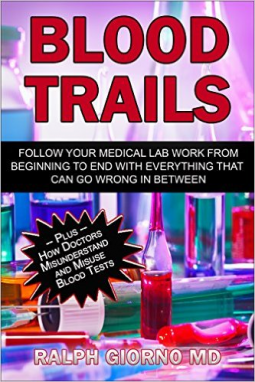
Blood Trails
This title was previously available on NetGalley and is now archived.
Send NetGalley books directly to your Kindle or Kindle app
1
To read on a Kindle or Kindle app, please add kindle@netgalley.com as an approved email address to receive files in your Amazon account. Click here for step-by-step instructions.
2
Also find your Kindle email address within your Amazon account, and enter it here.
Pub Date Jun 4 2015 | Archive Date Jan 18 2016
Description
Blood Trails offers in depth understanding of things that can go wrong with every medical laboratory test. Blood Trails focuses on high volume tests such as TSH, potassium, Vitamin B12 and Vitamin D and other tests to provide detailed analyses of issues specifically pertaining to those tests. Blood Trails examines the entire medical screening industry and discusses whether doctors and patients are doing a disservice to themselves by aggressive screening for disease that may not be medically necessary. Blood Trails discusses some simple tests that can be used to more accurately determine your functional Vitamin B12 and Vitamin D status and also discusses a group of tests that can predict how long you will live, regardless of what expensive DNA sequencing tells you about your genetic makeup.
The book discusses misuse and misunderstanding of diagnostic cancer testing, and strongly advocates the IDLE (indolent lesions of epithelial origin) concept. It discusses the importance of obtaining second opinions on surgical biopsies and points out the difficulties of obtaining such opinions because of conflicts of interest and monopolistic tendencies in the practice of pathology, the medical specialty involved in biopsy diagnosis. Finally the book introduces the death markers, simple lab tests that give an indication of how long you will live.
Available Editions
| EDITION | Other Format |
| ISBN | 9780996490009 |
| PRICE | $10.99 (USD) |
Average rating from 10 members
Featured Reviews
 Lisa k, Reviewer
I found this book very informative and useful. I like how it was written it was easy to understand I worked in the health field for over 20 years but even if I hadn't I still think I would have been able to comprehend it. I like the use of graphs of and charts also . I would recommend this book I enjoyed it.
Readers who liked this book also liked:






Demers; Véronique Demers; Véronique Demers
Children's Fiction