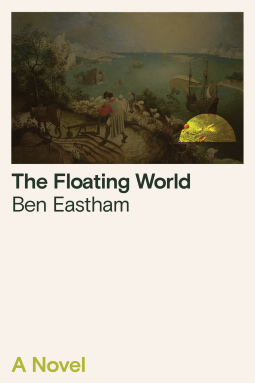
The Floating World
Sign In or Register Now to see if this title is available for request.
Buy on BN.com Buy on Bookshop.orgSend NetGalley books directly to your Kindle or Kindle app
1
To read on a Kindle or Kindle app, please add kindle@netgalley.com as an approved email address to receive files in your Amazon account. Click here for step-by-step instructions.
2
Also find your Kindle email address within your Amazon account, and enter it here.
Pub Date Sep 29 2026 | Archive Date Sep 29 2026
Astra Publishing House | Astra House
Talking about this book? Use #TheFloatingWorld #NetGalley. More hashtag tips!
Description
For fans of novels of Vincenzo Latronico’s Perfection and Blake Butler’s Molly
On a remote island in the Aegean, Morel, a billionaire, is constructing a utopian community beneath a giant geodesic dome. The “Floating World” is advertised as a refuge for only the wealthiest people from the crises engulfing the planet.
Our protagonist is offered a job working on the spectacular art exhibition that will inaugurate this closed society. Recognizing that this is a branding exercise for ethically dubious property development, he is nonetheless attracted by the opportunity to work with an artist he once hero-worshipped—the reclusive, semi-retired Finn Reith—and to restart a life that stopped with the loss of his wife.
At first glance, the Floating World seems like a paradise, but it soon becomes clear that all is not well beneath the shimmering dome. Why is the billionaire head of the corporation ensconced in his own residence on the far side of the island, surrounded by bodyguards? Why are the workers so reluctant to speak of their experiences? Our protagonist’s gaze is distracted from these indicators of some deeper disturbance by Selima, the uncannily familiar technical director of the exhibition.
The Floating World is a dystopia and Bildungsroman, steeped in atmosphere and sparkling with intelligence, and signals the arrival of a major new talent on the fiction scene.
A Note From the Publisher
A GRIPPING MYSTERY WITH AN UNEXPECTED ENDING: This novel is a master-class in making visible the unseen and bringing clarity to the unclear. The impressive grassroots activism weaving itself through the plot turn The Floating World into a field for real revolution.
SAVVY AND SOPHISTICATED POLITICAL COMMITMENTS: The political commitments of this gripping literary debut are subtle but strong, concerning the underdog versus the billionaire, the power of the collective over the individual, and how the underdog, backed by the power of the masses, can win.
Advance Praise
“An immersing, crystalline debut novel that reaches out to a world
in crisis; elegant, emotional, deeply serious, and gloriously witty.”
—Deborah Levy, author of August Blue
“An immersing, crystalline debut novel that reaches out to a world
in crisis; elegant, emotional, deeply serious, and gloriously witty.”
—Deborah Levy, author of August Blue
Marketing Plan
MARKETING AND PUBLICITY PLANS • Excerpt in major literary publication • National media campaign including print, radio, and online coverage • Pitch for feature stories and profile of the founding editor of The White Review upon publication of his first novel • Target outreach to publications focused on literary fiction, the art world, political fiction, climate fiction and dystopias, international authors, and important contemporary voices • Target outreach to publications that have published Eastham • Bookseller and librarian outreach • Social media campaign • Email marketing campaign • Influencer outreach and giveaways
Available Editions
| EDITION | Other Format |
| ISBN | 9781662603631 |
| PRICE | $26.00 (USD) |
| PAGES | 252 |
Links
Available on NetGalley
Available to Buy
Buy on BN.com Buy on Bookshop.orgAverage rating from 15 members

Featured Reviews
 Media/Journalist 861925
This is the kind of novel from which one must quote repeatedly and at length. In its very first pages there is a passage of such surpassing loveliness that I knew at once I was reading a work of literature and not of fiction: "These shadows were for a long time so insubstantial that I suspected they were the work of my mind, like the shapes on the backs of your eyelids or the blurred scotomas that herald a migraine. And then, startlingly, the bough of a tree above me shimmered out of the black and I slipped into a perfectly realized, silverish realm of pattern and form. Features of the landscape around me appeared as pentimenti in an X-ray: a wavering bush like a phantom limb, a bend in the river scrubbed out to serve the compositional harmony. This shift from one way of seeing to the other I experienced as something like grace."
My pet theory is that intelligence (in an author) and precision (in their prose) will necessarily generate humor on the level of the line, and I am grateful to this novel for bearing it out. "If you find the tinkle of empty nitrous oxide canisters when they are punted down the pavement beautiful, as I do, then London was very beautiful that morning." "I was looking out over the town like some self-consciously melancholy Rückenfigur..." "I talked to the painter about whether our attendance at this event would be held against us in the final judgment. He believed that our presence here was likely terminal to our chances of salvation, but that there was nothing to be gained now from complaining about the fact, and he rose even further in my estimation."
The novel is constituted of such observations and also has, though to me this is entirely superfluous, a high-concept plot (art world maniac employs narrator for frivolous little project in billionaires' island haven). Fortunately the latter does not ruin the former and is even meaningfully integrated within them. A feat!
 Matt B, Reviewer
It seems like this should be a moment for dystopian novels. Eastman does two things in the floating world that make the novel particularly haunting: the novel takes place right before an imminent catastrophe and his narrator is so incapable of cynicism that it makes the reader imagine the novel’s doom sequence.
While the narrator is so naive that the floating world doesn’t feel like an overtly political novel, it engages with three big themes which are grief (the narrator’s wife was killed in some sort of climate related regional war), the social role of art (the narrator is involved in an art project for a techno-billionaire’s end of the world bunker community), and the lines society draws to segment human beings (there is a constant backdrop of protests and mass migration).
Eastman is an art writer of some sort and the book’s portrayal and critique of how wealth and power use art as an instrument are what you’d expect and feel fully developed. The novel’s weakness is its exploration of grief.
Recent climate disaster novels tend to be tragic (like Tea Obreht’s The Morningside), satirical (Kleeman’s Something New Under the Sun), or a sci-fi-ish thriller (Vara’s The Immortal King Rao). Eastman seems to really want this novel to be tragic, but doesn’t spend enough time developing any of his characters. I can fill in the blanks of a story about ecological loss, geopolitical violence, and the sick ways billionaires behave because I’ve peeked at the news. I can maybe imagine the impact of collective grief from the end to the world, but I found the conclusion of this novel melodramatic because I didn’t ever start to care about any of the characters in it.
 Ashley S, Reviewer
This was a brilliantly tense, atmospheric thriller about the illusions of the ultra-wealthy. The contrast between the billionaire's pristine geodesic paradise and the creeping, paranoid dread felt by the workers beneath the dome created a slow-burn mystery that kept me hooked.
Reviewer 1915633
The Floating World immediately caught my attention with its premise: a climate-controlled artistic enclave funded by a billionaire while the rest of the world faces environmental collapse. I was drawn in by its blend of climate fiction, art, wealth, and power, and I appreciated its ambitious themes around privilege, creativity, and culture in times of crisis. Ultimately, though, I never became emotionally invested in the characters, so the stakes never fully landed for me. While I admired the ideas, I wasn't as engaged by the story as I'd hoped to be.
Thank you to the publisher and NetGalley for providing an ARC in exchange for an honest review.
 Mallory M, Reviewer
This was a brilliantly tense, atmospheric thriller about the illusions of the ultra-wealthy, but what really made it stand out to me was the writing. This is the kind of novel that makes you want to quote it repeatedly and at length. The prose is precise, intelligent, and occasionally hilarious, with observations so sharp and beautifully rendered that I knew almost immediately I was reading something special.
The contrast between the billionaire’s pristine geodesic paradise and the creeping, paranoid dread felt by the workers beneath the dome creates a slow-burn mystery that kept me hooked. An art-world maniac employs the narrator for a seemingly frivolous project in a billionaire’s island haven, and while the high concept plot is compelling on its own, it’s the strange observations, metaphors, and meticulous descriptions that give the book its real power.
There are passages of such surpassing loveliness that they stop you in your tracks, alongside moments of wonderfully dry humor. I particularly loved the way the novel can move from something haunting and philosophical to something absurdly funny without ever feeling out of place.
The plot is almost secondary to the experience of reading it, but fortunately, the two work together beautifully. The themes of wealth, isolation, art, perception, and privilege are meaningfully woven into the story rather than simply sitting on top of it.
A strange, cerebral, beautifully written, and genuinely tense novel. A feat!
Paul F, Reviewer
Ben Eastham's The Floating World is published by Fitzcarraldo Editions in the UK and Astra House in the US.
Eastham is known for his writing on art, botk books and in the media, most recently for the Guardian, and for co-founding with Jacques Testard, who also founded and runs Fitzcarraldo, the arts and literature magazine THE WHITE REVIEW.
The (unnamed) first-person narrator of the novel opens his account from a house in the Irish countryside owned by (we later find, an artist) Reith. Some form of economic crash has occurred, the banking system has at least temporarily collapsed, but as an employee at the local garden centre remarks, she is still working, keeping the plants alive until (or if) normality resumes. The narrator then begins to write his account of events on The Floating World, which forms the bulk of the novel, one which we know ends badly:
"If you are impatient to learn who was to blame for the disaster, then you might as well be disappointed now. The truth is that I don’t know. The only thing I can say with any certainty is that it had nothing to do with me."
Our narrator is or was an art critic living in South London. He was widowed at a young age when his wife, Cora, dies of suicide, after, while suffering from depression, visiting an overseas town, one close to a warzone, where her parents had died in an attack, planning to make a film. He decides to become a teacher but is an unsuccessful one, and as his account opens he's been approached by Asha, a friend of Cora's, to participate in an artistic project on The Floating World, rather to the horror of his left-wing best friend, Rotimi.
“The Morel Corporation is really evil,” said Rotimi, “... Just look at the Floating World. It’s literally a doomsday bunker for billionaires. It’s a gated community beneath a giant dome on a desert island. They might as well have built it into the heart of a volcano, they might as well have installed a swimming pool full of sharks, they might as well have put a sign up. You know the Morel Corporation trades with apartheid states, that it manufactures arms, that it has made billions of dollars by defying the embargoes?”
“But it’s not the Morel Corporation I’d be working for,” I objected, “it’s the Morel Foundation. The Morel Corporation is rebuilding the Floating World. The show I’ll be working on is funded by the Morel Foundation, the charitable organization. Legally separate from the corporation.”
The billionaire Morel has conceived the idea of building a utopia-for-the-rich on a Greek island, Pantarei. Rare earth mineral deposits were discovered on the uninhabited island in the late 1950s. A large dome, Harmonia, was built there in the boom years of the 1960s as a colony for mine workers, but had been abandoned in the economic downturn of the 1970s and had remained as a ruin. Morel and his Corporation have purchased the island and are now refurbishing it, as he is told by Sofia, daughter of the original architect.
The reconstruction of Harmonia as the Floating World was a travesty, was the sum of it. The dome had been built to house mine workers and their families, had been modeled on the garden cities of Bournville in England and Garbatella in Italy. It was intended to dignify the lives of ordinary workers rather than to serve as a gated community for the rich, in Sofia’s telling. She couldn’t countenance its renovation as a bolthole for the world’s richest people, because it was a betrayal of her father’s intentions. Her commitment to these principles struck me as charmingly old world.
Morel has commissioned a formerly-retired installation artist Reith, whose works the narrator was introduced to by Cora, to curate a large-scale art installation as part of the opening of the Floating World, and Reith is working with Asha, and her assistant Selima. His job is largely to persuade Morel's investors and potential customers as to the merit of the artistic project, as well as to help Reith with stories from the island to inspire his work.
“Look, Morel is branding the Floating World as a sustainable, holistic, homeostatic community for powerful people who want insurance against the end of the world. So Reith’s project needs to be framed in those terms. Morel must be reassured that the work is spectacular, celebratory, optimistic.”
“Okay,” I said. “But Reith is planning some kind of esoteric death ritual, from what I can gather.”
“Doesn’t matter. Our job is to give Reith the space to make what Reith wants, by convincing Morel that he’s making what Morel wants . That’s what you are here for. To make the work mean whatever Morel wants it to mean, to keep the stakeholders happy and the funders on board. If those people like the sound of what’s coming, then Morel is happy. Which means he’s not on Reith’s case and I’m not on yours.”
“Right. But are you not worried that these people will, you know, check?”
“None of these people give a shit about the actual work,” said Asha, sharply, “as long as the story suits them. They know nothing about art beyond what their advisors tell them, and the advisors know nothing about art beyond its function as a marketing opportunity or tradeable commodity. They will believe what they are told about it, on the condition that everyone else believes it too.”
And our narrator finds himself pulled in conflicting directions - he wants to impress Reith and is (overly) flattered when his suggestions and findings are incorporated in the project; he falls for Selima, but discovers that her and Asha's planned subversion of the project is far more political and activist than simply artistic; and yet he also speaks frequently with Morel, and starts to be sold on the merit of his plans, and looks to find a way that he can be invited as a permanent artistic resident:
"Rotimi was sending me news from London of runs on the banks, soldiers breaking up campus demonstrations, roaming far-right mobs, the overcrowding of broken hospitals, the encampment or expulsion of tens of thousands of people. And here I was, convinced that the waters of a great flood were rising, having weekly conversations with Noah about the progress of his ark. Who wouldn’t be wondering whether there was space left onboard?"
One intriguing motif in the novel is an oil painting based on Albrecht Dürer's engraving of the conversion story of Saint Eustace, one reproduced in the front papers of the novel, the narrator noting the potential ambiguity of Dürer's rendition of the miraculous vision, and perhaps relating to his own confusion.
Overall a worthwhile novel - perhaps a satire of an easy target of corporate art-washing and billionaire-survivalists, but with genuine depth, and a respectful artistic eye, from Eastham's immersion in the world of modern art.
Joy D, Reviewer
An unnamed first-person narrator writes an account of his time at the Floating World, a vast climate-controlled geodesic dome on an island off the coast of Greece, built long ago for a utopian community and fallen into disuse. A billionaire CEO is renovating it into a paradise for the wealthy, planning to sell residential units inside the dome as a refuge against the collapse of civilization. The setting is a dystopian version of our own world, where environmental disaster is well underway and economic failure looks imminent. The narrator is slow to realize there is more to the project than he was told.
The novel is concerned with the way the wealthy use art, class divides, social breakdown, and grief. I particularly enjoyed the writing, which is expressive and frequently witty. I was drawn in immediately and stayed curious about what was really going on beneath the surface. This is a book that requires the reader to assemble a lot of pieces into a whole, and the unsettling atmosphere holds it all together. I could feel the discomfort of existing in this world of natural and social breakdown.
The critique of the mega-rich is effective, especially when compared to the lives of the people doing the labor on the island. It extends to the narrator, whose own position is more compromised than he seems to understand, and watching him not quite see it is part of what makes the book so fascinating. This novel is extremely well crafted, and I need to keep Ben Eastham on my radar.
Readers who liked this book also liked:







Lexi Davis
General Fiction (Adult), New Adult, Romance