*This page contains affiliate links, so we may earn a small commission when you make a purchase through links on our site at no additional cost to you.
Send NetGalley books directly to your Kindle or Kindle app
To read on a Kindle or Kindle app, please add kindle@netgalley.com as an approved email address to receive files in your Amazon account. Click here for step-by-step instructions.
2
Also find your Kindle email address within your Amazon account, and enter it here.
Talking about this book? Use #DontSayPalestine #NetGalley. More hashtag tips!
Description
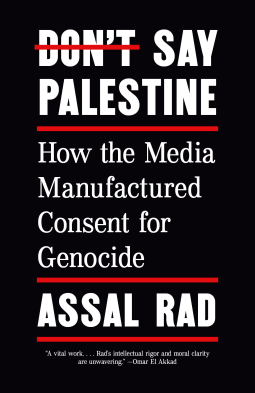
A searing indictment of Western media that lays bare how the "free press," long tasked with speaking truth to power, instead became a vital part of the machinery that enabled the genocide in Palestine
"In this important new work of media criticism, Rad dissects the biases, distortions, and falsehoods by which press institutions conceal the atrocities of empire—as well as delivering a powerful call for accountability, justice, and truth." —Molly Crabapple, author of Here Where We Live Is Our Country
If you’re not writing the truth about crimes against humanity, you’re culpable in them.
Activist and Middle East historian Assal Rad is known as the “headline fixer” for her powerful posts that illustrate how mainstream Western media’s coverage of the Gaza Genocide is filled with double standards. Israelis are described as "children" and "civilians," while Palestinians are "people under 18" and "collateral damage"; Israelis are killed; Palestinians die. Even in the wake of the so-called ceasefire, major Western media continually obfuscates Israeli violence in Palestine: For example, the Associated Press reported that "Gaza's living conditions worsen as strong winds and hypothermia kill 5." No, Rad corrects: Gaza's living conditions worsen as Israel blocks aid.
In Don’t Say Palestine, Rad reveals a pattern of dehumanizing language—in outlets from CNN and the AP to the BBC and The New York Times—so consistently employed throughout the Palestinian genocide that it amounts to a policy. Mainstream Western media consistently downplays Israeli responsibility, “others” Palestinians, and casts doubt on inviolable tenets of international law like the sanctity of hospitals and journalists in war zones. This groundbreaking, eye-opening exposé offers both a moral reckoning and an urgent call to action, mapping with devastating clarity the media’s complicity in whitewashing a human rights crisis.
A searing indictment of Western media that lays bare how the "free press," long tasked with speaking truth to power, instead became a vital part of the machinery that enabled the genocide in Palestine
"In this important new work of media criticism, Rad dissects the biases, distortions, and falsehoods by which press institutions conceal the atrocities of empire—as well as delivering a powerful call for accountability, justice, and truth." —Molly Crabapple, author of Here Where We Live Is Our Country
If you’re not writing the truth about crimes against humanity, you’re culpable in them.
Activist and Middle East historian Assal Rad is known as the “headline fixer” for her powerful posts that illustrate how mainstream Western media’s coverage of the Gaza Genocide is filled with double standards. Israelis are described as "children" and "civilians," while Palestinians are "people under 18" and "collateral damage"; Israelis are killed; Palestinians die. Even in the wake of the so-called ceasefire, major Western media continually obfuscates Israeli violence in Palestine: For example, the Associated Press reported that "Gaza's living conditions worsen as strong winds and hypothermia kill 5." No, Rad corrects: Gaza's living conditions worsen as Israel blocks aid.
In Don’t Say Palestine, Rad reveals a pattern of dehumanizing language—in outlets from CNN and the AP to the BBC and The New York Times—so consistently employed throughout the Palestinian genocide that it amounts to a policy. Mainstream Western media consistently downplays Israeli responsibility, “others” Palestinians, and casts doubt on inviolable tenets of international law like the sanctity of hospitals and journalists in war zones. This groundbreaking, eye-opening exposé offers both a moral reckoning and an urgent call to action, mapping with devastating clarity the media’s complicity in whitewashing a human rights crisis.
*This page contains affiliate links, so we may earn a small commission when you make a purchase through links on our site at no additional cost to you.
Average rating from 11 members
Featured Reviews
Ellie M, Reviewer
5 stars
5 stars
5 stars
5 stars
5 stars
A powerful indictment of western journalism and its deference to power. Assal Rad spells out with devastating precision the role of the media in dehumanising Palestinians and manufacturing consent for genocide. This is an important piece of history, and it’s documented with stark clarity in this book. “Communication can become participation when it legitimises extraordinary violence,” writes Rad, and most devastatingly, it is not so much a failure of the system as it is the system working as it was always meant to work. A powerful piece of work, this is an absolute must read for all of us and for all generations to come.
5 stars
5 stars
5 stars
5 stars
5 stars
Was this review helpful?
Librarian 2072429
5 stars
5 stars
5 stars
5 stars
5 stars
An unfortunate but necessary dissection of western media's complicity in israel's current and on-going genocide of Gaza. It examines the ways in which western media outlets use of deliberate language throughout its coverage of the most well-documented genocide in history paints a grim picture of bias due to external influences that end up distorting the truth and trying to present facts through the false lens of zionist hasbara. I'd consider this required reading for anyone looking to further educate themselves on the reality of the situation in Occupied Palestine as well as anyone looking to de-program themselves from the ever-present network of hasbara in the western world that becomes impossible to ignore once you know what you're looking for.
5 stars
5 stars
5 stars
5 stars
5 stars
Was this review helpful?
Lauren B, Reviewer
5 stars
5 stars
5 stars
5 stars
5 stars
A really fantastic, well written, well researched book that puts words and specific evidence behind the phenomena that many gen-z and gen-alpha (and others as well) have started to notice about western media. This should be required reading for all.
5 stars
5 stars
5 stars
5 stars
5 stars
Was this review helpful?
Elizabeth S, Reviewer
5 stars
5 stars
5 stars
5 stars
5 stars
Don’t Say Palestine by Assal Rad is a fantastic critical look at how words spoken by the media matter on one’s perception of reality. The ability to show in an accessible way the differences between reporting of events that happen to people in Israel versus events that happen to people in Gaza is jaw dropping. I was reading this book and getting more upset at the failure of what I thought was a free and fair reporting by the few mainstream news stations I thought I could trust. Seeing the stark differences in not only what is reported but also how it is reported literally made me so angry. I feel manipulated!
This is such an important book for people to read and see how media (and by that I mean those who own the media) use words and language to form our opinion about what is or is not a genocide. It’s hard to believe that even with all the evidence proven through people on the ground using their own cameras, the high number of casualties not only civilians but also journalists on the ground in Gaza, and testimonies from people like those who work at World Central Kitchen of the atrocities taken place by the Israeli government, people still don’t know what to believe. Or maybe it is easier to say, I don’t know what to believe than it is to actually take a stand one way or the other.
I know this book made me feel uncomfortable but it was a necessary uncomfortable. Opinions can change and through books like this, eyes are opening. Even among Jewish people like myself.
Thank you, Assal Rad, Knopf, Pantheon, Vintage and Anchor for providing this e-ARC via NetGalley for review.
5 stars
5 stars
5 stars
5 stars
5 stars
Was this review helpful?
Featured Reviews
Ellie M, Reviewer
5 stars
5 stars
5 stars
5 stars
5 stars
A powerful indictment of western journalism and its deference to power. Assal Rad spells out with devastating precision the role of the media in dehumanising Palestinians and manufacturing consent for genocide. This is an important piece of history, and it’s documented with stark clarity in this book. “Communication can become participation when it legitimises extraordinary violence,” writes Rad, and most devastatingly, it is not so much a failure of the system as it is the system working as it was always meant to work. A powerful piece of work, this is an absolute must read for all of us and for all generations to come.
5 stars
5 stars
5 stars
5 stars
5 stars
Was this review helpful?
Librarian 2072429
5 stars
5 stars
5 stars
5 stars
5 stars
An unfortunate but necessary dissection of western media's complicity in israel's current and on-going genocide of Gaza. It examines the ways in which western media outlets use of deliberate language throughout its coverage of the most well-documented genocide in history paints a grim picture of bias due to external influences that end up distorting the truth and trying to present facts through the false lens of zionist hasbara. I'd consider this required reading for anyone looking to further educate themselves on the reality of the situation in Occupied Palestine as well as anyone looking to de-program themselves from the ever-present network of hasbara in the western world that becomes impossible to ignore once you know what you're looking for.
5 stars
5 stars
5 stars
5 stars
5 stars
Was this review helpful?
Lauren B, Reviewer
5 stars
5 stars
5 stars
5 stars
5 stars
A really fantastic, well written, well researched book that puts words and specific evidence behind the phenomena that many gen-z and gen-alpha (and others as well) have started to notice about western media. This should be required reading for all.
5 stars
5 stars
5 stars
5 stars
5 stars
Was this review helpful?
Elizabeth S, Reviewer
5 stars
5 stars
5 stars
5 stars
5 stars
Don’t Say Palestine by Assal Rad is a fantastic critical look at how words spoken by the media matter on one’s perception of reality. The ability to show in an accessible way the differences between reporting of events that happen to people in Israel versus events that happen to people in Gaza is jaw dropping. I was reading this book and getting more upset at the failure of what I thought was a free and fair reporting by the few mainstream news stations I thought I could trust. Seeing the stark differences in not only what is reported but also how it is reported literally made me so angry. I feel manipulated!
This is such an important book for people to read and see how media (and by that I mean those who own the media) use words and language to form our opinion about what is or is not a genocide. It’s hard to believe that even with all the evidence proven through people on the ground using their own cameras, the high number of casualties not only civilians but also journalists on the ground in Gaza, and testimonies from people like those who work at World Central Kitchen of the atrocities taken place by the Israeli government, people still don’t know what to believe. Or maybe it is easier to say, I don’t know what to believe than it is to actually take a stand one way or the other.
I know this book made me feel uncomfortable but it was a necessary uncomfortable. Opinions can change and through books like this, eyes are opening. Even among Jewish people like myself.
Thank you, Assal Rad, Knopf, Pantheon, Vintage and Anchor for providing this e-ARC via NetGalley for review.
A Trade of Blood
Robert Jackson Bennett
Mystery & Thrillers, Sci Fi & Fantasy
This site uses cookies. By continuing to use the site, you are agreeing to our cookie policy. You'll also find information about how we protect your personal data in our privacy policy.