*This page contains affiliate links, so we may earn a small commission when you make a purchase through links on our site at no additional cost to you.
Send NetGalley books directly to your Kindle or Kindle app
To read on a Kindle or Kindle app, please add kindle@netgalley.com as an approved email address to receive files in your Amazon account. Click here for step-by-step instructions.
2
Also find your Kindle email address within your Amazon account, and enter it here.
Talking about this book? Use #Centenarian #NetGalley. More hashtag tips!
Description
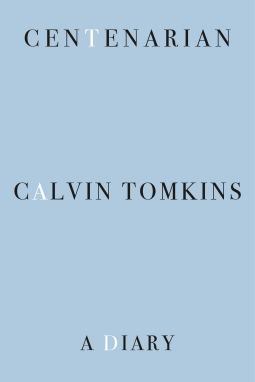
A moving (and wickedly funny) diary of the legendary New Yorker staff writer Calvin Tomkins’s one hundredth year.
Calvin Tomkins and The New Yorker—two of the most storied names in American writing—were both born in the same year, 1925. As the magazine toasted its centenary, Tomkins began keeping a diary of his one hundredth year of life and sixty-fifth year as a staff writer, one whose nearly four hundred pieces amount to one of the fullest accounts of postwar art ever published. The result is Centenarian, a moving, probing, and wickedly entertaining series of reflections on daily life after nearly ten decades on earth. As Tomkins writes, “The first hundred years are the hardest.”
Tomkins confronts with candor the indignities of old age—macular degeneration and short-term memory loss. But he continues to find humor in everyday absurdities, like assistive devices that come with fine-print instructions. He also looks back on his relationships with some of the twentieth century’s greatest artists—from watching Georgia O’Keeffe’s oven explode while she roasted a chicken to surreptitiously slipping a coin into a Robert Rauschenberg collage, inserting a piece of himself into the art whose rise he would chronicle in real time.
As Tomkins observes, “I sometimes think my main complaint about old age is the way it interferes with looking at art and listening to music.” This ever-inquisitive sensibility infuses the pages of Centenarian, offering a singular model for living well and embracing all the world has to offer in one’s hundredth year and beyond. Above all, Centenarian is a love story—a tribute to Tomkins’s wife of nearly forty years, Dodie Kazanjian, who helped him complete his diary as his eyesight began to fail.
A moving (and wickedly funny) diary of the legendary New Yorker staff writer Calvin Tomkins’s one hundredth year.
Calvin Tomkins and The New Yorker—two of the most storied names in American...
A moving (and wickedly funny) diary of the legendary New Yorker staff writer Calvin Tomkins’s one hundredth year.
Calvin Tomkins and The New Yorker—two of the most storied names in American writing—were both born in the same year, 1925. As the magazine toasted its centenary, Tomkins began keeping a diary of his one hundredth year of life and sixty-fifth year as a staff writer, one whose nearly four hundred pieces amount to one of the fullest accounts of postwar art ever published. The result is Centenarian, a moving, probing, and wickedly entertaining series of reflections on daily life after nearly ten decades on earth. As Tomkins writes, “The first hundred years are the hardest.”
Tomkins confronts with candor the indignities of old age—macular degeneration and short-term memory loss. But he continues to find humor in everyday absurdities, like assistive devices that come with fine-print instructions. He also looks back on his relationships with some of the twentieth century’s greatest artists—from watching Georgia O’Keeffe’s oven explode while she roasted a chicken to surreptitiously slipping a coin into a Robert Rauschenberg collage, inserting a piece of himself into the art whose rise he would chronicle in real time.
As Tomkins observes, “I sometimes think my main complaint about old age is the way it interferes with looking at art and listening to music.” This ever-inquisitive sensibility infuses the pages of Centenarian, offering a singular model for living well and embracing all the world has to offer in one’s hundredth year and beyond. Above all, Centenarian is a love story—a tribute to Tomkins’s wife of nearly forty years, Dodie Kazanjian, who helped him complete his diary as his eyesight began to fail.
A Note From the Publisher
Calvin Tomkins (1925–2026) was a staff writer at The New Yorker for more six decades, contributing nearly four hundred pieces to the magazine. One of the foremost chroniclers of the twentieth- and twenty-first-century art world, he profiled artists ranging from Georgia O'Keeffe to Robert Rauschenberg to Cindy Sherman. He was the author of more than a dozen books, including Living Well Is the Best Revenge and Duchamp: A Biography.
Calvin Tomkins (1925–2026) was a staff writer at The New Yorker for more six decades, contributing nearly four hundred pieces to the magazine. One of the foremost chroniclers of the twentieth- and...
Calvin Tomkins (1925–2026) was a staff writer at The New Yorker for more six decades, contributing nearly four hundred pieces to the magazine. One of the foremost chroniclers of the twentieth- and twenty-first-century art world, he profiled artists ranging from Georgia O'Keeffe to Robert Rauschenberg to Cindy Sherman. He was the author of more than a dozen books, including Living Well Is the Best Revenge and Duchamp: A Biography.
*This page contains affiliate links, so we may earn a small commission when you make a purchase through links on our site at no additional cost to you.
Average rating from 4 members
Featured Reviews
Librarian 1706719
5 stars
5 stars
5 stars
5 stars
5 stars
When learning that the author, Calvin "Tad" Tomkins lived to be just over 100, I was drawn instantly to this short work. My own grandmother lived to the young age of 102 and I hoped that Tad's experience would allow me to sit with my own grief of missing her in a new way, from a perspective closer to hers than my own.
This short work, previously published in The New Yorker, was a joy to read. It was funny, reflective, honest, and timely. Tad's ability to narrate such a unique experience (of turning 100) in such a down to earth way was inspiring. I applaud his dedication to his creative craft and that he wrote until his very last day. This made me want to read his past works, since I did not have previous knowledge of his work.
I certainly recommend reading this insightful, short work
Thank you NetGalley and Farrar, Straus and Giroux for providing me with an Advance Readers Copy of this book in exchange for my honest review!!
5 stars
5 stars
5 stars
5 stars
5 stars
Was this review helpful?
Featured Reviews
Librarian 1706719
5 stars
5 stars
5 stars
5 stars
5 stars
When learning that the author, Calvin "Tad" Tomkins lived to be just over 100, I was drawn instantly to this short work. My own grandmother lived to the young age of 102 and I hoped that Tad's experience would allow me to sit with my own grief of missing her in a new way, from a perspective closer to hers than my own.
This short work, previously published in The New Yorker, was a joy to read. It was funny, reflective, honest, and timely. Tad's ability to narrate such a unique experience (of turning 100) in such a down to earth way was inspiring. I applaud his dedication to his creative craft and that he wrote until his very last day. This made me want to read his past works, since I did not have previous knowledge of his work.
I certainly recommend reading this insightful, short work
Thank you NetGalley and Farrar, Straus and Giroux for providing me with an Advance Readers Copy of this book in exchange for my honest review!!
This site uses cookies. By continuing to use the site, you are agreeing to our cookie policy. You'll also find information about how we protect your personal data in our privacy policy.