Please wait... This may take a moment.
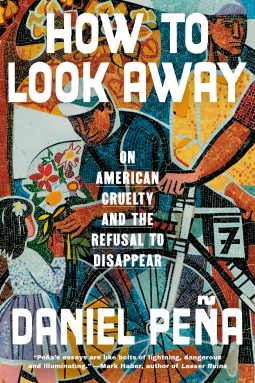
How to Look Away
On American Cruelty and the Refusal to Disappear
Pub Date
Oct 6 2026
| Archive Date
Dec 6 2026
Description
A riveting, kaleidoscopic portrait of the American compulsion toward cruelty and our power to subvert it from an award-winning contributor to The Guardian and The New York Times.
In How to Look Away, Daniel Peña explores how fringe elements of his Texas childhood—AM radio, conspiracy theories, Post-Cold War paranoia—came to dominate the American political discourse and contributed to our extreme tolerance of human rights abuses against migrants from Latin America and elsewhere. He asks: What compels us to look away from these abuses? And how do we wake ourselves into action?
These evocative essays braid journalism, cultural criticism, and memoir, roaming from the vestigial Comanche War battlefields of his native Austin, to the black markets of Mexico City, to the home of a cartel hitman’s family doomed to live in the unglamorous aftermath of his crimes. Writing from both Mexico and the United States, Daniel Peña reflects on two childhood fears: demons and the death penalty. Or the answer to the question, “Do you ever really belong to yourself?” A question that serves as the looking glass through which Peña meditates on American citizenship and the kinds of people we are willing to disappear in the name of the American project.
How to Look Away conjures disquiet and longing beside clarity and hope as it offers a haunting account of the strange bond between two nations, this American moment, and the land upon which our bodies stand.
A riveting, kaleidoscopic portrait of the American compulsion toward cruelty and our power to subvert it from an award-winning contributor to The Guardian and The New York Times.In
How to Look Away,...
Description
A riveting, kaleidoscopic portrait of the American compulsion toward cruelty and our power to subvert it from an award-winning contributor to The Guardian and The New York Times.
In How to Look Away, Daniel Peña explores how fringe elements of his Texas childhood—AM radio, conspiracy theories, Post-Cold War paranoia—came to dominate the American political discourse and contributed to our extreme tolerance of human rights abuses against migrants from Latin America and elsewhere. He asks: What compels us to look away from these abuses? And how do we wake ourselves into action?
These evocative essays braid journalism, cultural criticism, and memoir, roaming from the vestigial Comanche War battlefields of his native Austin, to the black markets of Mexico City, to the home of a cartel hitman’s family doomed to live in the unglamorous aftermath of his crimes. Writing from both Mexico and the United States, Daniel Peña reflects on two childhood fears: demons and the death penalty. Or the answer to the question, “Do you ever really belong to yourself?” A question that serves as the looking glass through which Peña meditates on American citizenship and the kinds of people we are willing to disappear in the name of the American project.
How to Look Away conjures disquiet and longing beside clarity and hope as it offers a haunting account of the strange bond between two nations, this American moment, and the land upon which our bodies stand.
Available Editions
| EDITION |
Other Format |
| ISBN |
9780593596395 |
| PRICE |
$28.00 (USD)
|
| PAGES |
208
|
Available on NetGalley
NetGalley Reader
(EPUB)
NetGalley Shelf App
(EPUB)
Send to Kindle (EPUB)
Download (EPUB)
Available to Buy
Buy on BN.com
Buy on Bookshop.org
*This page contains affiliate links, so we may earn a small commission when you make a purchase through links on our site at no additional cost to you.
BISAC Codes
SOC044000 SOCIAL SCIENCE / Cultural & Ethnic Studies / Hispanic & Latino Studies
POL032000 POLITICAL SCIENCE / Essays
BIO002030 BIOGRAPHY & AUTOBIOGRAPHY / Hispanic & Latino
Additional Information
Available Editions
| EDITION |
Other Format |
| ISBN |
9780593596395 |
| PRICE |
$28.00 (USD)
|
| PAGES |
208
|
Available on NetGalley
NetGalley Reader
(EPUB)
NetGalley Shelf App
(EPUB)
Send to Kindle (EPUB)
Download (EPUB)
Available to Buy
Buy on BN.com
Buy on Bookshop.org
*This page contains affiliate links, so we may earn a small commission when you make a purchase through links on our site at no additional cost to you.
BISAC Codes
SOC044000 SOCIAL SCIENCE / Cultural & Ethnic Studies / Hispanic & Latino Studies
POL032000 POLITICAL SCIENCE / Essays
BIO002030 BIOGRAPHY & AUTOBIOGRAPHY / Hispanic & Latino
Average rating from 12 members
Readers who liked this book also liked:
Chancla
Leslie Priscilla
History, Multicultural Interest, Parenting, Families, Relationships
Blood Relay
Devon Mihesuah
General Fiction (Adult), Mystery & Thrillers