Please wait... This may take a moment.
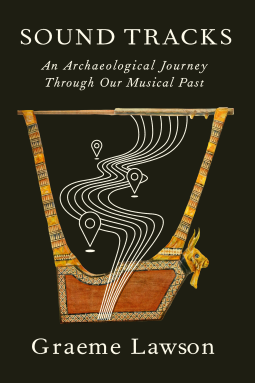
Sound Tracks
An Archaeological Journey Through Our Musical Past
Pub Date
Oct 27 2026
| Archive Date
Nov 26 2026
Description
A breathtaking archaeological journey that illuminates the unsung role of music and sound in shaping human civilization
What if you could hear the history of the world through a bronze bell buried deep in the ground? Or a fine, old terra-cotta pot? Or a long, hollow strip of a mammoth's tusk?
In Sound Tracks, Graeme Lawson explores our rich and ancient history of music-making through sixty musical objects and the thrilling accounts of the archaeological digs in which they were discovered. We stumble upon a German harmonica found on a 19th century American battlefield, a 1,300-year-old Peruvian flask designed to warble like a bird, a Stone Age flute calcified within the unlikely depths of a cave in Southwestern France—all the while unearthing the vibrant worlds of the people that once made music and meaning with them.
One of the world’s foremost archaeologists, Lawson leaves no stone unturned, ushering the reader from the present day all the way back to the dawn of time, revealing music’s role as an essential medium through which we commemorate our histories, form our identities, and communicate our dreams for the future. Expansive in its scope and brimming with lively, unforgettable insights, Sound Tracks lends an ear to an unheard past, offering an exhilarating new portrait of music as an ancient and magical force.
A breathtaking archaeological journey that illuminates the unsung role of music and sound in shaping human civilizationWhat if you could hear the history of the world through a bronze bell buried...
Description
A breathtaking archaeological journey that illuminates the unsung role of music and sound in shaping human civilization
What if you could hear the history of the world through a bronze bell buried deep in the ground? Or a fine, old terra-cotta pot? Or a long, hollow strip of a mammoth's tusk?
In Sound Tracks, Graeme Lawson explores our rich and ancient history of music-making through sixty musical objects and the thrilling accounts of the archaeological digs in which they were discovered. We stumble upon a German harmonica found on a 19th century American battlefield, a 1,300-year-old Peruvian flask designed to warble like a bird, a Stone Age flute calcified within the unlikely depths of a cave in Southwestern France—all the while unearthing the vibrant worlds of the people that once made music and meaning with them.
One of the world’s foremost archaeologists, Lawson leaves no stone unturned, ushering the reader from the present day all the way back to the dawn of time, revealing music’s role as an essential medium through which we commemorate our histories, form our identities, and communicate our dreams for the future. Expansive in its scope and brimming with lively, unforgettable insights, Sound Tracks lends an ear to an unheard past, offering an exhilarating new portrait of music as an ancient and magical force.
Available Editions
| EDITION |
Other Format |
| ISBN |
9780593320365 |
| PRICE |
$35.00 (USD)
|
| PAGES |
416
|
Available on NetGalley
NetGalley Reader
(EPUB)
NetGalley Shelf App
(EPUB)
Send to Kindle (EPUB)
Download (EPUB)
Available to Buy
Buy on BN.com
Buy on Bookshop.org
*This page contains affiliate links, so we may earn a small commission when you make a purchase through links on our site at no additional cost to you.
BISAC Codes
MUS020000 MUSIC / History & Criticism
MUS023000 MUSIC / Musical Instruments / General
SOC003000 SOCIAL SCIENCE / Archaeology
Additional Information
Available Editions
| EDITION |
Other Format |
| ISBN |
9780593320365 |
| PRICE |
$35.00 (USD)
|
| PAGES |
416
|
Available on NetGalley
NetGalley Reader
(EPUB)
NetGalley Shelf App
(EPUB)
Send to Kindle (EPUB)
Download (EPUB)
Available to Buy
Buy on BN.com
Buy on Bookshop.org
*This page contains affiliate links, so we may earn a small commission when you make a purchase through links on our site at no additional cost to you.
BISAC Codes
MUS020000 MUSIC / History & Criticism
MUS023000 MUSIC / Musical Instruments / General
SOC003000 SOCIAL SCIENCE / Archaeology
Average rating from 12 members
Featured Reviews
 Sarah R, Reviewer
5 stars
5 stars
5 stars
5 stars
5 stars
Since the dawn of time humands have loved dogs, horses, and sound. This deep dive into our historical longing to create art and instruments was truly fascinating.
5 stars
5 stars
5 stars
5 stars
5 stars
Greg K, Reviewer
5 stars
5 stars
5 stars
5 stars
5 stars
Amazing book! This is a book for musicians with at least a curiosity to know more about the history of their art and the cultural impact that music has had throughout earth's long journey. It's also a book for anyone who might be curious about archeology, beyond watching Raiders of the Lost Ark or National Treasure. The diverse knowledge and skills that is required to be a field archeologist is mind-blowing: history, weather, chemistry. metallurgy, botonny, zoology, entomology, meteorology, geography, geology etc. Then having a focus on the history of music requires experience playing an instrument as well as being a skilled luthier.
Though I do not fully agree with the author's unyielding belief in the accuracy of the results of various dating methods (requiring an assumptive truth claim to start with), the book was both educational (I learned a lot about the function of voicing for the various types of horns because my background is piano and guitar). and entertaining at the same time.
5 stars
5 stars
5 stars
5 stars
5 stars
 Nancy A. B, Reviewer
5 stars
5 stars
5 stars
5 stars
5 stars
Archeology has always fascinated me, thanks to my dad’s collection of old National Geographics that I would read through when bored. And, I have always loved music since grade school, learning piano and singing in choirs, and as an adult attending orchestra concerts. So, this book is a perfect match for my interests.
Moving backward in time, Graeme Lawson tells the stories of sixty musical instruments discovered by archeologists, tracing a history of humanity’s love of music. From pieces of recovered instruments, Lawson resurrects its place in history.
Some traditions leave no trace, like the willow whistles made of tree bark slid off the branch in one piece and given a small hole and mouthpiece. It dries out in days or hours, decaying and leaving to trace, yet they are a living tradition across Northern Europe and as far south as Turkey. Lawson imagines instruments that have left no trace that were made by prehistoric humans. Forty-five and a half thousand years ago hand stencils were made by spraying ochre; perhaps using hollow containers that also made sounds.
A delightful and interesting read.
Thanks to Knopf for a free book through NetGalley.
5 stars
5 stars
5 stars
5 stars
5 stars
Featured Reviews
Sarah R, Reviewer
5 stars
5 stars
5 stars
5 stars
5 stars
Since the dawn of time humands have loved dogs, horses, and sound. This deep dive into our historical longing to create art and instruments was truly fascinating.
5 stars
5 stars
5 stars
5 stars
5 stars
Greg K, Reviewer
5 stars
5 stars
5 stars
5 stars
5 stars
Amazing book! This is a book for musicians with at least a curiosity to know more about the history of their art and the cultural impact that music has had throughout earth's long journey. It's also a book for anyone who might be curious about archeology, beyond watching Raiders of the Lost Ark or National Treasure. The diverse knowledge and skills that is required to be a field archeologist is mind-blowing: history, weather, chemistry. metallurgy, botonny, zoology, entomology, meteorology, geography, geology etc. Then having a focus on the history of music requires experience playing an instrument as well as being a skilled luthier.
Though I do not fully agree with the author's unyielding belief in the accuracy of the results of various dating methods (requiring an assumptive truth claim to start with), the book was both educational (I learned a lot about the function of voicing for the various types of horns because my background is piano and guitar). and entertaining at the same time.
5 stars
5 stars
5 stars
5 stars
5 stars
Nancy A. B, Reviewer
5 stars
5 stars
5 stars
5 stars
5 stars
Archeology has always fascinated me, thanks to my dad’s collection of old National Geographics that I would read through when bored. And, I have always loved music since grade school, learning piano and singing in choirs, and as an adult attending orchestra concerts. So, this book is a perfect match for my interests.
Moving backward in time, Graeme Lawson tells the stories of sixty musical instruments discovered by archeologists, tracing a history of humanity’s love of music. From pieces of recovered instruments, Lawson resurrects its place in history.
Some traditions leave no trace, like the willow whistles made of tree bark slid off the branch in one piece and given a small hole and mouthpiece. It dries out in days or hours, decaying and leaving to trace, yet they are a living tradition across Northern Europe and as far south as Turkey. Lawson imagines instruments that have left no trace that were made by prehistoric humans. Forty-five and a half thousand years ago hand stencils were made by spraying ochre; perhaps using hollow containers that also made sounds.
A delightful and interesting read.
Thanks to Knopf for a free book through NetGalley.
5 stars
5 stars
5 stars
5 stars
5 stars
Readers who liked this book also liked:
Creatures of Habit
Jennifer Yeh
General Fiction (Adult), Literary Fiction, Women's Fiction
The Original
Priya Parmar
Historical Fiction, Women's Fiction
All We Say
Ben Rhodes
History, Nonfiction (Adult), Politics & Current Affairs
Sunrise
Téa Obreht
General Fiction (Adult)
Blood Relay
Devon Mihesuah
General Fiction (Adult), Mystery & Thrillers