Please wait... This may take a moment.
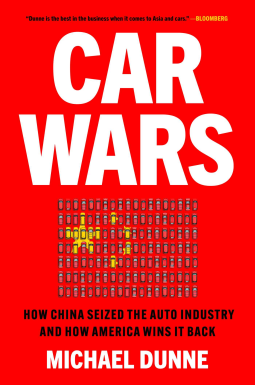
Car Wars
How China Seized the Auto Industry—and How America Can Win It Back
Pub Date
Jan 5 2027
| Archive Date
Feb 2 2027
Description
As the automobile—long a pillar of American identity and economic power—faces its biggest transformation in a century, industry insider Michael Dunne reveals how China dominated the electric vehicle market and what it means for America’s economic and technological future.
In Car Wars, veteran auto industry insider Michael Dunne reveals how China executed one of the most consequential industrial strategies of the 21st century: building a dominant manufacturing ecosystem for electric vehicles, batteries, and software-defined cars right under the noses of Western automakers.
Why did executives in Detroit dismiss Elon Musk and China’s production prowess for years, only to be blindsided in the 2020s by a Chinese EV fleet that is more advanced, more attractive to consumers, and dramatically cheaper than Western options? Drawing on decades of firsthand experience from Detroit to California and throughout Asia, Dunne traces the pivotal decisions, personalities, and policies that reshaped the global auto industry.
The stakes extend far beyond cars. As vehicles become platforms for software, chips, and data, the outcome of the EV race will influence economic power, national security, and technological leadership for decades to come. For readers of Chip Wars and AI Superpowers, Car Wars explains how China pulled ahead—and what the United States must do to catch up.
As the automobile—long a pillar of American identity and economic power—faces its biggest transformation in a century, industry insider Michael Dunne reveals how China dominated the electric vehicle...
Description
As the automobile—long a pillar of American identity and economic power—faces its biggest transformation in a century, industry insider Michael Dunne reveals how China dominated the electric vehicle market and what it means for America’s economic and technological future.
In Car Wars, veteran auto industry insider Michael Dunne reveals how China executed one of the most consequential industrial strategies of the 21st century: building a dominant manufacturing ecosystem for electric vehicles, batteries, and software-defined cars right under the noses of Western automakers.
Why did executives in Detroit dismiss Elon Musk and China’s production prowess for years, only to be blindsided in the 2020s by a Chinese EV fleet that is more advanced, more attractive to consumers, and dramatically cheaper than Western options? Drawing on decades of firsthand experience from Detroit to California and throughout Asia, Dunne traces the pivotal decisions, personalities, and policies that reshaped the global auto industry.
The stakes extend far beyond cars. As vehicles become platforms for software, chips, and data, the outcome of the EV race will influence economic power, national security, and technological leadership for decades to come. For readers of Chip Wars and AI Superpowers, Car Wars explains how China pulled ahead—and what the United States must do to catch up.
Available Editions
| EDITION |
Other Format |
| ISBN |
9781668224755 |
| PRICE |
$29.00 (USD)
|
| PAGES |
288
|
Available on NetGalley
NetGalley Reader
(EPUB)
NetGalley Shelf App
(EPUB)
Send to Kindle (EPUB)
Send to Kobo (EPUB)
Download (EPUB)
Available to Buy
Buy on BN.com
Buy on Bookshop.org
*This page contains affiliate links, so we may earn a small commission when you make a purchase through links on our site at no additional cost to you.
BISAC Codes
TEC018000 TECHNOLOGY & ENGINEERING / Industrial Technology
BUS113000 BUSINESS & ECONOMICS / Globalization
POL023000 POLITICAL SCIENCE / Political Economy
Additional Information
Available Editions
| EDITION |
Other Format |
| ISBN |
9781668224755 |
| PRICE |
$29.00 (USD)
|
| PAGES |
288
|
Available on NetGalley
NetGalley Reader
(EPUB)
NetGalley Shelf App
(EPUB)
Send to Kindle (EPUB)
Send to Kobo (EPUB)
Download (EPUB)
Available to Buy
Buy on BN.com
Buy on Bookshop.org
*This page contains affiliate links, so we may earn a small commission when you make a purchase through links on our site at no additional cost to you.
BISAC Codes
TEC018000 TECHNOLOGY & ENGINEERING / Industrial Technology
BUS113000 BUSINESS & ECONOMICS / Globalization
POL023000 POLITICAL SCIENCE / Political Economy
Average rating from 1 member
Featured Reviews
 Yvonne S, Reviewer
5 stars
5 stars
5 stars
5 stars
5 stars
I wasn't sure what to expect with this book since I know practically nothing about the auto industry, but I found it surprisingly interesting (if slightly depressing). Michael Dunne is a very knowledgeable consultant in the auto industry, but the overall topic of the book is much wider and deeper than that - it's an account of how China is implementing a long-term plan to overtake the West industrially, politically, and culturally, using the auto industry and particularly the development of electric cars, as the example of how this is being done and how the west was caught flat-footed while Chinese cars went from being irrelevant to internationally dominant. The success of Tesla has been America's major challenge to Chinese domination of EVs, and the book provides a really interesting history of the development of the company and its products.
In contrast to the short-term outlook of a lot of western corporations and governments, this dominance by China has been decades in the making. Where the auto industry (and no doubt other industries) is concerned, it isn't just the final product - China has monopolized the supply chain from batteries (and the chemicals used to make them) to chips to magnets to all sorts of other things I had no idea were part of car manufacturing, and has also used partnerships and other strategies to help itself to intellectual property.
The author explains how the west rather naively believed that if China could be integrated into the global community of commerce and culture after the collapse of the Soviet Union, it would also integrate into the western set of values (democracy, freedom of speech, etc), but that this belief was based on a combination of wishful thinking and ignorance. The west has been paying for that hubris ever since. He ends the book with a chapter on how the west can claw back at least some of what it's lost, although it isn't going to be easy.
This is certainly a thought-provking book and well worth reading.
With thanks to NetGalley and the publisher for a prepublicationi ebook.
5 stars
5 stars
5 stars
5 stars
5 stars
Featured Reviews
Yvonne S, Reviewer
5 stars
5 stars
5 stars
5 stars
5 stars
I wasn't sure what to expect with this book since I know practically nothing about the auto industry, but I found it surprisingly interesting (if slightly depressing). Michael Dunne is a very knowledgeable consultant in the auto industry, but the overall topic of the book is much wider and deeper than that - it's an account of how China is implementing a long-term plan to overtake the West industrially, politically, and culturally, using the auto industry and particularly the development of electric cars, as the example of how this is being done and how the west was caught flat-footed while Chinese cars went from being irrelevant to internationally dominant. The success of Tesla has been America's major challenge to Chinese domination of EVs, and the book provides a really interesting history of the development of the company and its products.
In contrast to the short-term outlook of a lot of western corporations and governments, this dominance by China has been decades in the making. Where the auto industry (and no doubt other industries) is concerned, it isn't just the final product - China has monopolized the supply chain from batteries (and the chemicals used to make them) to chips to magnets to all sorts of other things I had no idea were part of car manufacturing, and has also used partnerships and other strategies to help itself to intellectual property.
The author explains how the west rather naively believed that if China could be integrated into the global community of commerce and culture after the collapse of the Soviet Union, it would also integrate into the western set of values (democracy, freedom of speech, etc), but that this belief was based on a combination of wishful thinking and ignorance. The west has been paying for that hubris ever since. He ends the book with a chapter on how the west can claw back at least some of what it's lost, although it isn't going to be easy.
This is certainly a thought-provking book and well worth reading.
With thanks to NetGalley and the publisher for a prepublicationi ebook.
5 stars
5 stars
5 stars
5 stars
5 stars