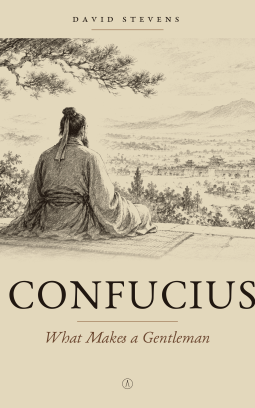
Confucius
What Makes a Gentleman
Sign In or Register Now to see if this title is available for request.
Buy on Amazon Buy on BN.com Buy on Bookshop.org Buy on KoboSend NetGalley books directly to your Kindle or Kindle app
1
To read on a Kindle or Kindle app, please add kindle@netgalley.com as an approved email address to receive files in your Amazon account. Click here for step-by-step instructions.
2
Also find your Kindle email address within your Amazon account, and enter it here.
Pub Date Nov 1 2026 | Archive Date Nov 10 2026
ARC provided by Victory Editing NetGalley Co-op | Decision Publishing
Talking about this book? Use #Confucius #NetGalley. More hashtag tips!
Description
He took the word that meant a Lord's son and pointed it at men who owned nothing.
Artificial feet were expensive, and shoes were cheap. A minister of a Chinese state, in 539 BC, was asked how things stood at home. That is the century Confucius grew up in: one that governed by amputation and fear, and in which what a man was worth had been settled by who his father was.
He proposed something else, and the word he proposed it with was junzi — a lord's son. It reaches us as gentleman and sounds like table manners. In his mouth it meant a man who studies, practises and corrects himself for as long as he lives, and who holds a country together by being worth copying rather than by being feared.
It was a claim about who was allowed into the rooms where things were decided, made by a man one rung below them. Eighteen centuries later a Chinese state was examining the men it appointed on his book, and the road between is not straight.
Almost nothing else that circulates under his name is his. He wrote no book, nobody who met him described his face, and the sayings come down at second hand. He spent forty years failing to get a single ruler to govern the way he said, and watched his students take the jobs he wanted. This is what he said while that was happening.
Also in these pages: whether he wrote the Analects, whether Confucianism is a religion, what junzi really meant, and why he was not called Confucius.
Every quotation in this book is sourced. The notes at the back say where each one comes from, so any of it can be checked against the record.
One of five narrative lives built the same way: the documents first, then the life that comes out of them.
Marketing Plan
Distribution. Paperback and case laminate hardcover through IngramSpark, returnable, available to the trade at a full 55% discount. Ebook in all major stores.
The series cross-promotes itself. Every book carries, straight after its epilogue, the opening of another book in the series and a link back to the author's site. The six are written to be read in any order and to send readers to each other.
Author site. davidstevensbooks.com carries a research section for each subject: a timeline, the full source list, and direct answers to the questions readers actually search for.
Readers' list. Readers are offered The Trial File, a short free book on what the documents in Galileo's trial file actually say, for joining the list.
Reviews. Advance copies through this listing and through Booksprout ahead of publication.
Available Editions
| EDITION | Ebook |
| ISBN | 9798953350006 |
| PRICE | $9.99 (USD) |
| PAGES | 147 |