Please wait... This may take a moment.
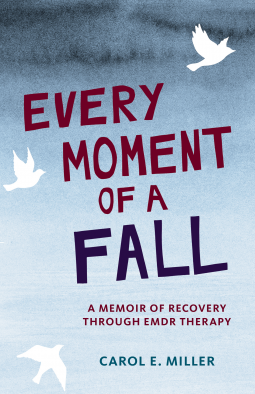
Every Moment of a Fall
A Memoir of Recovery Through EMDR Therapy
This title was previously available on NetGalley and is now archived.
Pub Date
May 13 2016
| Archive Date
Dec 3 2016
Description
Carol E. Miller was sixteen when the private plane piloted by her father crashed, pinning her in the wreckage, critically injuring her parents and killing her twelve-year-old sister. Compounding this traumatic event, her father told her he wished she had died instead of her sister. For the next twenty years, she labored under feelings of guilt and lack of self-worth. When another in a long line of personal crises landed her in therapy with an EMDR (Eye Movement Desensitization and Reprocessing) practitioner, she began at last to investigate the crippling effects of the plane crash. Using bi-lateral stimulation to access her fiercely guarded memories, she learned to challenge the belief that the crash was all her fault, and that she didn't deserve to be alive. This is a brave and revealing memoir of recovery from tragedy, and a fascinating, vividly narrated exploration of the increasingly popular eye-movement therapy developed to heal the wounds trauma leaves in its wake.
Carol E. Miller was sixteen when the private plane piloted by her father crashed, pinning her in the wreckage, critically injuring her parents and killing her twelve-year-old sister. Compounding this...
Description
Carol E. Miller was sixteen when the private plane piloted by her father crashed, pinning her in the wreckage, critically injuring her parents and killing her twelve-year-old sister. Compounding this traumatic event, her father told her he wished she had died instead of her sister. For the next twenty years, she labored under feelings of guilt and lack of self-worth. When another in a long line of personal crises landed her in therapy with an EMDR (Eye Movement Desensitization and Reprocessing) practitioner, she began at last to investigate the crippling effects of the plane crash. Using bi-lateral stimulation to access her fiercely guarded memories, she learned to challenge the belief that the crash was all her fault, and that she didn't deserve to be alive. This is a brave and revealing memoir of recovery from tragedy, and a fascinating, vividly narrated exploration of the increasingly popular eye-movement therapy developed to heal the wounds trauma leaves in its wake.
Advance Praise
"A primer on the impact of life-threatening trauma as well as the
healing power of EMDR. Both author and reader emerge from the story
grateful for grace." —Jessica Stern, author, Denial: A Memoir of Terror
"Miller
writes with a poet's exactness and imagery about childhood, religion,
love, and friendship . . . an insightful and moving book that invites
the re-imagination of one's own memories." —Rene Steinke, National Book
Award finalist and author, Friendswood
"Miller’s
journey is one of hope for all who are curious about EMDR therapy or
have been burdened by unresolved trauma and afraid to find the right
support." —Renee Podunovich, reneepodunovich.com
"A primer on the impact of life-threatening trauma as well as the
healing power of EMDR. Both author and reader emerge from the story
grateful for grace." —Jessica Stern, author, Denial: A Memoir...
Advance Praise
"A primer on the impact of life-threatening trauma as well as the
healing power of EMDR. Both author and reader emerge from the story
grateful for grace." —Jessica Stern, author, Denial: A Memoir of Terror
"Miller
writes with a poet's exactness and imagery about childhood, religion,
love, and friendship . . . an insightful and moving book that invites
the re-imagination of one's own memories." —Rene Steinke, National Book
Award finalist and author, Friendswood
"Miller’s
journey is one of hope for all who are curious about EMDR therapy or
have been burdened by unresolved trauma and afraid to find the right
support." —Renee Podunovich, reneepodunovich.com
Available Editions
| EDITION |
Hardcover |
| ISBN |
9781943156047 |
| PRICE |
$25.95 (USD)
|
Additional Information
Available Editions
| EDITION |
Hardcover |
| ISBN |
9781943156047 |
| PRICE |
$25.95 (USD)
|
Average rating from 5 members
Featured Reviews
 Pamela A, Bookseller
5 stars
5 stars
5 stars
5 stars
5 stars
Every Moment of a Fall reads like a well written novel even though it is a memoir. I found Carol's life remarkable and the book very informative. I had never heard of EMDR prior to reading this book. This book explains and demonstrates this form of therapy so that any lay person can easily understand how it works and how it can help heal a person struggling with a traumatic incident.
5 stars
5 stars
5 stars
5 stars
5 stars
Featured Reviews
Pamela A, Bookseller
5 stars
5 stars
5 stars
5 stars
5 stars
Every Moment of a Fall reads like a well written novel even though it is a memoir. I found Carol's life remarkable and the book very informative. I had never heard of EMDR prior to reading this book. This book explains and demonstrates this form of therapy so that any lay person can easily understand how it works and how it can help heal a person struggling with a traumatic incident.
5 stars
5 stars
5 stars
5 stars
5 stars
Readers who liked this book also liked: