Please wait... This may take a moment.
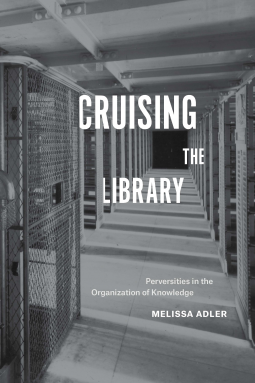
Cruising the Library
Perversities in the Organization of Knowledge
This title was previously available on NetGalley and is now archived.
Pub Date
Apr 3 2017
| Archive Date
Mar 15 2017
Description
Cruising the Library offers a highly innovative analysis of the history of sexuality and categories of sexual perversion through a critical examination of the Library of Congress and its cataloging practices. Taking the publication of Eve Kosofsky Sedgwick's Epistemologies of the Closet as emblematic of the Library's inability to account for sexual difference, Melissa Adler embarks upon a detailed critique of how cataloging systems have delimited and proscribed expressions of gender, sexuality, ethnicity, and race in a manner that mirrors psychiatric and sociological attempts to pathologize non-normative sexual practices and civil subjects.
Taking up a parallel analysis, Adler utilizes Roderick A. Ferguson's Aberrations in Black as another example of how the Library of Congress fails to account for, and thereby "buries," difference. She examines the physical space of the Library as one that encourages forms of governmentality as theorized by Michel Foucault while also allowing for its utopian possibilities. Finally, she offers a brief but highly illuminating history of the Delta Collection. Likely established before the turn of the twentieth century and active until its gradual dissolution in the 1960s, the Delta Collection was a secret archive within the Library of Congress that housed materials confiscated by the United States Post Office and other federal agencies. These were materials deemed too obscene for public dissemination or general access. Adler reveals how the Delta Collection was used to regulate difference and squelch dissent in the McCarthy era while also linking it to evolving understandings of so-called perversion in the scientific study of sexual difference.
Sophisticated, engrossing, and highly readable, Cruising the Library provides us with a critical understanding of library science, an alternative view of discourses around the history of sexuality, and an analysis of the relationship between governmentality and the cataloging of research and information--as well as categories of difference--in American culture.
Cruising the Library offers a highly innovative analysis of the history of sexuality and categories of sexual perversion through a critical examination of the Library of Congress and its cataloging...
Description
Cruising the Library offers a highly innovative analysis of the history of sexuality and categories of sexual perversion through a critical examination of the Library of Congress and its cataloging practices. Taking the publication of Eve Kosofsky Sedgwick's Epistemologies of the Closet as emblematic of the Library's inability to account for sexual difference, Melissa Adler embarks upon a detailed critique of how cataloging systems have delimited and proscribed expressions of gender, sexuality, ethnicity, and race in a manner that mirrors psychiatric and sociological attempts to pathologize non-normative sexual practices and civil subjects.
Taking up a parallel analysis, Adler utilizes Roderick A. Ferguson's Aberrations in Black as another example of how the Library of Congress fails to account for, and thereby "buries," difference. She examines the physical space of the Library as one that encourages forms of governmentality as theorized by Michel Foucault while also allowing for its utopian possibilities. Finally, she offers a brief but highly illuminating history of the Delta Collection. Likely established before the turn of the twentieth century and active until its gradual dissolution in the 1960s, the Delta Collection was a secret archive within the Library of Congress that housed materials confiscated by the United States Post Office and other federal agencies. These were materials deemed too obscene for public dissemination or general access. Adler reveals how the Delta Collection was used to regulate difference and squelch dissent in the McCarthy era while also linking it to evolving understandings of so-called perversion in the scientific study of sexual difference.
Sophisticated, engrossing, and highly readable, Cruising the Library provides us with a critical understanding of library science, an alternative view of discourses around the history of sexuality, and an analysis of the relationship between governmentality and the cataloging of research and information--as well as categories of difference--in American culture.
Advance Praise
“An original study on an old institution— the U.S. Library of Congress. Adler’s reading of crucial and cultural theory are accurate and insightful. She presents a practical example of the philosophical power of library documentation as a tool of metaphysics and political economy.”—Ronald E. Day, author of Indexing It All: The Subject in the Age of Documentation, Information, and Data
“An original study on an old institution— the U.S. Library of Congress. Adler’s reading of crucial and cultural theory are accurate and insightful. She presents a practical example of the...
Advance Praise
“An original study on an old institution— the U.S. Library of Congress. Adler’s reading of crucial and cultural theory are accurate and insightful. She presents a practical example of the philosophical power of library documentation as a tool of metaphysics and political economy.”—Ronald E. Day, author of Indexing It All: The Subject in the Age of Documentation, Information, and Data
Available Editions
| EDITION |
Other Format |
| ISBN |
9780823276363 |
| PRICE |
$28.00 (USD)
|
| PAGES |
232
|
Additional Information
Available Editions
| EDITION |
Other Format |
| ISBN |
9780823276363 |
| PRICE |
$28.00 (USD)
|
| PAGES |
232
|
Average rating from 23 members
Featured Reviews
 Roman C, Reviewer
4 stars
4 stars
4 stars
4 stars
4 stars
Taking a Foucauldian approach, this book explores how the supposedly 'neutral' Library of Congress classification system serves to discipline and police categories of knowledge, especially - though not only - knowledge of sex, sexuality and the 'perverse' or 'obscene'.
Adler analyses in detail how the system and processes that underpin libraries and librarianship take on an ideological role in terms of how books and the knowledge they contain are classified, hierarchised, collocated and, sometimes, excluded from the main stacks of the library itself (and we should remember here that Library of Congress classification has an effect on all other US and some other libraries). She starts with a consideration of Eve Kosofsky Sedgewick's Epistemology of the Closet and the way in which is was codified, and expands her thinking out of there. One of the best and most stimulating chapters is the one on the Delta Collection, the collection of withdrawn publications, which has profound political and cultural implications, not least for the historicised construction of the American subject. (And many other national libraries have a similar 'hidden' collection - such as the one in the British Library that we have to seek permission to access).
This is an academic book, one which relies on and speaks back to work in fields of epistemology and cultural history, so if you haven't read thinkers like Foucault and Sedgewick, this probably isn't very accessible. If you have, this is a thoughtful excavation of the hidden ways in which power and authority circulate to discipline and police culture.
4 stars
4 stars
4 stars
4 stars
4 stars
 Alison G, Bookseller
3 stars
3 stars
3 stars
3 stars
3 stars
As a reader with a Lib Tech / Cataloguing background and an interest in queer/gender studies, I was immediately interested in the summary of this book. LOC/LCSH are truly interesting and massive beasts, and the author did a great job delving into their inception and history in regards to "perverse" subjects. I really enjoyed all the other works she brought in - Kafka, Foucault, etc - to expand upon her ideas and criticisms as well.
That said, I'm not too too certain that this work would be very accessible and/or interesting to those outside of the library field. Even those in the field who are unfamiliar with Foucault might be missing out on a large portion of the references in this book, and lose some of the meat behind the arguments. Portions of it reminded me of reading an adapted Masters thesis rather than a typical non-fiction ... I don't view that as a negative necessarily.
Overall I found it prompted me to do a lot of critical thinking, and left me with many questions to ponder, which given the weight of the subject matter was a welcome outcome indeed!
3 stars
3 stars
3 stars
3 stars
3 stars
 Librarian 211567
4 stars
4 stars
4 stars
4 stars
4 stars
A fascinating study of cataloguing bias against LGBTQ items and patrons that for its heavily academic approach, relying a lot on Foucault, is a surprisingly easy read (although, as one reviewer pointed out - it would've helped significantly to be a little familiar with Foucault and/or Sedgwick). This book builds upon Adler's fascinating body of work quite well, and a must for anyone that is interested in the intersection between LGBTQ and Library and Information Studies. It also makes me want to go back and read Sedgwick's Epistemelogy of the Closet again!
4 stars
4 stars
4 stars
4 stars
4 stars
Douglas L, Librarian
0 stars
0 stars
0 stars
0 stars
0 stars
Not set
Very eye opening for how, we as librarians, take as true that LoC is an impartial source.
0 stars
0 stars
0 stars
0 stars
0 stars
Not set
Stella G, Reviewer
2 stars
2 stars
2 stars
2 stars
2 stars
An interesting look at the cataloguing bias against LGBTQ items and patrons via the LIbrary of Congress. A surprisingly easy read, despite feeling a smidge like a textbook, although, it would've helped being at least a little familiar with Foucault and/or Sedgwick.
2 stars
2 stars
2 stars
2 stars
2 stars
Librarian 172584
5 stars
5 stars
5 stars
5 stars
5 stars
5 stars
5 stars
5 stars
5 stars
5 stars
Felicia B, Librarian
3 stars
3 stars
3 stars
3 stars
3 stars
The description of this book made it appear more accessible to a general audience, but the vocabulary and writing style make it accessible to only the most hard-core catalogers with a scholarly interest in the history of cataloging.
3 stars
3 stars
3 stars
3 stars
3 stars
catherine h, Reviewer
5 stars
5 stars
5 stars
5 stars
5 stars
This was an interesting read. I work in a library and have never encountered anything like this, so perhaps times have changed. Anyway, Having discovered Erotica as a subject heading shortly after having began work at the library, it surprised me that professional co-workers were clueless to the genre! That was the real early 90's! Times have seriously changed sine then! But I never really gave any thought to the Library of Congress actually "hiding" away material it though no one should have access to , that's rather distasteful. Kind of infringes on freedom of information and smacks of Big Brother.... Unsettling...makes me wonder what else they keep under wraps to "protect" us..
Great read for anyone interested; lots of into.
5 stars
5 stars
5 stars
5 stars
5 stars
 Amber T, Media/Journalist
4 stars
4 stars
4 stars
4 stars
4 stars
An interesting sociopolitical look at libraries and the ways our cultural biases infect the way we treat information--even how we organize it. Heavily academic but still accessible, and especially fascinating if you have ever wondered just how something as arbitrary as data organization can impact everyday life in unexpected ways.
4 stars
4 stars
4 stars
4 stars
4 stars
Featured Reviews
Roman C, Reviewer
4 stars
4 stars
4 stars
4 stars
4 stars
Taking a Foucauldian approach, this book explores how the supposedly 'neutral' Library of Congress classification system serves to discipline and police categories of knowledge, especially - though not only - knowledge of sex, sexuality and the 'perverse' or 'obscene'.
Adler analyses in detail how the system and processes that underpin libraries and librarianship take on an ideological role in terms of how books and the knowledge they contain are classified, hierarchised, collocated and, sometimes, excluded from the main stacks of the library itself (and we should remember here that Library of Congress classification has an effect on all other US and some other libraries). She starts with a consideration of Eve Kosofsky Sedgewick's Epistemology of the Closet and the way in which is was codified, and expands her thinking out of there. One of the best and most stimulating chapters is the one on the Delta Collection, the collection of withdrawn publications, which has profound political and cultural implications, not least for the historicised construction of the American subject. (And many other national libraries have a similar 'hidden' collection - such as the one in the British Library that we have to seek permission to access).
This is an academic book, one which relies on and speaks back to work in fields of epistemology and cultural history, so if you haven't read thinkers like Foucault and Sedgewick, this probably isn't very accessible. If you have, this is a thoughtful excavation of the hidden ways in which power and authority circulate to discipline and police culture.
4 stars
4 stars
4 stars
4 stars
4 stars
Alison G, Bookseller
3 stars
3 stars
3 stars
3 stars
3 stars
As a reader with a Lib Tech / Cataloguing background and an interest in queer/gender studies, I was immediately interested in the summary of this book. LOC/LCSH are truly interesting and massive beasts, and the author did a great job delving into their inception and history in regards to "perverse" subjects. I really enjoyed all the other works she brought in - Kafka, Foucault, etc - to expand upon her ideas and criticisms as well.
That said, I'm not too too certain that this work would be very accessible and/or interesting to those outside of the library field. Even those in the field who are unfamiliar with Foucault might be missing out on a large portion of the references in this book, and lose some of the meat behind the arguments. Portions of it reminded me of reading an adapted Masters thesis rather than a typical non-fiction ... I don't view that as a negative necessarily.
Overall I found it prompted me to do a lot of critical thinking, and left me with many questions to ponder, which given the weight of the subject matter was a welcome outcome indeed!
3 stars
3 stars
3 stars
3 stars
3 stars
Librarian 211567
4 stars
4 stars
4 stars
4 stars
4 stars
A fascinating study of cataloguing bias against LGBTQ items and patrons that for its heavily academic approach, relying a lot on Foucault, is a surprisingly easy read (although, as one reviewer pointed out - it would've helped significantly to be a little familiar with Foucault and/or Sedgwick). This book builds upon Adler's fascinating body of work quite well, and a must for anyone that is interested in the intersection between LGBTQ and Library and Information Studies. It also makes me want to go back and read Sedgwick's Epistemelogy of the Closet again!
4 stars
4 stars
4 stars
4 stars
4 stars
Douglas L, Librarian
0 stars
0 stars
0 stars
0 stars
0 stars
Not set
Very eye opening for how, we as librarians, take as true that LoC is an impartial source.
0 stars
0 stars
0 stars
0 stars
0 stars
Not set
Stella G, Reviewer
2 stars
2 stars
2 stars
2 stars
2 stars
An interesting look at the cataloguing bias against LGBTQ items and patrons via the LIbrary of Congress. A surprisingly easy read, despite feeling a smidge like a textbook, although, it would've helped being at least a little familiar with Foucault and/or Sedgwick.
2 stars
2 stars
2 stars
2 stars
2 stars
Librarian 172584
5 stars
5 stars
5 stars
5 stars
5 stars
5 stars
5 stars
5 stars
5 stars
5 stars
Felicia B, Librarian
3 stars
3 stars
3 stars
3 stars
3 stars
The description of this book made it appear more accessible to a general audience, but the vocabulary and writing style make it accessible to only the most hard-core catalogers with a scholarly interest in the history of cataloging.
3 stars
3 stars
3 stars
3 stars
3 stars
catherine h, Reviewer
5 stars
5 stars
5 stars
5 stars
5 stars
This was an interesting read. I work in a library and have never encountered anything like this, so perhaps times have changed. Anyway, Having discovered Erotica as a subject heading shortly after having began work at the library, it surprised me that professional co-workers were clueless to the genre! That was the real early 90's! Times have seriously changed sine then! But I never really gave any thought to the Library of Congress actually "hiding" away material it though no one should have access to , that's rather distasteful. Kind of infringes on freedom of information and smacks of Big Brother.... Unsettling...makes me wonder what else they keep under wraps to "protect" us..
Great read for anyone interested; lots of into.
5 stars
5 stars
5 stars
5 stars
5 stars
Amber T, Media/Journalist
4 stars
4 stars
4 stars
4 stars
4 stars
An interesting sociopolitical look at libraries and the ways our cultural biases infect the way we treat information--even how we organize it. Heavily academic but still accessible, and especially fascinating if you have ever wondered just how something as arbitrary as data organization can impact everyday life in unexpected ways.
4 stars
4 stars
4 stars
4 stars
4 stars
Readers who liked this book also liked:
Big American Writer
Jean-Christophe Cloutier
Biographies & Memoirs, Essays & Collections, Nonfiction (Adult)
Karro
Jenny Mustard
General Fiction (Adult), Literary Fiction
Crash into You
Simone Soltani
Multicultural Interest, New Adult, Romance
Worship
Alice Winn
General Fiction (Adult), Romance