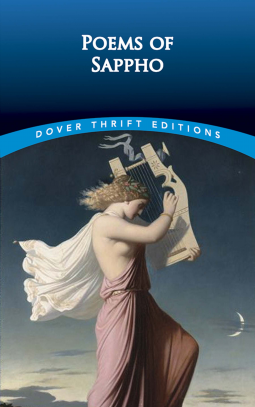
Poems of Sappho
This title was previously available on NetGalley and is now archived.
Buy on Amazon
Buy on BN.com
Buy on Bookshop.org
*This page contains affiliate links, so we may earn a small commission when you make a purchase through links on our site at no additional cost to you.
Send NetGalley books directly to your Kindle or Kindle app
1
To read on a Kindle or Kindle app, please add kindle@netgalley.com as an approved email address to receive files in your Amazon account. Click here for step-by-step instructions.
2
Also find your Kindle email address within your Amazon account, and enter it here.
Pub Date Feb 15 2018 | Archive Date Mar 20 2018
Talking about this book? Use #PoemsOfSappho #NetGalley. More hashtag tips!
Description
Plato hailed her as "the Tenth Muse," and 2,500 years later her voice remains dazzling as well as direct and honest. Sappho, a lyric poet from the Greek island of Lesbos, wrote verse that sings to both sexes of desire, rapture, and sorrow. Praised for their simplicity and sincerity, her poems nevertheless evoke powerful and memorable images as well as a sense of unreserved eroticism. Her focus on emotion and individualism sets her work apart from that of her contemporaries, lending it an intimacy that foreshadows modern poetry.
Details about Sappho's life are largely unknown; she is thought to have lived sometime between 612–570 B.C.E., and her poetry was read and admired throughout the ancient world. Today her poems survive in fragmentary form, and she is best known as a symbol of female homosexuality, having inspired the terms "sapphic" and "lesbian." This concise collection of her surviving works features an informative Introduction by translator J. M. Edmonds.
Details about Sappho's life are largely unknown; she is thought to have lived sometime between 612–570 B.C.E., and her poetry was read and admired throughout the ancient world. Today her poems survive in fragmentary form, and she is best known as a symbol of female homosexuality, having inspired the terms "sapphic" and "lesbian." This concise collection of her surviving works features an informative Introduction by translator J. M. Edmonds.
Available Editions
| EDITION | Other Format |
| ISBN | 9780486817279 |
| PRICE | $4.00 (USD) |
| PAGES | 112 |
Available to Buy
Buy on Amazon Buy on BN.com Buy on Bookshop.org*This page contains affiliate links, so we may earn a small commission when you make a purchase through links on our site at no additional cost to you.
Average rating from 13 members
Readers who liked this book also liked:

I Think I Was Murdered
Colleen Coble; Rick Acker
General Fiction (Adult), Mystery & Thrillers, Romance
Colleen Coble; Rick Acker
General Fiction (Adult), Mystery & Thrillers, Romance