*This page contains affiliate links, so we may earn a small commission when you make a purchase through links on our site at no additional cost to you.
Send NetGalley books directly to your Kindle or Kindle app
To read on a Kindle or Kindle app, please add kindle@netgalley.com as an approved email address to receive files in your Amazon account. Click here for step-by-step instructions.
2
Also find your Kindle email address within your Amazon account, and enter it here.
In the year 1830, the state of North Carolina adopted into law the act to prevent all persons from teaching slaves to read or write. The teaching of slaves to read or write, has a tendency to excite dis-satisfaction in the minds of slaves, and will produce insurrection and rebellion, to the manifest injury of citizens of this state of North Carolina. Any free person, who shall hereafter teach, or attempt to teach, any slave within the state to read or write or give or sell to such slave any books or pamphlets, shall be liable to indictment in any court of record in this State of North Carolina. And the slave shall be imprisoned; and or whipped at the discretion of the court, not exceeding 39 lashes and not less than 20 lashes.
"Act Passed" by the General Assembly of North Carolina at the Session of 1830 (Raleigh:1830). Despite the racism of North Carolina and other united states in America, slaves did learn to read and write. Even though many slaves were not literate they would sign documents using a scribed "X" in lieu of a signature. The courts permitted this as long as the X-mark was witnessed.
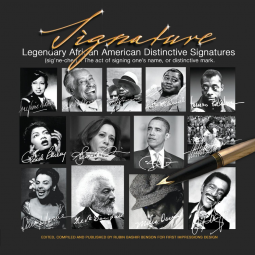
The individual signatures enclosed in this unique presentation is not a critique of their "penmanship". On the contrary, our intention is only to show a individuals style of "handwriting" their name. Iconic as these African-Americans are, their signatures reveal a vibrant brand attached to their personality.
In the year 1830, the state of North Carolina adopted into law the act to prevent all persons from teaching slaves to read or write. The teaching of slaves to read or write, has a tendency to excite...
In the year 1830, the state of North Carolina adopted into law the act to prevent all persons from teaching slaves to read or write. The teaching of slaves to read or write, has a tendency to excite dis-satisfaction in the minds of slaves, and will produce insurrection and rebellion, to the manifest injury of citizens of this state of North Carolina. Any free person, who shall hereafter teach, or attempt to teach, any slave within the state to read or write or give or sell to such slave any books or pamphlets, shall be liable to indictment in any court of record in this State of North Carolina. And the slave shall be imprisoned; and or whipped at the discretion of the court, not exceeding 39 lashes and not less than 20 lashes.
"Act Passed" by the General Assembly of North Carolina at the Session of 1830 (Raleigh:1830). Despite the racism of North Carolina and other united states in America, slaves did learn to read and write. Even though many slaves were not literate they would sign documents using a scribed "X" in lieu of a signature. The courts permitted this as long as the X-mark was witnessed.
The individual signatures enclosed in this unique presentation is not a critique of their "penmanship". On the contrary, our intention is only to show a individuals style of "handwriting" their name. Iconic as these African-Americans are, their signatures reveal a vibrant brand attached to their personality.
*This page contains affiliate links, so we may earn a small commission when you make a purchase through links on our site at no additional cost to you.
*This page contains affiliate links, so we may earn a small commission when you make a purchase through links on our site at no additional cost to you.
Average rating from 2 members
This site uses cookies. By continuing to use the site, you are agreeing to our cookie policy. You'll also find information about how we protect your personal data in our privacy policy.