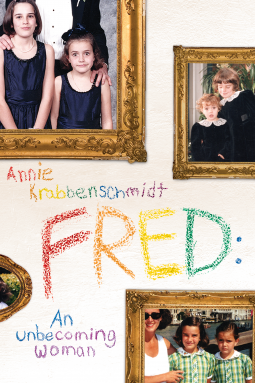
Fred: An Unbecoming Woman
by Annie Krabbenschmidt
This title was previously available on NetGalley and is now archived.
Send NetGalley books directly to your Kindle or Kindle app
1
To read on a Kindle or Kindle app, please add kindle@netgalley.com as an approved email address to receive files in your Amazon account. Click here for step-by-step instructions.
2
Also find your Kindle email address within your Amazon account, and enter it here.
Pub Date Jun 03 2022 | Archive Date Sep 30 2022
Description
As she recounts the journey from the blissful non-committance of her “straight” origins, to falling in love, to her years spent (shockingly) alone, Annie Krabbenschmidt’s debut book is both wickedly funny and heartbreaking. More autotheory than memoir, Fred deconstructs the institution of “womanhood,” defying gender and genre.
Krabbenschmidt charts their adolescence through a constellation of their coded interactions with 2000s media—including The Notebook, Twilight, and, of course, Mean Girls—and is eventually resigned to undergo their inevitable arrival at true queerness. “Do I get no say?” a teenaged Krabbenschmidt screams into their godless void, only to be met by a challenge to embrace the unknown and the possibility of love, acceptance, and bold self-actualization.
Fred carves lasting grooves of ache and comedic introspection. Wielding her Marin-County-bred compulsory social grace, Krabbenschmidt invites us to be a part of her “coming out” story, though the road is far from unidirectional. This book is a lesson in accepting comfort, love, and desire, and freeing yourself of the ties that bind from both sides.
Available Editions
| EDITION | Paperback |
| ISBN | 9798985043204 |
| PRICE | $18.00 (USD) |
Average rating from 7 members
Featured Reviews
 Krista T, Bookseller
In what is essentially a collection of introspective essays, Fred is Annie Krabbenschmidt’s coming-out/coming-of-age story, and it is filled with humour, heartbreak, candour, and thoughtfulness. I always say that I read (fiction and non-) to learn about the world and how others navigate it, and Krabbenschmidt’s story — overcoming an affluent and loving childhood that, perversely, traumatised and oppressed Krabbenschmidt with its strict gender expectations — represents the perfect union of a person with something to say and the writing skills to say it; I learned plenty. I appreciate what Krabbenschmidt shares about her life, appreciate what she has to say about society at large, and although her struggles were not my struggles, there’s something relatable and universal about this story of striving to make the painful transition to adulthood with authenticity and self-love. I’m glad I read this and wish the author much happiness and success.
Readers who liked this book also liked:





Views expressed in promotions/advertisements do not necessarily reflect those of NetGalley or its affiliates.
© 2026 NetGalley LLC
• All Rights Reserved


Views expressed in promotions/advertisements do not necessarily reflect those of NetGalley or its affiliates.