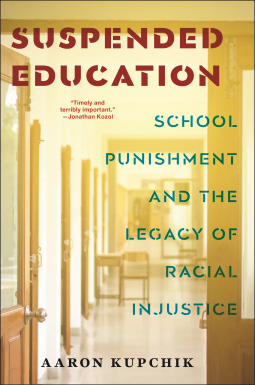
Suspended Education
School Punishment and the Legacy of Racial Injustice
This title was previously available on NetGalley and is now archived.
Send NetGalley books directly to your Kindle or Kindle app
1
To read on a Kindle or Kindle app, please add kindle@netgalley.com as an approved email address to receive files in your Amazon account. Click here for step-by-step instructions.
2
Also find your Kindle email address within your Amazon account, and enter it here.
Pub Date Mar 18 2025 | Archive Date Mar 18 2025
Talking about this book? Use #SuspendedEducation #NetGalley. More hashtag tips!
Description
How the historic resistance to racial desegregation in schools led to the over-punishment of students today
Every year, millions of public school students are suspended. This overused punishment removes students from the classroom, but it does not improve their behavior. Instead, suspension disrupts their education, harming the students, their families, and their schools. Black students suffer most within this broken system, experiencing a far greater risk of school punishment and the significant harms that accompany it. Many activists and scholars have considered how school punishment increases racial inequity, but few have thought to ask why. Why do we punish students the way we do, and why have we allowed this harmful practice to impact the lives of our nation’s children?
In Suspended Education, Aaron Kupchik takes readers to the root of the issue. Suspensions were not intended as a behavior management tool. Instead, they were designed to remove unwanted students from the classroom. Through statistical analysis and in-depth case studies of schools in Massachusetts and Delaware, Kupchik reveals how suspension rates skyrocketed after the 1954 Brown v. Board of Education decision, serving as an unofficial means of removing Black children from newly desegregated schools. His groundbreaking research traces the legacy of these segregationist movements, demonstrating that school districts with more desegregation-related legal battles from the 1950s onward suspend more Black students today. Combining expert analysis with compelling, accessible prose, Kupchik makes a powerful case for the end of suspension and other exclusionary punishments. The result is a revelatory explanation of a pressing problem facing all children, parents, and educators today.
Available Editions
| EDITION | Other Format |
| ISBN | 9781479821143 |
| PRICE | $32.00 (USD) |
| PAGES | 304 |
Available on NetGalley
Available to Buy
Buy on Amazon Buy on BN.com Buy on Bookshop.orgAverage rating from 13 members
Readers who liked this book also liked: