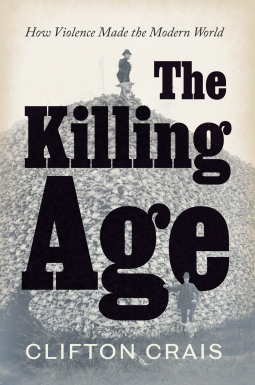
The Killing Age
How Violence Made the Modern World
This title was previously available on NetGalley and is now archived.
Send NetGalley books directly to your Kindle or Kindle app
1
To read on a Kindle or Kindle app, please add kindle@netgalley.com as an approved email address to receive files in your Amazon account. Click here for step-by-step instructions.
2
Also find your Kindle email address within your Amazon account, and enter it here.
Pub Date Nov 25 2025 | Archive Date Oct 6 2025
Talking about this book? Use #TheKillingAge #NetGalley. More hashtag tips!
Description
We are used to speaking of the Anthropocene and the outsized impact humans have had on the planet. But we sometimes lose sight of a fundamental truth at the heart of modern world history: the legacy of human predation, slavery, and imperialism that has devastated the natural world and led us to our present moment. As historian Clifton Crais shows in this magisterial work, the period that we most associate with human progress—which gave us the Enlightenment, the rise of democracies, the Industrial Revolution, and more—was at the same time catastrophically destructive.
In this bracing, landmark book, Crais urges us to view the growth of global capitalism between 1750 and the early 1900s not as the Anthropocene, but as the Mortecene: the Killing Age. Killing brought the world together and tore it apart, as profiteering warlords committed mass-scale slaughter of humans and animals across Africa, Asia, and the Americas. The newfound ease and profitability of killing created a disturbing network of global connections and economies, eliminating tens of millions of people and sparking an environmental crisis that remains the most urgent catastrophe facing the world today.
Drawing on years of scholarship and marshaling myriad sources across world history, The Killing Age turns our vision of past and present on its head, illuminating the Mortecene in all its horror—how it shaped who we are, what we value and fear, and the precarious present we inhabit today.
Available Editions
| EDITION | Other Format |
| ISBN | 9780226827414 |
| PRICE | $39.50 (USD) |
| PAGES | 664 |
Available on NetGalley
Available to Buy
Buy on Amazon Buy on BN.com Buy on Bookshop.orgAverage rating from 4 members
Featured Reviews
 Miles L, Educator
The Killing Age: How Violence Made the Modern World, by Clifton Crais, is a well-researched reassessment of what has become known as the Anthropocene, but centering violence and weapons rather than the concept often thought of as "progress."
This is one of those books that will, and should, make you uncomfortable and want to counter some of the arguments. But if you look at the research, the events that did indeed play major roles in making this world what it is, you won't be able to honestly counter too many of them. Sure, you can rationalize a few things, especially if you or yours were the beneficiaries, but we both know that is all you'll be doing, rationalizing as cover-up.
Our discomfort shouldn't be taken so personally that we seek to hide from this very persuasive argument but rather try to better understand why we as human beings are this way and what we might be able to do to make things better. If we as a species survive, what kinds of infrastructure, not just material but governmental and cultural, can we incorporate so that the world, not just humans, survive and flourish for a long time? Is there anything we can actually expect to accomplish when those currently in power take such enjoyment in inflicting harm on people and the environment?
This can be read as primarily a history book coming from a different perspective and making a counterargument for how and why the world has changed (I won't say evolved, that often implies a positive change). As such it is a fascinating book that could both enlighten and offer some ideas for further reading and research.
I prefer to read this as history with a purpose. Certainly not prescriptive, I'm not sure what one could put down briefly that cod be such. But we are warned throughout to look for two trails: money (or lust for profit) and weaponry (whether building up or sending off to increase profit). While a single unified plan to confront and reverse our destructive tendencies would be wonderful, it really seems like people locally and regionally will need to make stands where they are against whatever specific ills they have while looking for similar groups elsewhere to gradually form larger coalitions, mutual cooperation to attack the various sources of our self-destruction. So I guess you could say I think this can serve as a call-to-action. One of the difficult aspects is that there isn't much in the way of previous success stories to build on, so we need to be creative and find ways to make positive change even though our "leaders" have no interest in us or the world beyond what it can add to their own feeble sense of entitlement.
Highly recommended for readers of history, as well as those who want to better understand why we're destroying our planet and everything on it so gleefully. What we do with this information, whether to make positive change or just add an extra lecture to the syllabus we're making, is up to us. I vote for positive action against passive support.
Reviewed from a copy made available by the publisher via NetGalley.
 Anna F, Book Trade Professional
European Warmongers That Sold Arms and Warfare to the World
Clifton Crais, The Killing Age: How Violence Made the Modern World (Chicago: University of Chicago Press, November 2025). Hardcover: $39.95. 654pp. ISBN: 978-0-226-82741-4.
****
“A bracing account of how our current planetary crisis emerged from the worst cataclysmic destruction in human history, which Clifton Crais terms the Mortecene—the killing age. We are used to speaking of the Anthropocene and the outsized impact humans have had on the planet. But we sometimes lose sight of a fundamental truth at the heart of modern world history: the legacy of human predation, slavery, and imperialism that has devastated the natural world and led us to our present moment… The period that we most associate with human progress—which gave us the Enlightenment, the rise of democracies, the Industrial Revolution, and more—was at the same time catastrophically destructive. In this bracing, landmark book, Crais urges us to view the growth of global capitalism between 1750 and the early 1900s not as the Anthropocene, but as the Mortecene: the Killing Age. Killing brought the world together and tore it apart, as profiteering warlords committed mass-scale slaughter of humans and animals across Africa, Asia, and the Americas. The newfound ease and profitability of killing created a disturbing network of global connections and economies, eliminating tens of millions of people and sparking an environmental crisis that remains the most urgent catastrophe facing the world today.”
The front- and back-matter is plentiful in this book: maps, figures, tables, a note on language and place names, the main characters are described, and a chronology and notes are offered. There are also appendixes on weapons, deaths, wealth and climate. Any re-writing or re-interpretation of history requires such parts for clarity. The book is divided into parts that cover technological warfare advances as a business, killing in Africa, killing in other regions, killing in America (two parts), and then the “Twilight of the Warlords”. The latter positions the totalitarian “Empire” as a rival force to “Warlords” in Africa, India, and China. This is partly the propaganda European empires used to turn regional rulers into villainous and barbaric “warlords”, which made it possible for them to conquer enormous territories through such propagandistic persuasion of the others’ inferiority at ruling.
I found some helpful information in this book regarding colonialism that somewhat helps my Fall Mythology course. Though most of these historic explanations are too vague, and more directly-quoted, and more thoroughly sourced information is needed to explain these intricate subjects that have previously been misunderstood. I have not seen similar studies previously that begin to shift the blame for the world’s killings onto European warmongering… But it does not really go far enough in this, as it still proposes “warlords” in these regions were not manipulated by the Europeans into fighting through propaganda, but rather themselves found reasons to kill each other. This book is suitable for acquisition by most libraries, and would benefit researchers of this subject.
--Pennsylvania Literary Journal: https://anaphoraliterary.com/journals/plj/plj-excerpts/book-reviews-summer-2025/
Readers who liked this book also liked:

Kenneth Womack; Scott Freiman
Entertainment & Pop Culture, Nonfiction (Adult)
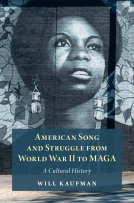
Will Kaufman
Entertainment & Pop Culture, Nonfiction (Adult), Politics & Current Affairs


Judi Dench; Brendan O'Hea
Biographies & Memoirs, Nonfiction (Adult)
Gerald J. Steinacher
History, Nonfiction (Adult), Religion & Spirituality
Frederick Douglass
History, Nonfiction (Adult)