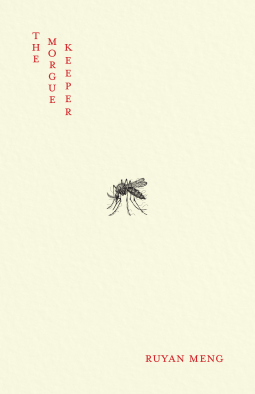
The Morgue Keeper
This title was previously available on NetGalley and is now archived.
Send NetGalley books directly to your Kindle or Kindle app
1
To read on a Kindle or Kindle app, please add kindle@netgalley.com as an approved email address to receive files in your Amazon account. Click here for step-by-step instructions.
2
Also find your Kindle email address within your Amazon account, and enter it here.
Pub Date Oct 15 2025 | Archive Date Dec 31 2025
Leland Cheuk | 7.13 Books
Description
In 1966, as a brutal revolution grips his city, morgue keeper Qing Yuan spends his nights cleaning bodies in silence—until a viciously murdered woman, known only as “#19,” shatters his routine, and he becomes entangled in an existential quest to uncover the truth behind her fate.
Today, the rapid rise of authoritarianism around the world, with its threats of state control and political persecution, gives plenty of reason for concern here in the United States, and plenty of reason to speculate on what is soon to come. The future that Ruyan Meng ventures in The Morgue Keeper, her relentless, scintillating debut novel, is unique, one drawn from historical precedent, and from experience itself. Based on true events, it is both a tale for our uncertain time and a harrowing testimony to survival. Its hero is unforgettable: Qing Yuan’s power lies not in grand defiance, but in his unwavering faith in human kindness and compassion.
Advance Praise
The Morgue Keeper is a harrowing, chilling historical novel that reads like a dystopian cautionary tale for our current times. Through haunting imagery and elegant prose, Ruyan Meng paints a Kafkaesque world where reason holds no meaning. And yet the resilience of her compassionate, sensitive protagonist offers us great solace. Not only does he survive the bleakest circumstances—he never loses hope.
—Karissa Chen, best selling author of Homeseeking
Devastating.
—Asian Review of Books
Available Editions
| EDITION | Paperback |
| ISBN | 9798989121489 |
| PRICE | $21.99 (USD) |
| PAGES | 190 |
Available on NetGalley
Available to Buy
Buy on Amazon Buy on BN.com Buy on Bookshop.orgAverage rating from 138 members
Featured Reviews
 Reviewer 1553899
I just finished this book in one sitting omg and I honestly don’t think I’ll forget it anytime soon.
Set in 1966 during the Chinese Cultural Revolution, the story follows Qing Yuan, a morgue keeper who spends his nights cleaning bodies in silence; until the arrival of one particularly brutal case, a woman known only as “#19.” From there, the book unravels into something much deeper than a murder mystery. It becomes a journey into truth, memory, and what it means to survive in a world that wants to erase both.
This book was very chilling but not just because of the violence, but because of how quiet that violence becomes and that was what got to me. Especially the way cruelty blends into the daily routine and how people turn away from it because they’re scared or helpless or just trying to survive. It’s heartbreaking.
What really stuck with me is how relevant the book feels right now. Even though it’s set in the 1960's, I couldn’t stop thinking about how much of what’s described is happening again, RIGHT NOW. The rise of authoritarianism, the distortion of truth, the silencing of dissent; it’s not just history, it’s current reality in so many places, including here in America. That’s what made it hit so hard. It felt less like reading fiction and more like staring into a warning we keep ignoring.
The protagonist Qing Yuan isn’t some revolutionary hero. He doesn’t fight back with fire. He just refuses to let the system take his humanity. He chooses kindness. He chooses to see people as people, even when the world tells him not to. And honestly, that quiet resistance hit me harder than any dramatic rebellion ever could.
This book was so painful to read but necessary. It’s a reminder of what happens when fear rules, when truth is buried, when we look away and stay silent. And it’s also a reminder that even in the darkest systems, human decency can survive. Sometimes barely, but it survives.
I’m still sitting with this one. If you’re looking for something beautifully written, emotionally devastating, and deeply relevant to our time, this absolutely worth reading.
Thank you 713Books for my personal copy.
Reviewer 1808863
Ruyan Meng’s "The Morgue Keeper" is not a novel for the faint of heart, indeed the novel at its core is an affirmation of the human spirit’s ability to persevere even after everything has been taken, after every imaginable torture and loss has been inflicted, after the world and country one knew has been completely erased. I would be remiss to open this review without a significant content warning. This book portrays the worst of humanity, the lowest depths of depravity, the most unspeakable acts we can commit against each other. Non-exhaustively, this books includes discussion or descriptions of: starvation, torture, violence, sexual assault, suicide, the abuse of animals, and many other sensitive topics. However, it is important to note that none of these descriptions or portrayals are gratuitous. The Morgue Keeper, for all the macabre imagery implied in the title alone, is not a piece of “grimdark” fiction nor does it participate in what is often termed “misery porn”. Instead this novel (which is based on true events), attempts to communicate the desolation experienced by the characters (and by extension the real people they portray) with absolute honesty, without softening the blow or turning its gaze away from their suffering.
Qing Yuan is a morgue keeper in Chairman Mao’s Revolutionary China. In June of 1966, a brutally mutilated body is delivered into his care— unrecognizable as human, still breathing her last breaths. With no name, and no cause of death listed besides “Trauma”, Qing Yuan files her into cabinet #19. From that day #19 haunts the morgue keeper, begging him to discover the cause of her death. What follows is a journey through the depths, illuminated by beautiful, restrained prose and punctuated with flourishes of magical realism and dream-like descriptions.
It is difficult to say that one might “enjoy” reading The Morgue Keeper, but as I flipped through its pages it wasn’t the violence or the horror that struck me most deeply— it was the constant assertions of hope, the never ending search for something to buoy one’s spirit above the water even as each new life-preserver was snatched away or sucked under. I kept reading because I had to know if such hope was possible, if it could be sustained into some kind of conclusion, and I did not come away empty handed.
Thank you Leland Cheuk and NetGalley for the ARC!
 Isabella D, Reviewer
If you read just one book in 2025, make it this one!
In The Morgue Keeper, author Ruyan Meng crafts a brilliant, timeless, and perspective-shifting cultural commentary. In precisely 200 pages, Meng holds a torch to the most severe flaws of mankind and then sets them aflame with hope. Thus, The Morgue Keeper is essential reading for anyone who feels hopeless, numb, or desensitized in the face of current affairs. The book’s length and language make this story accessible to even the most casual of readers.
The Morgue Keeper follows Qing Yuan, a man who has little to his name but compassion to spare, during China’s Cultural Revolution. In many ways, he exists on the fringes of society, sleeping through his neighbors’ waking hours in order to work the night shift cleaning corpses at the local hospital. Despite the dismal circumstances of his life and the grotesque realities he is exposed to daily, Qing Yuan has not been hardened by his physical and emotional toils. His story reminds us that these are precedented times we are living in.
I don’t often read historical fiction in its purest form, but I am so glad I picked this book up. As soon as I finished reading it, I wanted to turn back to page one and begin again. This book has every element of a modern classic. I sincerely hope it gets the recognition it deserves come publishing day.
Thank you to NetGalley and 7.13 Books for the arc in exchange for an honest review :)
Moira F, Reviewer
The Morgue Keeper is a haunting, elegant, and deeply atmospheric debut that completely consumed me. Ruyan Meng crafts a story that pulses with quiet dread, where the dead don’t just linger—they speak, and not always in words. This is horror at its most poetic and philosophical, rooted in grief, memory, and the eerie weight of unspoken truths.
From the opening pages, I was drawn to the stillness of the morgue, the loneliness of the keeper, and the creeping sense that something wasn’t quite right. But rather than jump scares or gore, Meng builds her horror slowly—like fog curling around your ankles—until you’re fully immersed in a world where life and death blur, and the past refuses to stay buried.
The prose is spare and lyrical, each sentence deliberate, each image etched with precision. There’s a melancholy beauty to it all, and the emotional resonance hit me harder than I expected. It’s not just about the bodies—it’s about the stories they leave behind, and the weight the living must carry.
If you’re drawn to quiet, character-driven horror with a literary sensibility and emotional depth, The Morgue Keeper is a stunning, unforgettable read. It left me chilled, but also strangely comforted—like I’d been allowed to witness something sacred and strange.
 Erica L, Reviewer
This story, based on real events during the Mao Zedong era in China, was shocking in its detail, but beautiful in the way it portrayed human resilience in the harshest of environments. I didn't know much about this part of history so I went in blind. While it was an emotionally challenging read, I really appreciated the way the author was able to take events that are so remote from my reality and make them relatable and relevant in our shared human experience. It was a short read, and I highly recommend it.
Reviewer 1825809
Thanks to NetGalley for providing eARC.
I just finished Han King’s masterpiece Human Acts, so my headspace was acclimated to the grisly content, but this book still hit me very hard; I felt like I was there next to Qing Yuan trying to preserve my humanity and sanity while slowly losing (almost) everything.
Some images that will stay with me: morgues as gateways to cosmos, mosquitoes in the coal room, the beautiful and evil Red Guard lieutenant, the wonderful Lio Jia singing “The Internationale” while dressing corpses in circus costumes and “entertaining the cosmos with his slapdash song”, ghosts in hallucinations….
This book is especially timely being published in 2025 as the US becomes ever more authoritarian with each day. History shows us how this experiment works out: people turning on each other, the “struggle sessions” and “dazibao” (big character signs, see China in Ten Words for an excellent summary), which reminiscent of the vitriol spewed on social media, cable news, and from Trump’s mouth.
As a cat mom, I was holding my breath rooting for little Xi’er.
Favorite quote:
“He thought at times he could hear the earthworms crying”
Reviewer 1262898
THE MORGUE KEEPER REVIEW
RATING: 5
GENRE: Literary fiction, Historical fiction
The Morgue Keeper is a hauntingly beautiful book written by Ruyan Meng. Though the synopsis hints at a mystery that our protagonist tries to solve, this book is much more than that. It takes place in China during the Cultural Revolution where communism has begun to take over. The shift in how the country is run is apparent as we follow Qing Yuan through his daily live as a morgue keeper and someone who is considered a member of the proletariat.
I believe everyone should read this book - this is eye-opening on the commentary of the treatment of human kind. What makes us human and how do humans quickly turn on each other? The book delves into the mindset of a broken man who continues to live through many atrocities while attempting to maintain a shred of human empathy.
Though it is a relatively short read, the topic is heavy and at times, there are events that occur that can be considered grotesque. However, I highly urge everyone to take a chance and read this book. It was eye-opening and made me curious to spend some time researching into more details about those who were considered counterrevolutionary during this period.
Thank you 7.13 Books, Leland Chuck, and Netgalley for the opportunity to read this book. For those who enjoyed the focus on the human experience during historical periods, such as Han Kang’s Human Acts, please pick up this book on 10/15/25.
Rose T, Reviewer
The Morgue Keeper hit me harder than I expected. It’s not a loud or flashy book it’s quiet, grim, and precise but it gets under your skin in this slow, deliberate way. At first, I wasn’t sure what I was getting into. The opening is emotionally cold, kind of clinical, with Qing Yuan just doing his job, methodically logging the dead. But that coldness makes sense. It mirrors the numbness he has to live with just to survive. Once the story shifts and he’s arrested and thrown into that coal room, everything tightens. I found myself holding my breath during those parts. The fear and paranoia are suffocating, but not in a melodramatic way. It just feels real, like you’re in there with him and there’s no way out.
What I loved most was how restrained the writing is. It doesn’t rely on shock value or overly emotional language to make its point. It just tells the truth of what it was like to live through that time. Qing Yuan isn’t a big hero or a rebel he’s just a man trying to stay human in a world trying to erase humanity. That made him incredibly compelling to me. The strength of this book is in the way it shows quiet resistance just existing, remembering, telling the truth when you can. That hit deep. It’s not always an easy book to sit with, and honestly, it left me drained in the best way. I felt like I’d been trusted with something important by the time I finished.
 Ashley P, Reviewer
I’m not sure what I was expecting when I started this book based on other reviews, but it was a fantastic read. The story was raw, emotional, violent, and deeply disturbing given the current state of affairs IRL. The main character finds small bits of hope and happiness while being publicly condemned and brutalized for his father’s past decisions. I found it to be less about the mysterious woman in the morgue that’s introduced in the beginning and more about the unbreakable human spirit in the face of unimaginable circumstances.
Reviewer 1045807
I was initially attracted by the title because it sounded like it was going to be a dark read and it was. It starts off at quite a slow pace as we follow the morgue keeper as he goes about his quiet daily routine under the rising of the Red Army.
I found it slow to start but I feel this was important to let the reader know what life was like, as the keeper gets dragged into the brutalist regime the pace picks up and I found it quite harrowing. He is quiet in person and in life as though to not draw any attention to himself. In the story, he receives a mutilated female body only known as #19, and is determined to find out what happened to her. The brutality of the regime was beyond comprehension and I think this book will be well received.
Maria J, Reviewer
It will take me some time to recover from this book. How lucky am I to be able to.
The Morgue Keeper broke my heart more times than I can count. Set during China’s Cultural Revolution, it follows morgue keeper Qing Yuan — a quiet man trying only to survive, to share what little he has, and to hold on to decency while the world crumbles around him. The violence is brutal, the cruelty unbearable, but what stayed with me most was the humanity: cigarettes shared in silence, food offered to those everyone else called trash, a man who still believed people were worth saving.
This isn’t an easy read, but it is a necessary one. Reminded me of Human Acts in tone and emotional weight. I'm grateful to have read it.
Thank you to NetGalley and the 7.13 Books for making it possible.
 Andi M, Reviewer
Historical fiction isn’t one of my preferred genres, but I went into THE MORGUE KEEPER with an open mind. This debut novel is set in 1966 during the Chinese Cultural Revolution under the leadership of Mao Zedong, and follows conscripted morgue keeper Qing Yuan, whose life as a solitary, introspective man changes as he comes across a murdered young woman in the morgue.
When no one comes to claim her, Qing Yuan sets out to find out what happened to her. But that isn’t the only plot in this book. The other plot describes the brutality experienced by the residents under Mao’s regime, including public “struggle sessions” and frequent beatings by the Red Guard which were common during this time.
With just under two hundred pages, this novel really packs a punch. Beijing was such a dirty, inhospitable, and bleak place during these times, but Qing Yuan’s enduring human spirit, generosity, and compassion for others prevails. I appreciated that he could provide solace to others when he was suffering himself. This book will stay with me for a long time.
🌟Thanks to the author, publisher, and NetGalley for a copy of this book in exchange for an honest review.🌟
 Joanne H, Reviewer
Dang. That ending.
Fantastic. Worthy of 5 star. Deep. Dark. Reality. Correlation from the communist uprising in China to the modern fascist uprising in America. The steps are there, and it's eerie.
At the 41% mark: "One evil man, he thought , a single evil man, had reduced him and his millions of fellows to creatures who existed to be crushed."
Eerie. The similarities is off putting and gave me a sinking feeling. The darkness that surrounds our main character is horrendous and happens time after time in human history. Humans are destructive.
And when there's a glimmering line of hope - it gets imprisoned, massacred, shoved into a hell hole.
All we have in the middle of death and insanity is hope. All we can do is hold on. This is a must-read.
Thank you at Netgalley.com for the ARC. I am amazed at this shorter book. It packs a punch.
 Rebecca C, Reviewer
This is a book that eats away at you even after you finish it. The blurb almost makes the book seem like a murder mystery. But while the search for the identity and cause of #19’s murder is an early driving point of the plot, it takes a backseat for the majority of the novel. Instead, The Morgue Keeper is a raw depiction of humanity, how it is lost through political control and herd mentality, and how Qing Yuan is able to maintain his despite social, mental, and physical cruelty and torture. Beyond the main focus on Qing Yuan, the complex side characters beg the reader to question how we treat each other and what the morally correct course of action is in tough situations.
The Morgue Keeper is a masterclass in showing without telling which makes it rich for interpretation. I received an eARC for my honest review, and upon publication I will purchase a print copy to annotate and revisit.
"Few if any had considered how far they’d had to stoop to embrace a joy born of savagery." (138)
"Sometimes, he reflected, it’s better to remain in the dark, not for the sake of the dark, but because it was kinder than the light." (167)
Reviewer 1821119
I feel so privileged to have had the opportunity to read this ARC of the Ruyan Meng's The Morgue Keeper, provided by NetGalley
This was a painfully beautiful Literary Historical novel. In just under 200 pages Ruyan has waived a multilayer story that is both, in turn a disturbing and uplifting commentary on human kind.
Set during the Cultural Revelation in China we follows Qing Yaun as he tries to solve the mystery of the death of a women No.19 brought to the morgue where he works. Along side the mystery we are given a window into the raise of communism and how the regime change, lead to a period of human atrocity, with the de-humanizing and horrific treatment of one group of people by another.
Despite its heavy topic and at times grotesque depictions of human kind at its worst, this was ultimately a moving and uplifting story, as even though Qing is a broken man, and experiences horrific and humiliating treatment at the hands of his neighbours and government, Qing is able to maintain his humanity and continue to show empathy and care to those around him including a kitten who comes to be his closest companion.
This is not a period of history I don't know well but this novel has inspired me to read more around this in the future.
I would highly recommend this book and will be buying my own copy, and would be interested in picking up any further works by this author.
I truly hope that this book receives the success is so deserves.
 Casey Jo C, Reviewer
This book will stick with me for quite some time, in the best way possible. It’s a hard read, in the sense the hardships the characters faced throughout the book was brutal. It was raw, thought provoking, and deep. Incredibly well written, it places you in the scene and you can easily immerse yourself into the time and place with the main character. I absolutely could not put it down. Before reading, I was unfamiliar with the historical events outlined in the book, and it made me research further once I finished reading. A huge thank you to the author, Ruyan Meng, the publisher, and NetGalley for allowing me the opportunity to read this book.
Samantha P, Reviewer
"I can't help but to think that sometimes a man can be as frail as a mosquito"
Through vulnerable, intimate prose, Ruyan Meng's "The Morgue Keeper" paints an engaging, if bleak, portrayal of Maoist China from the perspective of someone on the fringes of society.
From the Dante Alighieri quote at the beginning of the book, to the bleak description of the Mortuary, Meng shows the reader that Qing Yuan, our morgue keeper, and his peers, are unwanted as the dead in the present social context. Yet, beneath all of their suffering, still have the capacity for human empathy and warmth. Through the stillborn baby, #19, FanFan, Feng Ge, and Xi'er, Qing Yuan shows us that despite the unspeakable horrors enacted on him by the Red Guards and his peers, one never loses their sense of concern and empathy for others.
I also thought that the insertion of caring relationships (as an intended for Feng Ge, and a cat dad to Xi'er), also allowed the novel to feel less bleak, showing that even in the darkest of times, the human spirit remains resilient.
My only complaint is that the end of the novel, where Fan Fan tells the story of both #19 and Feng Ge's husband's deaths felt a little rushed in the overall context of the narrative.
Kate C, Reviewer
Qing Yuan, the titular morgue keeper, spends his nights silently doing his job and his days keeping quiet in his apartment and helping his neighbors. But one night a brutalized body, #19, comes across his table and he finds he can no longer ignore the world around him. I won't say much more to avoid giving away plot points, but this is a story of kindness and resilience in the face of authoritarianism.
I recommend this to those who enjoy stories of existence in oppressive regimes, and cats.
Thank you to NetGalley for an eARC of this book.
 Tiffany D, Reviewer
This gripping, heartbreaking story is set during Mao Zedong's' cultural revolution in 1966. A time of bleak unrest, violence, and destitution. This story puts the reader into the heart of this time period as it follows one man Qing Yuan ,who is a Morgue keeper. When a woman's badly beaten body shows up at his morgue, he vows to find out what happened to her. In the story The worst things imaginable happen to Qing Yuan as we get glimpses of the effects of this Cultural revolution but still despite the abuse and hardship he cannot forget his promise to the dead woman names #19. I finished this book in one sitting and I feel that this book sparked a curiosity in me about this time in History. This story is heartbreaking and magnifies our ability for resilience and empathy but also shines a spotlight on the cruelty of human beings. Written in stunning prose this story is for people who appreciate works such as Han Kang's Human Acts.
Odette L, Reviewer
Not sure I have the words to express how much I enjoyed this book. I was drawn into Qing Yuan’s world and experienced the highs and lows with him. This book is more than Qing Yuan wanting to know what happened to #19. It is a book about the human condition when placed in a hostile environment. When one is at the mercy of others for survival. To have hope in such situations is not an easy thing. I look forward to reading more from Ruyan Meng.
This book prompted me to read about China’s cultural revolution. Thank you for the ARC NetGalley.
Mariah S, Reviewer
Thank you to NetGalley for the ARC of this excellent book. I highly recommend this gut-wrenching book about a hopeful and generous morgue keeper during the cultural revolution in Communist China. This is one of those stories that will stay with me for a while. Meng is a skillful writer who is able to captivate, saying a lot with so few words.
When discussing the depressive state of the morgue keeper, our narrator, Qing Yuan, Meng writes "He existed now in a liminal zone, between a past to which he could never return and a future that would never come." There are layers of complexity to this book. Yuan's generosity with strangers that pushes beyond the state of depravity and torture, the joy found in the small, the resilience in the darkness. Each twist and turn left me without words.
This book is ugly, and tragic with odd glimmers of hope - as they refer to the book of Job with in the story, it could be referred to as a tragicomedy (definitely in the Biblical/Shakespearean sense).
 Michelle C, Reviewer
Upon requesting this book on NetGalley, I thought I was in for a mystery novel. Instead, I was rewarded with a devastatingly raw and unflinching commentary on what it means to be human in China during the Cultural Revolution, where communism has started to take over. Qing Yuan works as a morgue keeper, cleaning corpses and preparing them for the afterlife. Grisly as the job may be, it's a sacred ritual for the families. One day, Qing Yuan is presented with a mutilated body, #19. It is this body that takes him aback and Qing Yuan soon becomes obsessed with uncovering who the deceased was.
Soon Qing Yuan and his fellow medical workers are accused and detained as counter-revolutionaries by Chairman Mao's Red Guards. Locked in a coal room, he witnesses even further atrocities and is tortured himself, fighting to survive. Through extraordinary prose and poetic dialogue, Ruyan Meng delivers a clever, eye-opening commentary on how humans act and behave and survive through authoritarianism, using Qing Yuan's psyche to take us through human empathy, revolution, survival and hope.
Reviewer 1765543
An intriguing read that makes you research China's past of the Chinese Revolution, the Red Guards and Mao Zedong.
Qing Yuan is basically forced to become a morgue keeper, after denouncing his father, a person who cleans up the dead. He comes across a nameless woman, #19, a person who was brutally murdered by the unknown. Qing Yuan finds himself trying to find the truth of this woman's death as no one has claimed her or brought clothes to her before her cremation.
Qing Yuan goes through many events through this story, such as struggle meetings, finding love and the death of his colleagues.
It might be best to read a bit about the late 1960's China, and the events before and after the Red Guards before you attempt to read this book.
Thanks to Netgalley and Leland Cheuk | 7.13 Books for this ARC!
 Brandon G, Reviewer
The Morgue Keeper is a haunting and atmospheric debut novel set during the Cultural Revolution in 1966 China. The story follows Qing Yuan, a morgue keeper who spends his nights cleaning bodies in silence, until the arrival of a brutally murdered woman, known only as “#19,” shatters his routine. This event propels him into an existential quest to uncover the truth behind her fate.
Meng's prose is evocative, capturing the bleakness of the era and the inner turmoil of her characters. The novel delves into themes of human kindness, survival, and the impact of political oppression. While the narrative may not follow a traditional mystery structure, it offers a poignant exploration of resilience and empathy in the face of cruelty.
The novel's strength lies in its portrayal of the human condition amidst a repressive regime, offering readers a glimpse into a tumultuous period in history.
Thank you to NetGalley and 7.13 Books for the eARC.
Kiera M, Reviewer
I really enjoyed the writing style overall and the way Qing Yuan is written as our main character. He’s a simple man who just wants to make sure people are looked after they’ve passed away. I loved the descriptions of his friendships with his colleagues and the way they jibbed with each other as this made me like Qing Yuan even more and fleshed him out as a character very well. This book is heart wrenching and while quite short, deals with a lot of gruesomeness through different lenses that make you reflect and appreciate what you have.
 Anna Y, Reviewer
This book has many ways of getting under your skin, sending shivers down your spine, and marking you forever. It's full of horrendous torture, both mental and physical, and full of despair. But undeniably, this is the best book I have read this year. 6 stars.
 Mawoolar (, Reviewer
For readers who enjoyed Han Kang's Human Acts, this book is for you.
This book revolves around the life of Qing Yuan, a man who works at the hospital's morgue as the morgue keeper. He sees to the dead bodies that get delivered to him and as an experienced man, rarely ever gets attached to the bodies no matter their condition. But when the corpse of a female, labeled as #19, who was badly bludgeoned and whose body has badly decomposed, he finds himself haunted by her death and becomes desperate to find answers to her death.
The story takes place during China's Cultural Revolution led by Mao Zedong and enforced by China's youth party. The book does not shy away from showing the brutality and violence the party enforces on innocent civilians. Whatever the government says is final; if you are a criminal, then they will make you a criminal (forge documents, spread lies about you, encourage the people around you to insult you). The unimaginable acts committed by the children of the youth party (some barely even 16, 17 years of age) show the lengths humans could go to under unconditional submission, even if it means beating your own father.
Amidst these bleak moments which felt like a nightmare that would never end, we are shown how Qing Yuan perseveres. It's ironic that death is what anchors him; the image of the many bodies he has cleaned and cared for throughout his life kept him sane. His will to live and to get through the violence committed onto him was for one goal: to find out how #19 had died.
Despite humanity's capability in enforcing unimaginable acts of violence without question, it also showed humanity's ability to hope and remain kind. Qing Yuan's life was never all sunshine and rainbows, yet he was still able to show compassion to the beggar who he was acquaintances with, to the widowed mother's kids and to his friend at the morgue. When he gets a kitten and decides to care for her, it was as if he could get through anything else if it meant being able to stay happy with her. In a world brimming with violence and brutality, Qing Yuan represented a sliver of hope that kept humanity sane through these tough times.
Thank you to NetGalley for providing me with this ARC. It was a masterpiece of a work tightly packed in 200 pages.
Lori H, Reviewer
This book is strange in the most unsettling, quietly devastating way. It lulls you with its restraint, then blindsides you with violence so horrific, so humiliating, it feels like a gut punch.
Set during the Chinese Cultural Revolution, it follows Qing Yuan, a morgue keeper tasked with cleaning the bodies of the dead before they’re claimed or cremated. He’s seen countless corpses, but it’s #19—a grotesquely mutilated woman—that rattles him to his core and compels him to find out more about her. This quiet, unassuming man is soon pulled into a nightmare I wish didn’t exist, yet can’t pretend isn’t real: the brutal punishments inflicted on alleged counter-revolutionaries.
As bleak as it is, the novel pulses with threads of hope and perseverance. And if it doesn’t stir something in you, if it doesn’t leave a mark, however faint, are you even alive?
Reviewer 1775320
The Morgue Keeper By Ruyan Meng
What to say and where to start ?…..
I would say there are very few books (I have read) that are quietly powerful yet are so loud they leave you speechless.
This book tells the story of Qing Yuan, a morgue keeper who spends his nights cleaning the bodies of the dead. When the body of a brutally murdered woman is brought into the morgue. Qing Yuan finds himself needing to uncover her identity and the fate that led her to be called only by the number #19.
My thought's… I was aware at all time times that I was reading a historical novel and not a dystopian, but you would be forgiven for thinking this could not possibly be real!
The oppressive regime and depictions of the effects of state control and persecution, for me as someone who has grown up in Britain are breathtakingly frightening and tragic.
The characters in this Fictional novel, may not be “real’, but Ruyan’s writing unapologetically details the lives of many who are trapped under such a regime, you are left with no doubt that these are peoples real life experiences.
Some of the worst of humanity are displayed within these pages. Trigger warnings for Violence(in all forms) Physical and mental torture, descriptions of abuse including animal.
The oppressive and frightening reality of 1960’s China for so many of its people leaves you speechless.
And yet….. Qing Yuan a man who has lost everything under the Maoist regime. Through loss and despair still finds and clings to the small acts of kindness and hope.
This is a story of survival, perseverance and quiet strength.
For reasons described above, it would be wrong to say this book was enjoyable. Thought provoking, powerful and emotive are better suited.
This book will stay with me for a long time, along with it’s haunting reminder of what could happen in a world leaning ever more towards authoritarianism in the west.
I will be following this authors work closely And have already ordered myself a copy of the book.
Thank you to NetGalley and the publisher for the opportunity to read this ARC .
Trigger warning described in the review ( remember this is a powerful read but I feel a important one, if you feel you are in safe mindset I would highly recommend it)
 Rachel D, Reviewer
Review:
The Morgue Keeper is a haunting mix of history, mystery, and survival. Set during the chaos of revolution in 1966 China, it follows Qing Yuan, a morgue worker who stumbles into the mystery of a brutally murdered woman known only as “#19.” in this book, it isn’t just the suspense, but the way it explores humanity in the face of brutality—how kindness can endure even under authoritarian rule. Dark, unsettling, and deeply moving, it’s perfect if you like historical fiction that feels both urgent and timeless.
 Mara R, Reviewer
Wow, I literally have no words. This is such a stunning and remarkable debut novel. It was truly an amazing read. Once I started I couldn't put down the book. The story was so gripping, transportive, haunting, and poignant, especially in light of the current state of the U.S. So much of this can be reflected in the U.S. today, especially with our government/media weaponizing the public's fears of the other to create fanaticism, racism, and violence.
Qing Yuan's instinct to be kind/compassionate to others reminds us to find hope in times we might not think it's possible. His quiet strength and care really impacted me. I was crying towards the end of the book!
This is hands down one of my favorite reads of 2025, I won't be forgetting this story anytime soon. I will definitely be buying this once it comes out.
Thank you NetGalley and 7.13 Books for the arc.
Tiffany N, Reviewer
The Morgue Keeper by Ruyan Meng is about a man, Qing Yuan, who works in a morgue for several years before the arrival of a brutalized body - unnamed except for the tag of #19. Despite his experience dealing with death, this one rattles him, and he becomes fixated on discovering the identity of this woman and what happened to her.
While this book first feels like a sort of murder-mystery, what happens is similar to what the arrival of #19 does for Qing Yuan, reaching over a careful neutrality to implore you to look a little deeper. The main character is someone who is used to the monotony of his day-to-day, has become resigned to it, until he is brought back to harsh reality. In this reality, too many questions are unwelcome, and life does not always go the way you’ve planned it.
As we learn more about Qing Yuan, we begin to feel with him each small glimpse of hope and subsequent crushing defeat. Simple pleasures like budding romance and curiosity are harshly squashed and vehemently punished, to the point where you as a reader find yourself full of despair, prepared for the worst. However, in spite of it all, Qing Yuan again and again finds small things to propel him forward, to keep him fighting.
This story pulls you in to the full historical context of the world it resides in, the true weight of what is happening at the hands of the Cultural Revolution. It strikes a delicate balance of allowing that weight to settle onto you while not letting you be crushed completely under its weight. A story of brutal force, perseverance, and connection.
Tika M, Reviewer
Wow, I don't even know how to articulate what I just read. Whilst nothing like what it was expecting, I couldn't put it down. I felt horror, desolation, shock and there, right at the end, hope. It was certainly a gripping read, but there should be trigger warnings for this, which I have added below *this is not an extensive list.
This is a very graphic novel which features torture, death, suicide, cannibalism, with mentions of rape, child death, stillbirth, and disposal of infant bodies.
 Lara A, Reviewer
This is a brutal, brutal read, unsparing in its depictions of the horrors of the Cultural Revolution. Yet despite the manifold suffering within, a sense of hope glows at the heart of the story and this kept me reading. A very promising debut.
 Scott B, Reviewer
Aristotle identified four types of metaphor, with one being species to genus or synecdoche. The Greek can be literally translated as coming together or understanding together. Kenneth Burke called it one of the four master tropes and said, “Synecdoche is related to the representation of a part for the whole, the whole for the part, the container for the contained, the sign for the thing signified, the material for the thing made, cause for effect, effect for cause, etc.” This idea of understanding a larger phenomenon by concentrating on one detail or part of the thing is a central aspect of human thinking.
In the context of a narrative, when a writer describes something by only describing one detail she invites the reader to engage with the story by making the connection between the part and the whole in their own mind. In Meng’s rather intense short novel, the main character, Qing Yuan, while working at a morgue is deeply affected by an unnamed body or “#19”, a woman who has been viciously murdered. Rather than saying that this is a book about the Chinese Cultural Revolution, Meng invites the reader to think for herself about how one man seeing this one dead body might represent this historical event that affected millions of people over a ten year period.
Qing Yuan is driven to understand the murder of #19:
“#19, on the other hand, in the larger sense, had been innocent. The very least he could do was to learn the circumstances of her murder. It didn’t matter that her murderers were captured and punished. The likelihood of that, he knew, amounted to the escape of a rhinoceros from a zoo. One way or another, he had to find out.” (location 1467).
Meng’s novel is an introspective psychological novel that does have some descriptions of violence and human suffering, although I did not find them overwhelming. Overall, I found the book to be an engaging and moving story about one man’s attempt to understand just one of the many victims of the Chinese cultural revolution.
scheduled for publication 15 October 2025. epub. 191 pgs. 23 September 2025. Galloway NJ USA
Meghan P, Reviewer
The Morgue keeper begins with arrival of #19 to the morgue where Qing Yuan works. Qing Yuan becomes obsessed with finding out who #19 was and what happened to her so that her soul can rest. This obsession is a common thread that Qing Yuan keeps coming back to even as the events of the Cultural Revolution ramp up. The novel swings between despair to hope to anger, but through it all Qing Yuan's compassion allows him to continue to find hope and the will to survive.
I appreciated that Qing Yuan's character was not proselytizing, not was he a loud counterrevolutionary. He was simply a kind person who continued to find hope despite the horrors that he experienced. The Morgue Keeper is an incredible debut novel.
Thank you to NetGalley and 7.13 Books for the ARC in exchange for an honest review.
 Jana W, Reviewer
this book is not an easy read at all, but ruyan meng holds your hand through it and the early days of mao ze dong‘s cultural revolution with warm candlelight, a dash of hope, and flowy writing. this book made me want to look away because of how terrible and depressing everything is in qing yuan‘s life—from the endless corpses being rolled to the morgue to the people in his surrounding environment to the character himself—but i can‘t help but feel hope for everyone and everything so i stayed. also, with how short this book is (at 200 pages) it packed a disgustingly devastating punch and i felt so many emotions throughout my reading experience, mostly anger and plain sadness. if you were a fan of “human acts” by han kang, give this book a go. the historical weight of it is important as well.
the mystery mentioned in the blurb, however, takes a bit of a back seat in the story without losing its significance, so i would say that this book is more about life in the early years of the cultural revolution working a job that you were forced into with the mystery of #19 lodging itself into qing yuan‘s heart and not wanting to go away rather than one that dedicates itself to solving this singular mystery, in case anybody was expecting that.
overall I really enjoyed this book. the plot kept me going—there was never a dull moment—the side characters were fleshed out and not just “there” for the sake of it (they all had well-written lives and backstories that explain why they are where they are today) and I appreciated the fact that with all the death he had to see, qing yuan never really lost his sense of humanity, rather the other way around.
I am looking forward to reading more of Ruyan Meng‘s writing.
 Caitlin M, Reviewer
The book was an incredible, yet harrowing, read which is incredibly well-written. There were many passages where I felt rather sickened by what I was reading, yet I couldn’t tear myself away. The historical basis of this story makes it all the more emotive.
Qing Yuan was such a compelling main character. His persistence in treating those around him with grace, despite the circumstances and how other people were acting was inspiring and kept me thoroughly invested in following him. There were also, somehow, moments of joy that Qing Yuan is able to find when in the company of those he loves. As with the writing style, this doesn’t feel overdone wherein “good” characters can feel saccharine and false. And I suppose that is just the thing, it is not so much that Qing Yuan is “good” (although I do think he is), it is that he is principled and fair. These characteristics are made all the more stark due to the lack of them in many of the people around him, and the difficulty in keeping to principles in circumstances which are all but forcing you to turn against others and fend only for yourself.
While Qing Yuan is the driving force behind the book, but there are also numerous side characters who are well-rendered and you become easily invested in.
My thanks to NetGalley and the publisher for the eARC. I am very grateful to have had the opportunity to read this book before its publication.
 Anda T, Reviewer
The Morgue Keeper is one of the most powerful debuts I’ve ever read. In less than 200 pages, Ruyan Meng condenses the weight of history, memory, and human resilience into a novel that feels both intimate and epic.
We follow Qing Yuan, a morgue keeper, as he goes about his grim daily life until he himself is accused of being a counterrevolutionary and imprisoned. The novel spares us nothing of the torture, struggle sessions, and public humiliations of the Cultural Revolution, yet what stays with the reader is not just the horror, but the humanity. Qing Yuan refuses to let his heart harden — he gives to others even when he has nothing, he honors the unclaimed “#19” with a promise to uncover her story, and he clings to compassion in a world that seeks to strip it away.
The atmosphere is heavy and suffocating, but beautifully rendered.
For me, the book struck deeply, both as someone who loves China and as someone from an Eastern European country marked by its own communist past. It is not just a novel about history, but a warning for our present — about how quickly cruelty can be normalized and how fragile truth becomes under authoritarianism.
An extraordinary, haunting, and necessary book. Five stars, without hesitation.
 Jennifer F, Bookseller
Thank you to 713Books and NetGalley for an ARC of The Morgue Keeper in exchange for an honest review.
This one is a gut-punch. Overall, it was a thought-provoking and moving read. The character development was fantastic, and the lead is super compassionate and perseverant. The story really made me think about the human condition and what we’re capable of, from tiny acts of kindness to ultimate depravity. I also learned a lot about the Chinese Cultural Revolution, none of which I knew before.
That said, I do agree with other reviewers that the book felt somewhat mis-marketed. I went in expecting a thriller, but the story is much more literary and historical in nature. The pacing is deliberate, which makes it slower than a traditional thriller, but it adds depth to the setting and themes.
While it may not fit neatly into the thriller category some might expect, it succeeds beautifully as historical fiction and literary storytelling. I felt deeply while reading this book and would recommend it to anyone who enjoys character-driven narratives and historical insight.
Reviewer 1264300
The Morgue Keeper is devastating, beautiful, and unforgettable. A story that chills you, breaks you, and somehow heals you too.
 Rally R, Reviewer
This story was heartwrentching,scary, realistic, insightful, cautionary, and more... It is one moment in a man's journey in life. It is powerful not just because of what he faces but the fact that is is a true life even and time in our real world. It is a time that can easily happen again right now or down the line.
This is an easy, fast read to get through but not a comfortable one to read. However, I find it highly important to read as it shows a very real insight to the human level of a real time in our history.
This read made me dive deeper into the real events and that took place and how. I thank the author for that. It is hard to think on but so important so we make sure to do what we can to value life and not let things go that far. To not forget compassion and love for fellows living beings no matter what is going on in our world.
Make sure to experience what you have right now and be grateful cause as this book shows, we are not gaurenteed it.
 Grace F, Reviewer
the morgue keeper by ruyan meng
pub date: October 15, 2025
i really loved the morgue keeper. it’s a quiet but powerful story that feels so relevant right now, a kind of cautionary tale about what could be. the book follows qing yuan, a morgue keeper during the chinese cultural revolution, who seems to have accepted his life until body #19 comes through mutilated in ways he can’t understand. his search for the truth turns the book into more than just a mystery; it becomes a haunting look at how violence and authoritarianism become part of everyday life.
what struck me most was how the story shows the normalization of horror. brutality, silence, even betrayal become survival tactics, and people convince themselves it’s normal. but qing yuan’s quiet empathy—treating the dead with dignity, refusing to see them as just numbers feels like its own kind of resistance.
the book also asks hard questions about truth and silence. what does it cost to speak up, or to stay quiet? how much do you give up just to survive? qing yuan wrestles with those choices, and it makes the story hit even harder.
i also loved the symbolism the morgue as a place between memory and forgetting, body #19 as both a victim and a symbol of all the erased voices.
this isn’t a loud book. it’s slow, atmospheric, and unsettling in its restraint. but that’s exactly why it’s so effective. the morgue keeper isn’t just about the past it’s a reminder of how easily people can accept cruelty if they’re told to, and how important it is to remember, even when it’s painful.
 Asvin M, Reviewer
Set in 1966 Beijing, The Morgue Keeper follows Qing Yuan, a quiet and dutiful morgue attendant whose life revolves around cleaning corpses and staying invisible in a society gripped by fear and authoritarian control. His routine is shattered when the body of a nameless woman—brutalized beyond recognition and labeled simply as “#19”—lands on his table. Her death becomes an obsession for Qing Yuan, who begins to question the system that allowed such cruelty.
As Mao’s Red Guards tighten their grip, Qing Yuan and other hospital workers are accused of counter-revolutionary crimes and imprisoned in a coal room. What follows is a brutal descent into state-sanctioned violence, humiliation, and torture. Yet amid the horror, Qing Yuan clings to small acts of kindness—a cigarette, a bowl of food, a kind word—offering dignity to those discarded by the regime.
Meng’s debut novel is based on real events and reads like a survivor’s testimony. It’s both a Kafkaesque mystery and a deeply human story of endurance. The writing is vivid and emotionally charged, confronting readers with the cost of political repression while celebrating the resilience of the human spirit. Qing Yuan emerges as an unforgettable narrator—not because of grand heroics, but because of his unwavering empathy in a world designed to crush it.
 Jenny K, Reviewer
I've read quite a lot of books about the Chinese Revolution, but perhaps nothing quite as brutal as this. Its relentless, and the violence is so senseless and sad. It's a short but tragic march to its conclusion. You're longing for a happy ending you know isn't coming. This isn't a book for the faint hearted, but I'm glad to have read it.
Netgalley ARC but all views my own.
Reviewer 675379
Based on real life events, a brutal recollection of what happened to dissidents, or presumed dissidents. A kind and disillusioned main character makes this a great read.
Reviewer 1177107
traumatizing but beautifully written in the same vein as “a little life” yet based on true historical events, “the morgue keeper” tells the story of qing yuan, a morgue keeper living during china’s cultural revolution.
one day, a woman is brought into the morgue and qing yuan is unable to fathom the sight before him. the woman has been slaughtered in a way he struggles to believe humans can be capable of inflicting. after days of no one, no friends or family, coming forward to claim the body, qing yuan vows to uncover the truth.
the novel lures you in with this narrative and then turns it, along with the reader, over on their heads, exploring the true violence and horrors experienced under maoist china, and exploring the truth depths of human savagery. a truly harrowing story that hypnotizes you with its gorgeous prose, even in its most visceral moments. a testament to meng’s writing, even in its depravity, the narrative still glimmers with tenderness and hope, the resolve of the human spirit. a novel that truly begs to be read within one sitting. un-put-down-able.
thank you to netgalley and the publisher for the advanced copy in exchange for an honest review!
 Madeline L, Reviewer
This is a story that is quietly disturbing until all at once it smacks you in the face where you can’t shy away from the violence any longer. I was immediately engaged and intrigued by our main character, Qing Yuan, as he works as the city’s morgue keeper.
Set in 1960s China after the rise of Mao Zedong, The Morgue Keeper explores grief, political violence, and the human cost of suffering under authoritarianism. It felt especially poignant in the second half where it showed how neighbor is pitted against neighbor, and the government using fear/shame to control everyone into blindly obeying the laws.
While it was a difficult read, it was well told and reminded me a lot of Human Acts by Han Kang! There were occasions where the writing felt stilted or telling over showing but overall I think it’s an important story and one that’ll stay with me. This was Meng’s debut novel so I’ll be following her to read whatever she comes out with next!
Thank you NetGalley and 7.13 books for the earc. Rating is 4.5 stars rounded down.
TW/CW: death, stillbirth, death of parent, murder, body horror, rape (brief mention), child death (brief mention), war, starvation, torture, suicide, imprisonment, cannibalism (brief mention), blood, suicide attempt (brief mention), animal cruelty (brief mentions), grief
 Jessica Y, Reviewer
Thank you NetGalley for this ARC. Truly.
Qing Yuan is a morgue attendant during the 1960s in China. The environment is harsh, people are often suspicious of each other, and the loneliness is expansive. One day a Jane Doe is wheeled into the morgue, murdered and unrecognizable. Qing Yuan begins to spiral, feeling the injustice, and he decides he needs to find out more. But before that can happen, he is taken away and everything gets worse.
Ok that was a pretty crappy summary of this book. I can kind of understand people who either DNFed or gave it a low rating. In a sense, you’re kind of looking in on a man’s day to day life. Like reading a journal from third persons POV. There’s no super clear thesis or plot, at least on the surface. My interpretation is exactly that, the life of a man living under oppression from the communist party. Taking each incident by itself may not seem like much, but bringing it all together just creates such a heavy atmosphere.
The thing about books like these is that I absolutely believe and know that this was the life for many people during the early years of Mao’s communism. It’s not just fiction; it’s like a collection of things that probably happened to several different families. It’s gritty, it’s difficult, it’s harsh, and it’s full of despair, sadness, and pain. This definitely hit me different because of my own cultural connection.
I have never felt this type of weight with a book. I am devastated, but I am so glad I read it.
Pub date: Oct 15, 2025
Publisher: 7.13 Books
 Asia M, Reviewer
The Morgue Keeper by Ruyan Meng is one of the most stunning debuts I’ve read in a long time. From the very first page, Meng’s prose is both beautifully peculiar and deeply unsettling which is a rare combination that feels essential to the story’s emotional and historical weight. The horror’s described, reflecting the trauma, grief, and resilience of those who lived through the Chinese Revolution were heavy but essential to the story, and I appreciated the educational aspects of this novel. Ruyan Meng’s writing painted a vivid setting, and showed us what humanity and empathy can look like in times like these. I often found myself pausing to absorb the gravity of what I’d just read, there were so many wonderful, eloquent quotes that I found myself reflecting on throughout my day after. The morgue setting becomes a metaphorical and literal space for reckoning, and the characters who are all flawed, but all very much human. This book is informative in the most visceral way. It doesn’t lecture; it immerses. I learned so much about the Revolution and its impact, not through dry facts, but through the lived experiences of those caught in its wake. Her ability to balance historical insight with lyrical storytelling is nothing short of extraordinary. I’m truly in awe of this debut. It’s the kind of book that changes you for the better, that makes you think differently about history, the horror’s, and the quiet ways people survive. This book is one I will recommend for a while! Thank you Ruyan Meng, 7.13 Books, and NetGalley for the opportunity to read this ARC in exchange for an honest review!
Readers who liked this book also liked:

Kumi Makimura
Children's Fiction, Children's Nonfiction, Comics, Graphic Novels, Manga

Osamu Tezuka
Comics, Graphic Novels, Manga, Entertainment & Pop Culture, Mystery & Thrillers
Kumi Makimura
Children's Fiction, Comics, Graphic Novels, Manga, Science


DaVaun Sanders; Marvel
General Fiction (Adult), Sci Fi & Fantasy
Ed Brubaker
Comics, Graphic Novels, Manga, General Fiction (Adult), Mystery & Thrillers