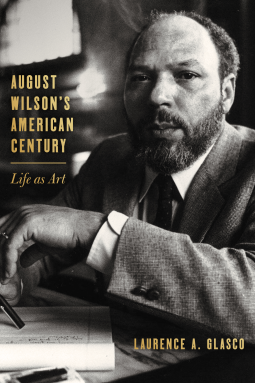
August Wilson's American Century
Life as Art
This title was previously available on NetGalley and is now archived.
Send NetGalley books directly to your Kindle or Kindle app
1
To read on a Kindle or Kindle app, please add kindle@netgalley.com as an approved email address to receive files in your Amazon account. Click here for step-by-step instructions.
2
Also find your Kindle email address within your Amazon account, and enter it here.
Pub Date Feb 10 2026 | Archive Date Feb 10 2026
Talking about this book? Use #AugustWilsonsAmericanCentury #NetGalley. More hashtag tips!
Description
Playwright August Wilson is best known for his American Century Cycle, a sequence of ten plays—including the Pulitzer Prize–winning Fences and The Piano Lesson—that chronicle the lives of Black Americans in each decade of the twentieth century. But behind the celebrated plays stands a complex man shaped by his hometown’s vibrant Black culture. In August Wilson’s American Century: Life as Art, Laurence Glasco, a foremost historian of Black life in Pittsburgh, draws on Wilson’s early poetry, archival material, and original interviews with family members, neighbors, and friends to show how the city and its residents shaped the playwright and his work. Wilson’s overlapping identities as an outsider, warrior, race man, and poet helped him persevere in the face of setbacks, weave real-life observations with his poetry to craft memorable dialogue and compelling characters, and portray the realities of race in America in ways that have resonated with theatergoers and readers ever since. Although Wilson eventually left his hometown, the people and places of Pittsburgh remained with him, shining through in a body of work that brought the struggles and triumphs of the Black experience to a wide audience and changed American theater for the better.
A Note From the Publisher
Advance Praise
"A well-written biography that will persuade Wilson’s admirers to revisit his plays and introduce his work to a new generation of fans." - Kirkus
“August Wilson’s American Century is a beautiful and moving portrait of the life and legacy of one of the most talented American playwrights of the twentieth century. Historian Laurence A. Glasco masterfully charts Wilson’s journey, demonstrating how the city of Pittsburgh fundamentally shaped his life and work. Drawing insights from an array of original research materials, including interviews with Wilson’s close friends and family, Glasco weaves a compelling narrative that captures the dynamic interplay of race, place, and identity.”
—Keisha N. Blain, author of Without Fear: Black Women and the Making of Human Rights
“The world knows how August Wilson mythologized the Hill District of Pittsburgh, but far less about how that city shaped America’s greatest Black playwright. Drawing on decades of archival research and scores of original interviews, historian Laurence A. Glasco has now given the definitive biographical answer to that question. Glasco’s study of how Wilson’s early life in Pittsburgh shaped his outlook as an ‘outsider, warrior, race man, and poet’ is full of fascinating personal details—and sheds invaluable light on the timeless art that Wilson went on to create.” —Mark Whitaker, author of Smoketown: The Untold Story of the Other Great Black Renaissance
“In this major addition to August Wilson studies, Laurence A. Glasco reveals—as no biographer has done before—the intertwined, deeply embedded yet paradoxical connections between the playwright, his art, and the sometimes-fraught relationship with Pittsburgh and its Hill District neighborhood. Glasco calls upon his decades-long expertise as a respected historian and documentarian to situate Wilson squarely within the Pittsburgh landscape that shaped him—its institutions, familiar streets, and the people. Beyond being Wilson’s birthplace or serving as the metaphorical backdrop for the narratives that unfold in nine of his American Century Cycle plays, the Pittsburgh that Glasco portrays in this important study masterfully affirms the power of its place in Wilson’s magnum opus. Amid competing biographies and a plethora of scholarship, this study provides a clearer view of August Wilson from the ground—that is, from someone who has done the work and deeply understands the Pittsburgh landscape, the man, his family, his associates and the locals who sometimes make their way into one or more of his plays.”
-Sandra Shannon, Howard University, and founder of the August Wilson Society
“Laurence A. Glasco crafts a vivid portrait of August Wilson’s early world. Grounded in Pittsburgh’s Hill District, August Wilson’s American Century: Life as Art follows the playwright’s roots, relationships, and self-formation with clarity and depth. Centering place as catalyst, Glasco reveals how Wilson’s artistry emerged through memory, migration, ancestral currents, and everyday experience.”
- Omiyẹmi (Artisia) Green, William and Mary
Marketing Plan
- National review coverage
- Extensive galley mailing
- National print, social media, and online marketing campaign
- academic marketing
- Feature at Winter Institute 2026 and AWP 2026
- National review coverage
- Extensive galley mailing
- National print, social media, and online marketing campaign
- academic marketing
- Feature at Winter Institute 2026 and AWP 2026
Available Editions
| EDITION | Hardcover |
| ISBN | 9780822948544 |
| PRICE | $35.00 (USD) |
| PAGES | 416 |
Links
Available on NetGalley
Available to Buy
Buy on BN.com Buy on Bookshop.orgAverage rating from 9 members
Featured Reviews
 Michael A, Educator
Excellent multifaceted depiction of the playwright and his work. Serving as both a biography, an analysis of the Century Cycle, and a captivating sociological exploration of Pittsburgh, this book shines a light on how the city shaped the man, and the man shaped his times. A brilliant examination of race, class and urbanism that shines a spotlight on one of the most important dramatists of the 20th Century.
 Miles L, Educator
August Wilson's American Century by Laurence Glasco was everything I was hoping it would be and more.
From the description I expected a biography that not only focused on Wilson's life but specifically his earlier life. I was interested in learning how his childhood and youth influenced his art. Because I have read a decent amount of critical analysis of his work I wasn't really considering how that might also get worked in. I got all of that woven together very well with contextualizing his work within other movements and other times. So while the biography did give much more emphasis to his younger days it also included nice discussions of where his personal life entered his work and how that work was often understood within the theater and other worlds as well.
The writing was brisk while still including plenty of facts and remembrances from those who were there, whether from written archival research or interviews. The reader can understand some of the nuance of where he grew up because Glasco includes broader societal information so we know how common or uncommon some things would have been at the time.
I didn't go back and reread all of the American Century Cycle or all of his poetry, but I did go back and read a couple of plays and some poetry, mostly when a particularly interesting point was made in the book and my memory didn't have the recall to remember as much as I wanted. I think reading or rereading some of his work will help you to keep the work in mind while reading about the man.
I want to qualify my last comment. I think this book is written in such a way that someone who isn't familiar with a lot of his work will still enjoy it. In other words, if you simply enjoy biographies but don't know much about his work, you will enjoy this simply as a good biography.
If you have an interest in drama or poetry (I, along with many others, think of Wilson as more of a poet who also wrote plays rather than a playwright who also wrote poems) this volume will give you some wonderful insight into a great writer as well as an idea for how you might use your own life experiences in your writing. It certainly isn't a how-to but as you come to understand how past events and feelings can combine with what one wants to say in the here and now to create powerful works, it may just spark some ideas for your own writing.
Reviewed from a copy made available by the publisher via NetGalley.
 Douglas M, Reviewer
Laurence Glasco, in his new book August Wilson's American Century: Life as Art, claims August Wilson has four distinct identities: outsider, warrior, race man, and poet. Each have been theatrically characterized by Wilson’s male protagonists during his “Pittsburgh Cycle,” plays all set “in a different decade of the twentieth century and all but one set in Pittsburgh” (3). These works--Gem of the Ocean, Joe Turner’s Come and Gone, Ma Rainey’s Black Bottom, The Piano Lesson, Seven Guitars, Fences, Two Trains Running, Jitney, King Hedly II, and Radio Golf--are generally but misleadingly looked at as being general representatives of the Black experience in America. Rather, according to Glasco, these plays “gave dignity and respect to the lives of Pittsburgh’s working-class Black residents that he carefully observed and came to value” (3). Glasco’s book is a successful attempt at proving the above points, while also establishing how Wilson fought and became the ground-breaking playwright, poet, and person he wanted to be, even if not always getting the recognition he deserved when alive.
This is an unedited version of a paragraph for a review I am writing for On the Seawall. Here are more of my reviews for your perusa::
https://www.ronslate.com/contributor/douglas-macleod/
 Mikala S, Reviewer
In this meticulously researched biography, the author provides a detailed examination of August Wilson’s history and family tree, offering readers a profound look into the roots of one of America’s greatest playwrights. The book excels at tracing the specific anecdotal situations from Wilson’s life that later affected his plays, showing how real world experiences appeared in various forms within his fictional stories. It is fascinating to see the direct lines drawn between his personal upbringing in Pittsburgh and the iconic characters that eventually populated his ten play cycle.
Beyond the biographical facts, the narrative serves as a powerful analysis of Wilson’s complex relationship with his own identity. It explores his deep acceptance of and simultaneous resistance to the realities of being Black in America, contextualizing his life within the broader scope of race relations throughout the century. While the level of detail can be dense at times, the insights into his creative process and his unwavering commitment to his heritage make this an essential read for theater lovers. It is a thoughtful tribute to a man who successfully captured the heartbeat of the Black experience on the American stage.
 Brian S, Educator
Big thanks to The University of Pittsburgh Press and NetGalley for sending me an advanced copy of Laurence A. Glasco’s comprehensive artistic biography of playwright August Wilson titled August Wilson’s American Century: Life as Art. This was an incredible book, especially if you’ve read or watched any of Wilson’s plays. I’ve taught Fences and The Piano Lesson in schools, and students always enjoy the characters, dialogues and conflicts in these plays. I started teaching these plays right around the time of Wilson’s untimely death at age 60. However, there was not a lot of biographical information about Wilson beyond what he shared in interviews. Glasco’s book provides a detailed and well-researched biography of not just Wilson’s life, but also the various influences on his development as a poet and one of America’s most significant playwrights. I absolutely loved this book, and I wished that there was this kind of level of scholarship or detailed background into Wilson’s influences when I was teaching his plays. Nevertheless, it was fascinating to read about his life growing up in Pittsburgh and to recognize some of the references in plays like Fences, Joe Turner’s Come and Gone, and The Piano Lesson to events, individuals, and places in his life and hometown.
In some ways, this book could also be titled Portrait of an Artist as a Young Man, as we see how various factors influenced Wilson’s life as a poet and playwright. A majority of the book is spent on his early life, adolescence, and young adulthood, prior to his struggles and emerging fame as a playwright. Glasco identifies how Wilson’s experience growing up as the son of a single African American mother, whose father was white, distant, and married to another woman, emerged in some of his plays. Although Glasco doesn’t explicitly make these connections in his book, I couldn’t help but see how Troy’s relationship with both Cory and Lyons was mirrored in Wilson’s relationship with father and mother. Similarly, Wilson’s stepfather shared similar characteristics with Troy as an ex-felon who tried to create a positive life after his time in prison. Additionally, readers can also see how Wilson’s bi-racial identity impacted his writing and how being a Black playwright in the 1980s and 1990s in particular challenged Wilson’s writing. I found it particularly interesting to read about how the Black Arts Movement eventually made its way from New York and Newark through Amiri Baraka’s appearance in Pittsburgh and influenced Wilson and some of his colleagues. While at times Wilson appeared to be influenced by the Black Nationalism of the Black Arts Movement, it wasn’t a consistent influence on his writing as he also seemed to be influenced by Beat writers as well, which I also found fascinating since I never realized this influence from his plays. I also loved the fact that Glasco included some of Wilson’s poems and provided some biographical analysis of them to better understand their context in relation to Wilson’s life. I have never read any of Wilson’s poems, so this was definitely exciting to read. Furthermore, readers are able to see the growth and development of his writing, from the kind of obscure and abstract modernity to the realism, and how Wilson’s early experiments with poetry, in particular his performances of Dylan Thomas’ poetry in Welsh accent, mirrored his own kind of search for an identity. Readers also learn how this search for a voice and style in his writing and the focus of the Black Arts Movement in drama as a medium to reach a broader audience led him into drama. It’s this kind of questing and Wilson’s observational skills and keen ear that led him to move from the kind of agitprop, political theater that was influenced by writers like Baraka to the everyday language and conversations that are a part of award winning plays like Fences.
August Wilson’s America is more than a biography, and yet it’s also more than a critical study. It’s a careful analysis of the development of a unique, artistic voice in American literature. I loved learning more about Wilson’s life and especially learning more about the references he makes to his life in his plays. This was an incredible book, and it is recommended reading if you are a fan of Wilson’s work. Highly recommended, especially for literature and theater lovers.
Mandy J, Reviewer
August Wilson’s American Century: Life as Art by Laurence A. Glasco is a detailed and insightful biography of American playwright August Wilson. Best known for his ten-play “Century Cycle,” Wilson chronicled the African-American experience across the twentieth century, giving voice to ordinary Black lives. Glasco focuses especially on Wilson’s roots in Pittsburgh’s Hill District, showing how the neighbourhood, its people, and its culture shaped his identity and inspired his plays. Drawing on interviews, personal papers, and historical research, the book reveals Wilson as a poet, observer, and deeply committed artist whose work grew directly from lived experience and community life. The biography is thorough and comprehensive, sometimes a bit overwhelming in the amount of detail, but always readable and illuminating. It succeeds not only as a portrait of Wilson himself but also as a broader story about art, history and race. It’s an excellent and authoritative account, and I would recommend it for anyone interested in theatre, biography, and American cultural history.
Readers who liked this book also liked:
Kenneth Womack; Scott Freiman
Entertainment & Pop Culture, Nonfiction (Adult)
Will Kaufman
Entertainment & Pop Culture, Nonfiction (Adult), Politics & Current Affairs



Christopher M. Faulkner; Raphael Parens; Colin P. Clarke
History, Nonfiction (Adult), Politics & Current Affairs