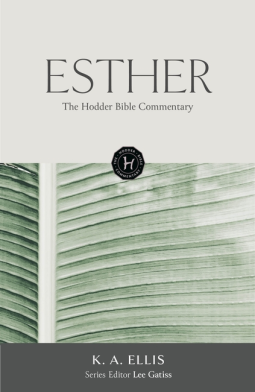
The Hodder Bible Commentary: Esther
This title was previously available on NetGalley and is now archived.
Send NetGalley books directly to your Kindle or Kindle app
1
To read on a Kindle or Kindle app, please add kindle@netgalley.com as an approved email address to receive files in your Amazon account. Click here for step-by-step instructions.
2
Also find your Kindle email address within your Amazon account, and enter it here.
Pub Date Jul 16 2026 | Archive Date Jul 17 2026
John Murray Press US | Hodder & Stoughton
Talking about this book? Use #TheHodderBibleCommentaryEsther #NetGalley. More hashtag tips!
Description
The Book of Esther has spoken to God's people down the ages about faithful endurance under threat, even when God's hand seems hidden. Drawing us into the wider biblical story of exile, persecution, and covenant promise, it shows how God keeps his people through threat and opposition, in the time of Esther and throughout history.
In this powerful commentary, K.A. Ellis maps out the themes of providence, identity, hiddenness, fear, boldness, and dramatic reversal in the book of Esther, speaking directly to Christians navigating hostility today. Pointing us to Christ as the true Deliverer, she shows how the covenant faithfulness of God never fails to strengthen, keep, and expand his Kingdom on earth until the day it is fully revealed.
ABOUT THE HODDER BIBLE COMMENTARY
50 volumes. 4 million words. Global representation.
Engage with the latest theological thinking in this new, readable exposition of the Bible in 50 volumes. Covering all books of the Bible and including the full the Anglicised New International Version (NIV) text, the Hodder Bible Commentary series makes connecting scripture and scholarship easier than ever.
Explore how the Bible intersects with 21st century life with commentary that is doctrinally sensitive and globally aware, sourced from a team of contributors representing a variety of cultural and ecclesiastical contexts from around the world.
Designed to be accessible to all adult readers and particularly for those who preach, teach, and lead Bible studies, each book is split into manageable sections suitable for talks or study groups. Read the Bible text and the commentary side by side to gain a deep knowledge of scripture and the variety of interpretations that can be made from it.
Be refreshed with new understanding. Be encouraged to apply your conclusions to life today.
Available Editions
| EDITION | Other Format |
| ISBN | 9781529301885 |
| PRICE | £22.99 (GBP) |
| PAGES | 176 |
Available on NetGalley
Available to Buy
Buy on BN.com Buy on Bookshop.orgAverage rating from 21 members
Featured Reviews
 Reviewer 1503116
How K.A. Ellis Approaches the Book of Esther
Just as with any commentary, understanding the author’s method is essential before diving into the exposition itself. K.A. Ellis begins her work on Esther by situating the book within the broader biblical story—exile, persecution, covenant promise, and God’s faithfulness in seasons when His presence seems hidden. She recognizes that Esther is a narrative shaped by tension and reversal, and she treats it as a text that speaks directly to believers who face cultural pressure, uncertainty, or hostility.
Who Is K. A. Ellis?
K. A. Ellis is a respected Christian scholar, writer, and speaker whose work focuses on global Christianity, persecution, theology, and the lived experience of believers in hostile or uncertain environments. She brings a rare combination of academic depth, cultural awareness, and pastoral sensitivity to her writing—qualities that make her an especially fitting commentator on the Book of Esther, a biblical narrative shaped by themes of identity, courage, and God’s hidden yet active providence.
Academic and Professional Background
Ellis holds advanced degrees in theology and the arts, including studies at Westminster Theological Seminary and Yale University. Her academic work often explores how Christians throughout history have remained faithful under pressure, and how the global church today continues to bear witness in difficult contexts. She has taught, lectured, and written widely on issues of religious freedom, Christian endurance, and the theology of suffering.
Ministry and Leadership
Ellis serves as the Director of the Edmiston Center for the Study of the Bible and Ethnicity at Reformed Theological Seminary in Atlanta. In this role, she helps equip students to understand Christianity within a global and historical framework, with particular attention to the experiences of marginalized and persecuted believers.
She is also a Senior Fellow at the Philos Project, an organization dedicated to promoting positive Christian engagement in the Near East. Her work there includes research, writing, and advocacy related to religious liberty and the flourishing of Christian communities around the world.
Writing and Public Influence
Ellis is known for her thoughtful, articulate engagement with Scripture and culture. She writes and speaks frequently on:
Christian perseverance under persecution
The global church and its witness
The theology of suffering and endurance
Identity and faithfulness in secular contexts
The intersection of Scripture, history, and contemporary challenges
Her voice is widely respected for its clarity, courage, and compassion. She brings a global perspective to biblical interpretation, drawing from the stories of believers who have lived out their faith in environments far more dangerous than most Western Christians experience.
Why She Is Well‑Suited to Write on Esther
The Book of Esther is a story of God’s hidden work, courageous faith, and dramatic reversal in the midst of political hostility. These themes align closely with Ellis’s lifelong work studying and supporting Christians who live under pressure.
Her commentary reflects:
A deep understanding of what it means to trust God when His presence seems hidden
Sensitivity to the fears and pressures believers face in hostile cultures
Insight into how God preserves His people through unexpected means
A global awareness that enriches her reading of the text
A Christ‑centered approach that sees Esther within the larger story of redemption
Ellis’s background allows her to read Esther not only as ancient history but as a living testimony for Christians today who must navigate cultural tension, identity challenges, and moments requiring bold obedience.
Before she turns to the verse‑by‑verse commentary, Ellis explores the major themes that define Esther’s message. She reflects on providence, emphasizing how God works behind the scenes even when His name is not mentioned. She examines identity, showing how Esther and Mordecai wrestle with what it means to belong to God in a foreign land. She addresses hiddenness, fear, and boldness, tracing how God forms courage in His people through ordinary obedience. And she highlights the theme of dramatic reversal, the way God overturns evil intentions and brings deliverance in unexpected ways. These themes become interpretive anchors throughout her commentary.
When Ellis begins her treatment of the text, she follows a clear and consistent pattern. Each section of Esther opens with a concise introduction—usually a few sentences that orient the reader to the narrative moment, the historical setting, or the theological tension at play. She then moves into the biblical text itself, presenting the passage in the NIV translation so readers can engage directly with Scripture before entering her exposition.
Her commentary is succinct but rich. Ellis has a gift for distilling complex ideas into clear, accessible insights without sacrificing depth. She draws attention to narrative details, character development, and literary structure, helping readers appreciate the craftsmanship of the book. She also consistently connects Esther’s story to the larger biblical narrative, showing how its themes echo throughout Scripture and ultimately point toward Christ as the true Deliverer.
Ellis divides the text into natural narrative units—scenes, dialogues, turning points—allowing the reader to follow the unfolding drama with clarity. Within each section, she offers theological reflection, historical background, and pastoral application. One of the strengths of her commentary is her ability to speak directly to modern Christians navigating cultural pressure or spiritual uncertainty. She draws parallels between Esther’s world and the challenges believers face today, offering encouragement rooted in God’s covenant faithfulness.
Another notable feature of Ellis’s work is her use of cross‑references. She frequently brings in passages from both the Old and New Testaments to illuminate Esther’s themes—stories of exile, promises of deliverance, teachings on courage, and the ultimate fulfillment of God’s purposes in Christ. These connections enrich the reader’s understanding and demonstrate how Esther fits within the unity of Scripture.
Overall, Ellis’s approach is both scholarly and pastoral. She respects the historical and literary integrity of the text while also drawing out its spiritual relevance for contemporary readers. Her commentary is accessible enough for everyday study yet thoughtful enough to benefit those seeking deeper theological reflection. Through her careful exposition, the Book of Esther emerges not only as an ancient narrative of survival and courage but as a timeless testimony to God’s hidden yet unstoppable work in the lives of His people.
 Abbie R, Reviewer
Ellis has completed a concise and easily read commentary on the book of Esther. I found that this is an easy enough to read commentary that is very much like a bible study. A great resource for anyone looking to deepen their understanding of the book. Easy enough for a new Christian to enjoy and one that I will be adding to my shelves to be used as a resource for people who are looking for something engaging to study.
 Sarah O, Reviewer
The first time I attempted to study the book of Esther I quickly realized that there was so much going on in the history and culture of the Persians that I knew nothing about! So when I saw this book I jumped at the chance to relieve myself of some of my ignorance.
This first time I heard of K.A. Ellis was when I watched a talk she gave at TGC conference and I thought she was just amazing. When I dived into this commentary I knew immediately I was going to like it. This is an expositional commentary, going chapter by chapter through the book of Esther. It was so easy to fall into the narration and was not intimidating at all. This would be a great commentary to have next to you when studying Esther or, if you're a nerd like me, just to read by itself as a more devotional type book. I would recommend this to anyone new to Bible study or anyone who was just interesting in getting to know the historical and cultural context of the time.
Grace C, Reviewer
I had actually never studied or really knew about Esther but this book took me into so much detail and really helped me see the historical context of it! Would very much recommend to help people studying!
 Brandi U, Reviewer
K.A. Ellis offers a rich and insightful examination of the book of Esther. The commentary balances historical context with practical application, making it accessible without sacrificing depth. I especially appreciated the author's thoughtful reflections on God's providence and faithfulness. This volume would be a valuable addition to the library of pastors, teachers, and anyone interested in studying Esther more deeply.
 Patricia N, Reviewer
The Hodder Bible Commentary:
Esther
by K.A. Ellis
Rating: 5 star rating
I absolutely love this commentary on Esther by K.A. Ellis. She makes heavy theology feel totally easy to grasp. I liked the way the commentary has a side by side format where the NIV Bible verses are printed right next to her commentary. This makes for a perfect devotional routine without constantly flipping pages.
Ellis does a beautiful job explaining how God is always working behind the scenes, even when life is scary or when it feels like He is silent.
What I loved most was how she explained the true ending of the book and the establishment of Purim. Ellis explains that Purim isn’t just a historical party; it represents the ultimate "reversal of lots." She highlights how Haman cast lots to destroy the Jews, but God flipped it around to deliver them instead.
If you want a quick, trustworthy guide that connects Esther and this historic feast to our modern hope, you will love this. This i found fascinating because I wasn't familiar with Purim.
Thank you, NetGalley, John Murray Press US, and K.A. Ellis for this book review consideration. All review opinions are my own.
#NetGalley
#JohnMurrayPressUS
#TheHodderBibleCommentaryEsther
#KAEllis
http://www.patriciasreadingroom.blogspot.com
http://goodreads.com/patriciasreadingroom
Joshua L, Reviewer
Esther: The Hodder Bible Commentary by K.A. Ellis
Before reading this commentary on Esther, I had not read any of the volumes in The Hodder Bible Commentary. I have actually purchased a few, both in Kindle and hardcover (yes, I buy too many books!!!). And after finishing this commentary, which I read via an advanced reader’s copy from #NetGalley, I feel even better about my previous purchases. I feel better because, if this commentary is indicative of what’s on offer in the others, they will certainly be worthwhile reading.
What I love:
-Chapters in the commentary are linked to the chapters from the biblical text, which is useful for an introductory commentary. The NIV text is also included, and each chapter is a dozen pages or so, which to me is the perfect amount for a book like this.
-The author is a good “writer.” Sometimes commentaries like this sound like a sermon series transcribed into book format. This book sounds like a fully developed introduction to Esther. Everything in the book helps you better understand the book of Esther; it isn’t bogged down by boring stories that don’t relate.
-I love the author’s use of other writings from the Old Testament/Hebrew Bible. She includes quite a few relevant Psalms—my favorite book of the bible, so maybe I’m biased.
-Another great thing is that this commentary is pretty Ecumenical, especially for one that is geared toward Evangelicals (I assume). I feel like any Christian church could use this book for a small group/bible study, whether Mainline or Catholic or Evangelical. This is also more impressive because each chapter includes a section connecting the readings to today, and none of those focused on stupid culture war issues and other stuff that ruins many books like this.
My only complaint, which is more of a suggestion to the publisher, is that there aren’t any discussion questions for each chapter. I feel like that’s a real missed opportunity, especially because I think this book works perfectly for small group study.
#TheHodderBibleCommentaryEsther
Readers who liked this book also liked:

Lucy Rycroft
Children's Nonfiction, Christian




We Are Bookish
General Fiction (Adult), New Adult, Romance